

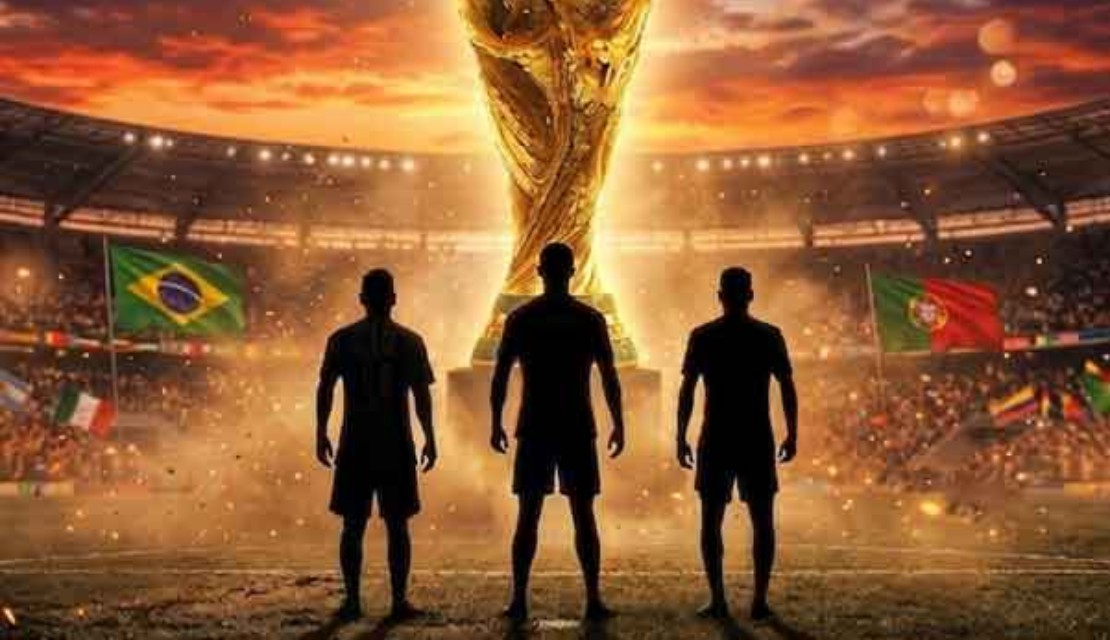
There exists a profound irony in the architecture of global affairs: the most potent manifestations of geopolitical conflict are no longer found within solemn legislative chambers or diplomatic summits, but upon the manicured grass of playing fields and athletic tracks. Human competition is inherently a polarizing force. It inevitably demarcates the world into a rigid binary of victors and vanquished, cultivating intense tribal loyalties that frequently serve as fertile ground for conspiracy theories and outright violence. To understand this phenomenon, one must recognize that the illusion of an apolitical sporting arena is perhaps the most enduring myth of modern international relations. Even before delving into the antiquity of ancient civilizations, which forged the philosophical foundations of organized sport, most notably through the Olympic Games of ancient Greece. There has forever been undeniable evidence of an inextricable linkage between statecraft and athletic spectacle. The visible presence of national flags and the broadcasting of anthems stand as clear testaments to this reality.
These ubiquitous nationalist symbols completely expose the profound hypocrisy routinely peddled by sports administrators. These officials habitually feign ignorance whenever the specter of fierce nationalism is legitimately raised, yet history repeatedly shatters their fragile façade. Consider the meticulously engineered spectacle of the 1936 Olympic Games in Berlin, hosted during the ominous ascent of European Nazism. Inaugurated by Adolf Hitler, these Games were deliberately weaponized to project an unparalleled image of German industrial greatness and validate the abhorrent myth of Aryan racial superiority. It was an exercise in geopolitical branding, a dark theatrical production masked as a global celebration of youth. Remarkably, the fascist aesthetic and logistical precision achieved their insidious effect. Numerous young international competitors and visiting dignitaries found themselves deeply mesmerized by the immaculate organization, state-of-the-art facilities, and sheer atmospheric grandeur. So intoxicating was this display of state power that many foreign observers returned homeward harboring a quiet desire to replicate similar authoritarian models of social mobilization.
They completely disregarded the inconvenient fact that actual athletic results did not entirely fulfill the Führer’s grandiose ambitions of absolute racial domination. This weaponization of the athletic arena naturally carried over into the ideological battlegrounds of the Cold War. Following the Soviet Union’s military invasion of Afghanistan in 1979, the United States, operating under President Jimmy Carter, orchestrated a comprehensive campaign to aggressively boycott the 1980 Moscow Olympic Games. The American-led crusade achieved a fractured, partial success. While a significant coalition of allied nations willingly joined the embargo, numerous other states stubbornly refused to participate, leaving the fraught decision to their national Olympic committees. However, that fractured diplomatic victory was destined to provoke retaliation. Four years later, during the summer of 1984, the Kremlin orchestrated a mirror-image boycott targeting the Los Angeles Olympic Games. Thirteen steadfast Soviet allies joined Moscow in a unified refusal to cross the Atlantic, cementing the inseparable nature of sports and high-stakes international politics.
Following this tit-for-tat escalation, any remaining idealistic pleas to separate the realm of sport from the gritty realities of international diplomacy decisively lost their credibility on the world stage. Furthermore, one must meticulously account for the decades-long Arab sporting boycott of Israel, the sweeping global embargo systematically enforced against the apartheid regime of South Africa, and the ruthless athletic isolation imposed upon Taiwan following Washington’s diplomatic recognition of the People’s Republic of China. When we turn our analytical lens toward international football, a sport whose cultural intensity consistently operates at a fever pitch, the historical intersection of nationalistic fervor and competition becomes even more stark. Perhaps the most universally cited paradigm is the infamous “Disgrace of Gijon,” which unfolded during the contentious 1982 FIFA World Cup. On that occasion, the national squads of West Germany and Austria engaged in a brazen conspiracy against the Algerian national team, staging what is forever immortalized as the tournament's match of shame.
By lazily manipulating the final scoreline, the two European neighbors ensured both sides advanced while unfairly condemning the North African squad to elimination. In direct response to this profoundly unethical public spectacle, FIFA was forcibly compelled to implement a sweeping structural reform, adopting a regulatory mandate requiring the final fixtures of every preliminary group to be contested simultaneously, thus preventing similar manipulative machinations in future tournaments. Yet, even earlier in the turbulent geopolitical landscape of Central America, the lethal fusion of nationalistic pride and footballing passion ignited a devastating military conflict. The accumulated, simmering societal tensions between neighboring El Salvador and Honduras spectacularly detonated into a tragic, fully mobilized armed conflict in 1969. This violent eruption was catalyzed directly by their fiercely contested qualifying matches for the 1970 FIFA World Cup, raging aggressively before urgent international mediation finally managed to extinguish the flames of war days later, proving that the pitch often serves as a dangerous proxy battlefield.
The North American Spectacle
Fast-forwarding to the present moment, the current FIFA World Cup unfolding across the expansive continent of North America serves as a masterclass in how modern athletic mega-events are defined by deeply entrenched political divisions. From the very inception of the tournament, it was glaringly evident that political relations between United States President Donald Trump and the leaderships of Mexico and Canada fundamentally lacked harmony. Washington’s remarkably hard-line stance on international immigration has seamlessly translated into a draconian framework of tightened border entry restrictions. This bureaucratic fortress has indiscriminately targeted visiting fans and, scandalously, directly obstructed the arrival of designated refereeing crews and the immediate relatives of participating athletes from certain nations. The highly partisan, provocative slogans visibly displayed across stadium terraces loudly testify to an aggressively toxic atmosphere entirely divorced from openness and goodwill. More profoundly troubling are the persistent complaints of shockingly poor officiating and an apparent, systemic bias strategically directed against specific national teams.
Whispers of corruption have steadily morphed into deafening allegations regarding intense official pressure emanating from powerful political quarters, designed to artificially clear the competitive path for favored geopolitical allies. The completely unjustified denial of American entry to a highly respected Somali international referee merely functioned as the opening salvo. That diplomatic incident was swiftly eclipsed after credible reports surfaced indicating the White House explicitly pressured FIFA executives to suspend an automatic disciplinary ban. This ban was originally designed to prevent the prominent American player Folarin Balogun from participating in the crucial last-16 knockout fixture against Belgium, following a legitimate red card he received in the preceding match. It was not long thereafter before pervasive reports began circulating, alleging a clear institutional favoritism purposefully directed toward Argentina, reinforced by an undeniably skewed refereeing performance during its fiercely contested match against Egypt, further validating the widespread sentiment that the tournament’s integrity has been completely compromised by unseen political hands.
These initial reports eventually metastasized into alarming claims suggesting that even the tournament’s foundational operational algorithms had been meticulously manipulated to artificially ease Argentina’s progression, systematically steering the squad away from encountering fundamentally stronger opponents. Against this incredibly toxic, conspiratorial backdrop, it was hardly surprising that regional polarization immediately intensified, frequently spilling over into displays of raw hostility. This fracture widened dramatically after FIFA whose malleable President, Gianni Infantino, astonishingly presented Donald Trump with an entirely fabricated “FIFA Peace Prize” just last year shamelessly capitulated and formally agreed to rescind Balogun’s suspension. Meanwhile, as fiercely nationalistic flags, partisan political slogans, and manufactured sporting rivalries persistently dominate stadiums across North America, genuine international statecraft elsewhere is tragically devolving into a deeply frivolous game. From the rapidly shifting, perpetually unstable corridors of power in Western Europe to the fraught recent NATO Summit hosted within the borders of Turkiye, the fundamental gravity of global diplomacy is undeniably and rapidly evaporating.
The Frivolity of Actual Geopolitics
Whether observing the escalating naval tensions aggressively choking the vital Strait of Hormuz, witnessing the unfolding maritime tragedies continuously haunting the Eastern Mediterranean, or analyzing Israel’s expanding influence over the intimate mechanics of American political decision-making, both political analysis and political practice are steadily losing their historical seriousness. The United Kingdom, frequently described as the foundational cradle of modern Western democracy, is currently preparing to embarrassingly welcome its seventh distinct prime minister in the remarkably compressed span of just ten turbulent years. Meanwhile, during the aforementioned diplomatic gathering in Turkiye, the supposedly powerful secretary-general of the NATO alliance stood entirely paralyzed, silently smiling, as President Trump openly criticized fellow strategic alliance member Spain directly in his immediate presence. Today, historically reliable strategic allies, no less than traditional global adversaries, find themselves deeply confused and strategically paralyzed by sudden policy directives contradicting stated objectives.
The vital democratic line meticulously separating objective, verifiable truth from dangerous, weaponized political incitement is becoming increasingly blurred in the public consciousness. Simultaneously, cynical political maneuvering and calculated diplomatic evasions continue to rapidly multiply across every level of government, aggressively fueling entirely genuine, deeply existential global fears of an unintended, catastrophic geopolitical slide toward disaster. In short, the collective future completely ceases to appear clear when it feels as though nearly everyone is currently trapped aboard a massively complex aircraft recklessly flown by a malfunctioning autopilot system, constantly buffeted by the fierce winds of deeply competing national and strategic interests.