

The reverberations of electoral politics are rarely confined within national borders in South Asia. In a region where history, identity, and geography remain deeply entangled, even subnational political transitions can produce consequences of strategic magnitude. The unfolding political transformation in India’s eastern state of West Bengal is one such moment, an electoral shift that is rapidly transcending its provincial character and evolving into a potential inflection point for Bangladesh’s border security, humanitarian posture, and diplomatic equilibrium.
At the center of this unfolding scenario lies the anticipated electoral ascendancy of the Bharatiya Janata Party (BJP), whose ideological posture and security rhetoric have already begun to cast a long shadow across the Bangladesh-India frontier. While elections are, in principle, instruments of democratic renewal, the political narratives accompanying this particular contest, especially those surrounding “infiltration,” demographic anxieties, and voter exclusion have introduced a new layer of uncertainty that is deeply unsettling for Dhaka.
The Border as a Political Fault Line
Bangladesh’s borderlands have historically functioned not only as geographic boundaries but also socio-political membranes consist of porous, dynamic, and deeply sensitive to developments across the frontier. The districts of Murshidabad, Malda, and Uttar Dinajpur in West Bengal are not distant peripheries; they are intimately connected to Bangladesh’s Dinajpur, Naogaon, Joypurhat, and Rajshahi regions through a dense web of cultural, linguistic, and economic ties. Any turbulence in these Indian districts is, therefore, almost inevitably mirrored across the border.
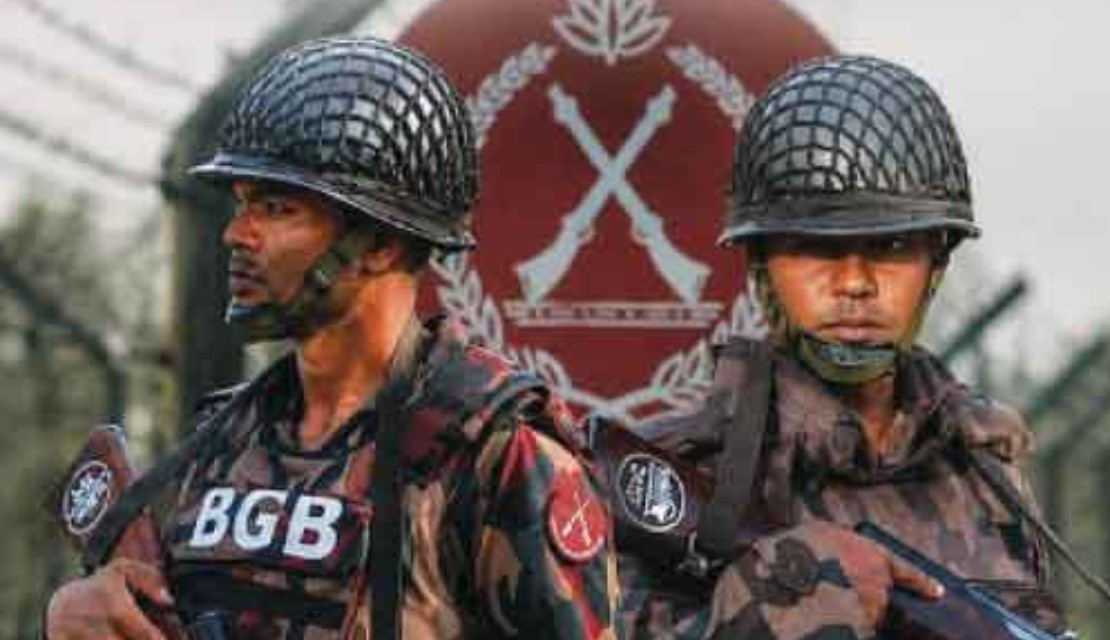
Bangladeshi authorities are acutely aware of this interconnected vulnerability. Heightened vigilance by the Border Guard Bangladesh (BGB), reinforced patrols, and increased intelligence coordination signal a preemptive attempt to contain potential spillovers. Strategic nodes such as the Hili land port have reportedly been placed under special alert, reflecting concerns that post-election instability could manifest in cross-border movements that is both voluntary and forced.
This securitized response is not precautionary; it is rooted in a growing apprehension that political developments in West Bengal could trigger a chain reaction with direct implications for Bangladesh’s internal stability.
Politics of “Infiltration” and Its Strategic Implications
Few issues have been as politically charged in Indian domestic discourse as the question of “illegal infiltration.” In the run-up to the West Bengal elections, this narrative has been aggressively amplified by the BJP, framing demographic changes in border regions as a national security threat. The party’s commitment to a “zero tolerance” policy against infiltration has been a central pillar of its campaign rhetoric.
Statements by senior leaders, including India’s Union Home Minister Amit Shah, have further intensified these concerns. His assertion that alleged “infiltrators” would be identified and expelled following electoral victory has not been interpreted as mere political rhetoric in Dhaka. Instead, it has been viewed through a strategic lens as a signal of potential policy shifts that could have direct cross-border consequences.
From Bangladesh’s perspective, the ambiguity surrounding the definition of “infiltrator” is particularly troubling. In a region marked by complex migration histories, overlapping identities, and bureaucratic inconsistencies, the risk of misclassification is high. This raises the specter of individuals, many of whom may possess legitimate documentation being labeled as foreigners and subjected to expulsion.
Voter List Revision: Administrative Exercise or Political Instrument?
Compounding these anxieties is the controversial revision of voter lists in West Bengal. Reports indicating that approximately 9.1 million names have been excluded from electoral rolls have sparked intense debate. While electoral roll revisions are not uncommon in democratic systems, the scale and perceived demographic skew of this exercise have raised serious questions. A significant proportion of those excluded may belong to the Muslim community, particularly in border districts where Muslims constitute a demographic majority. Although definitive data remains contested, the perception of targeted exclusion has already begun to shape political narratives and security assessments.
For Bangladesh, the implications of this development extend beyond electoral fairness. If large segments of the population find themselves disenfranchised and potentially categorized as non-citizens, the risk of displacement becomes a tangible concern. The possibility however speculative, of these individuals being pushed toward Bangladesh introduces a scenario that Dhaka cannot afford to ignore.
Echoes of Past Crises: The Rohingya Parallel
The specter of a humanitarian crisis akin to the Rohingya influx looms large in strategic calculations. While the contexts are fundamentally different, the structural dynamics, mass displacement driven by identity-based exclusion bear unsettling similarities. Bangladesh, already hosting over a million Rohingya refugees, is acutely aware of the socio-economic and security burdens such crises entail.
The concern is not that West Bengal will produce a crisis of identical scale, but that even a smaller influx, particularly if sudden and unregulated could strain local resources, disrupt border communities, and complicate internal security dynamics. Moreover, any perception that Bangladesh is being used as a destination for expelled populations could generate domestic political backlash and erode public confidence in border management.
Geography as Destiny: The Complexity of Border Management
The Bangladesh-India border, stretching nearly 4,000 kilometers, is one of the most complex in the world. Characterized by rivers, wetlands, enclaves, and densely populated settlements, it defies conventional notions of territorial control. This geographic complexity inherently limits the effectiveness of hard security measures and increases the likelihood of irregular crossings.
Key transit points such as Lalgola, Jalangi, Mahadipur, Radhikapur, and Hili serve as both legal and informal corridors of movement. While these routes facilitate trade and people-to-people contact, they also present vulnerabilities that can be exploited during periods of political instability.
In the current context, these vulnerabilities acquire heightened significance. The combination of political uncertainty, administrative exclusion, and securitized rhetoric creates conditions in which cross-border movement, whether driven by fear, coercion, or opportunism becomes more likely.
Demography and the Politics of Perception
Demographic trends in West Bengal’s border districts have long been a subject of political contestation. The relatively high proportion of Muslim populations in districts such as Murshidabad, Malda, and Uttar Dinajpur has been interpreted by some political actors as evidence of unchecked migration. However, such interpretations often overlook the historical and socio-economic factors that have shaped these demographics.
For Bangladesh, the danger lies not in demographic realities, but in how they are politicized. When demographic patterns are framed as security threats, they can justify policies that prioritize exclusion over inclusion. This, in turn, increases the risk of actions such as forced displacement or pushbacks that have direct cross-border implications.
Security vs. Humanity: A Delicate Balance
The emerging situation places Bangladesh in a difficult position. On one hand, it must safeguard its territorial integrity and prevent unauthorized entry. On the other, it must uphold humanitarian principles and avoid actions that could exacerbate human suffering or damage its international standing.
This tension between security and humanity is not easily resolved. Excessive securitization risks alienating border communities and undermining bilateral relations, while a purely humanitarian approach may be perceived as weakness and invite further challenges.
The path forward, therefore, lies in calibrated pragmatism, strengthening surveillance and coordination without losing sight of human rights obligations. Enhanced intelligence sharing, joint border management mechanisms, and diplomatic engagement with India will be crucial in navigating this complex terrain.
Bilateral Relations Under Strain?
Despite periodic tensions, Bangladesh-India relations have remained broadly stable in recent years, underpinned by economic cooperation, connectivity initiatives, and strategic alignment on regional issues. However, the developments in West Bengal introduce a potential stress test for this relationship.
If policies perceived as hostile or exclusionary are implemented, they could erode trust and complicate cooperation. Conversely, proactive diplomatic engagement and transparent communication could mitigate misunderstandings and prevent escalation.
It is important to recognize that both countries have a shared interest in maintaining border stability. Disruptions, whether in the form of mass migration, violence, or diplomatic friction would be detrimental to both sides.
A Regional Inflection Point
Ultimately, the political trajectory of West Bengal is no longer a matter of domestic Indian politics alone. It has evolved into a regional issue with implications that extend into the domains of security, diplomacy, and human rights. For Bangladesh, the stakes are particularly high, given its geographic proximity and historical interconnectedness with the region.
The rise of the BJP in West Bengal, while reflective of broader political currents within India, introduces a set of challenges that cannot be ignored. Its emphasis on identity, security, and exclusion has the potential to reshape the dynamics of the Bangladesh-India border in ways that are both complex and unpredictable.
Preparing for Uncertainty
In an era defined by geopolitical flux, the ability to anticipate and adapt to emerging challenges is a critical asset. Bangladesh’s response to the evolving situation in West Bengal will require not only vigilance but also strategic foresight. Strengthening border management, enhancing diplomatic engagement, and preparing for potential humanitarian contingencies must be pursued in parallel.
At the same time, it is essential to avoid alarmism. Not every political shift translates into immediate crisis. However, the convergence of factors including electoral change, securitized rhetoric, administrative exclusion, and geographic vulnerability creates a risk environment that demands careful attention.
The border, after all, is not just a line on a map. It is a living space where politics, identity, and human lives intersect. And in the current moment, that intersection is becoming increasingly fraught, turning West Bengal into a critical test for the resilience of Bangladesh’s fragile equilibrium.