

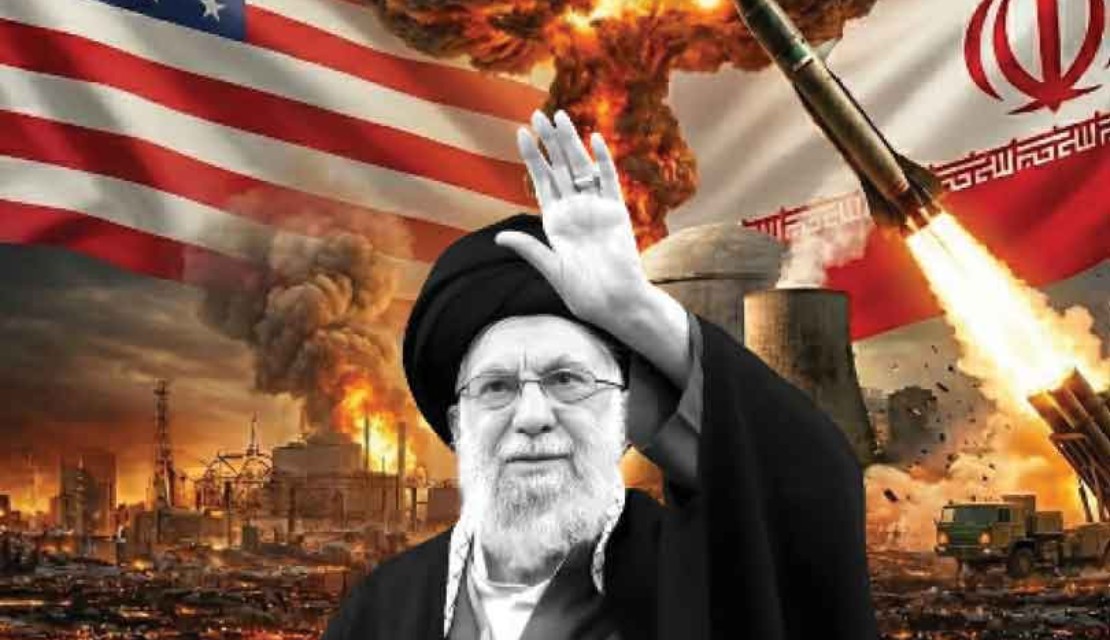
The signing of the diplomatic framework between Washington and Tehran marks the definitive expiration of the post-Cold War security architecture in Southwest Asia. For nearly five decades, the foundational premise of American grand strategy in the Middle East was the absolute containment, isolation, and ultimate transformation of the Islamic Republic of Iran. Yet, the memorandum of understanding finalized on June 14 represents something far more profound than a temporary cessation of hostilities or a tactical retreat. It stands as a formal, if reluctant, recognition by the United States that the geopolitical realities of the region have fundamentally shifted. The era of undisputed Western hegemony, which began in the wake of the 1979 Islamic Revolution and was cemented during the Gulf War, has reached its natural limits. Washington is no longer the sole arbiter of political and military outcomes in the Middle East.
THE GEOPOLITICAL SHIFT
1. 1979–2025: Era of Containment
[Sanctions]->[Isolation]->[Sabotage]->[Asymmetric Resistance]
2. 2025–2026: The Kinetic Catalyst
[12-Day War]->[107-Day War]->[Strait of Hormuz Chokehold]
3. June 2026: The New Baseline
[Geneva MoU]->[Sanction Relief]->[Multipolar Regional Security]
To understand the magnitude of this shift, one must examine the absolute failure of the multi-tiered containment strategy pursued by successive American administrations. For forty-seven years, Washington deployed a comprehensive toolkit of statecraft designed to cripple the Iranian state. This matrix included the most punitive economic sanctions ever levied against a sovereign nation, systematic diplomatic isolation, covert sabotage of industrial facilities, advanced hybrid warfare, and targeted assassinations of military and scientific leaders. These measures were reinforced by the perpetual, explicit threat of devastating military intervention. The objective was unyielding: force Tehran to dismantle its independent foreign policy, sever its regional alliances, and abandon its domestic defensive capabilities.
Instead of collapsing under this multi-generational pressure, the Iranian state developed an extraordinary systemic resilience. Decades of economic blockades forced the country to build a highly diversified, self-reliant industrial and technological foundation. Rather than suffocating Iran’s military ambitions, Western pressure accelerated the development of the most sophisticated and extensive ballistic and cruise missile arsenal in the region. Tehran did not retreat from its regional posture; instead, it solidified an asymmetric security architecture that stretches from the Levant to the Arabian Sea. The current text of the memorandum of understanding is not a product of sudden diplomatic goodwill, but rather a direct reflection of this hardened material reality.
The Kinetic Catalyst: From a 12-Day Salvo to a 107-Day War
The immediate path to Geneva was forged through two distinct kinetic conflicts that shattered long-held assumptions in Washington and Tel Aviv. The first was the brief, highly concentrated twelve-day war of last year, initiated under the premise that a surgical strike could decisively degrade Iran’s nuclear infrastructure and conventional military capability. Following the conclusion of those initial hostiles, the White House boldly declared that Tehran’s strategic deterrence had been effectively neutralized. This assessment, however, was quickly contradicted by intelligence realities on the ground. A highly sensitive report from the Mossad cast profound doubt on these triumphalist claims, revealing that Iran's core infrastructure remained largely intact and structurally resilient.
Rather than absorbing the lessons of that initial failure, Israeli Prime Minister Benjamin Netanyahu utilized the intelligence discrepancies to draw the Trump administration into a far more expansive and hazardous entanglement. The resulting hundred-and-seven-day war of this year became a crucible for both sides. For Tehran, this conflict was framed not as a limited border dispute or a localized proxy skirmish, but as an existential struggle for national survival. This psychological mobilization resonated deeply across the Iranian domestic spectrum, unifying a population that historical adversaries had long assumed would fracture under sustained external bombardment. Western and Israeli war planners had calculated that a conflict of this duration and intensity would trigger the domestic collapse of the Islamic Republic, potentially fracturing the nation into separate ethnic or geographic enclaves.
The reality on the battlefield completely inverted these expectations. Iran did not limit its operations to passive defense or localized resistance. Instead, it executed a coordinated, multi-theater counter-offensive that exposed the structural vulnerabilities of the American and Israeli security architecture in the Gulf. Iranian forces launched precision strikes against US military installations and logistics hubs throughout the region, while successfully pinning Israeli ground forces down in the complex theater of southern Lebanon and the Beirut periphery. Simultaneously, Tehran demonstrated its capability to saturate advanced air defense networks, launching multiple strikes against military and strategic sites within the United Arab Emirates, where Western-integrated systems and the Iron Dome framework were systematically targeted.
Throughout this escalatory spiral, Iranian diplomacy operated in perfect tandem with its military maneuvers. Tehran delivered a dual-track message to the neighboring Arab monarchies: while Western military bases on their soil remained legitimate targets under conditions of total war, Iran maintained a foundational commitment to long-term regional coexistence if these states refused to facilitate American or Israeli aggression. This military and diplomatic posture culminated in a joint operational maneuver with the Sultanate of Oman, establishing a de facto maritime condominium over the Strait of Hormuz. This move effectively placed the world’s most critical energy transit corridor under the direct monitoring and control of Tehran, an operational masterstroke that fundamentally altered the economic calculus of the war for the international community.
The Global Chokepoint and the Failure of Isolation
The economic ramifications of the maritime closure quickly transformed a regional war into a global crisis. The prolonged interruption of shipping through the Strait of Hormuz triggered a continuous, volatile spike in global energy markets, severely impacting consumer economies within the United States and Western Europe. Washington’s strategy of global isolation collapsed because it failed to account for the structural interdependence of the modern Eurasian economy. Crucially, the Western consensus failed to detach the Russian Federation and, most importantly, the People's Republic of China from their strategic alignment with Tehran.
MARITIME & LOGISTICAL CORRIDORS
[Strait of Hormuz] → Controlled by Iran & Oman
• 60% of China's indirect energy flow
• Global energy price spike
[Eastern Frontier] → Opened by Pakistan
• 3 Strategic Seaports
• 5 Terrestrial Transit Routes
Beijing’s economic and industrial architecture remains profoundly reliant on Iranian energy networks, drawing approximately three-fifths of its indirect oil and gas requirements from Persian Gulf corridors. This structural dependency meant that China could not permit the destruction or permanent blockade of its primary energy partner, prompting Beijing to provide critical financial and diplomatic insulation to Tehran throughout the hundred-and-seven-day conflict.
Simultaneously, the geopolitical landscape of South Asia shifted in ways that defied Washington's diplomatic expectations. Pakistan, a traditionally Western-aligned state with a Sunni majority, refused to participate in the isolation campaign. Instead, Islamabad maintained a strict, sophisticated neutrality that gradually evolved into vital logistical support for Tehran. Along Iran’s eastern frontier, Pakistan opened three strategic seaports and cleared five major terrestrial communication and transit routes. This move effectively neutralized the economic blockade and provided Iran with a robust logistical rear guard.
Faced with an unsustainable military expenditures exceeding twenty-five billion dollars, soaring domestic inflation, and a collapsing regional alliance network, the United States was forced to seek a diplomatic off-ramp. Recognizing the obsolescence of its unilateral leverage, Washington accepted Pakistan as the primary mediator. Islamabad’s skillful diplomacy, which echoed the historic neutrality of states like Bangladesh during the protracted Iran-Iraq War of the 1980s, enabled it to secure the trust of both Washington and Tehran, paving the way for the breakthrough in Geneva.
Deconstructing the 14-Point Geneva Framework
The memorandum of understanding signed on June 14-coincidentally falling on President Donald Trump’s birthday-establishes a comprehensive fourteen-point framework designed to halt the kinetic conflict and immediately restore commercial navigation through the Strait of Hormuz. While maritime traffic has resumed and stalled commercial vessels are moving through the waterway, the true significance of the document lies in its structural parameters. The agreement outlines a sixty-day window of detailed negotiations in Geneva, commencing June 19, aimed at translating the initial memorandum into a permanent, legally binding peace treaty.
The most instructive element of the Geneva framework is not what is contained within the text, but what has been systematically excluded.
For decades, the standard policy of both Washington and Tel Aviv dictated that any diplomatic engagement with Tehran must be strictly conditional upon the total dismantling of Iran’s ballistic missile program and the verifiable termination of its relationships with regional resistance movements. The complete omission of these two pillars from the Geneva memorandum represents a profound concession to reality. It is a tacit admission by Western powers that Iran's regional influence and asymmetric deterrent capabilities are permanent fixtures of the Middle Eastern landscape that cannot be unwound by military force or economic coercion.
Despite this breakthrough, the upcoming sixty-day negotiating window faces severe structural friction points that could disrupt the peace process. The first and most complex challenge centers on the precise calibration of Iran’s nuclear program. While Washington seeks to restrict Tehran’s uranium enrichment to a nominal six percent threshold, Iranian negotiators are demanding the internationally recognized right to maintain enrichment at twenty percent, viewing it as a non-negotiable prerequisite for industrial and medical independence, and as a vital hedge for national security. Furthermore, Tehran has established a firm red line against the extra-territorial transfer of its domestic uranium stockpiles to any third-party nation, eliminating a mechanism that was central to previous nuclear agreements.
The second core dispute involves the future of the American military presence in the Persian Gulf. Iran’s grand strategy aims for the systematic, gradual withdrawal of all foreign military bases from the Arab littoral states. Tehran has continuously messaged its Gulf neighbors that the United States has proven to be an unreliable security guarantor, urging a shift toward an indigenous, collaborative regional security architecture. Washington, conversely, is fighting to retain a symbolic military footprint and preserve its legacy installations, a position that Tehran views as incompatible with a sustainable regional peace.
Third, the governance and operational control of the Strait of Hormuz remains unresolved. The memorandum has temporarily restored navigation, but the long-term legal regime of the waterway is highly contested. Iran and Oman are pushing for a localized, dual-sovereignty framework that grants them permanent regulatory oversight over all naval traffic. This is directly opposed by the United States and its European allies, who demand a return to an unrestricted internationalized transit regime.
Compounding these issues are intense negotiations over the mechanism and timeline for unfreezing over one hundred billion dollars in Iranian sovereign assets currently blocked in international financial institutions, alongside the highly volatile issue of enforcing a total Israeli military withdrawal from southern Lebanon to restore Lebanese territorial integrity.
Domestic Pressures and the Specter of "Greater Israel"
The diplomatic maneuvers in Geneva are deeply entangled with the domestic political timelines of the primary actors. In the United States, the upcoming midterm elections in November have created an urgent domestic imperative for the Trump administration.
The hundred-and-seven-day war had become deeply unpopular across the American electorate, viewed as an expensive, unnecessary entanglement driven by foreign influence rather than core national interests. Faced with severe electoral vulnerability, the White House is highly motivated to spin the June 14 memorandum as a decisive diplomatic triumph. Yet, across the global analytical community, the agreement is widely understood as a major strategic retreat for Washington, marking the failure of the maximum pressure paradigm.
DOMESTIC ELECTION TIMELINES & STRATEGIC PIVOTS
In Israel, the political calculations are even more volatile. Prime Minister Benjamin Netanyahu faces general elections in October, with current projections indicating a severe defeat for his right-wing coalition. Having failed to achieve any of the strategic objectives set at the beginning of the war-most notably the destruction of Iran’s deterrent capabilities and the decoupling of the Axis of Resistance-Netanyahu has reacted to the US-Iran negotiations with open hostility. The public break between the Israeli Prime Minister and the US President regarding the security arrangements in Lebanon illustrates a growing divergence in their strategic priorities.
Isolating itself from the Washington-Tehran channel, the Israeli leadership may attempt to preserve its domestic political survival by pivoting toward an aggressive, expansionist territorial strategy. This scenario could manifest as an attempt to formally annex parts of southern Lebanon, the West Bank, and portions of Syrian territory under the ideological banner of "Greater Israel." Far from consolidating security, such a desperate move would guarantee new, protracted conflicts, ensuring that the Levant remains a volatile flashpoint even if the US-Iran bilateral conflict is resolved in Geneva.
| [UNITED STATES - NOV] | [ISRAEL - OCT] |
| Midterm Election Vulnerability | Netanyahu Coalition Faces Collapse |
| War Deeply Unpopular | Failure to Achieve Kinetic Goals |
| Need to Spin MoU as Success | Need to Spin MoU as Success |
The New Geopolitical Architecture of Eurasia
Ultimately, the failure of the Abraham Accords and the parallel rise of the Geneva framework signal a profound transformation in the balance of power across Eurasia. Iran's strategic patience, combined with its sophisticated integration of asymmetric warfare and independent industrial development, has secured a clear strategic victory. By demonstrating its capacity to sustain a total war, protect its core infrastructure, project power into critical maritime corridors, and maintain its regional alliances, Tehran has emerged as an uncontainable regional hegemon.
THE NEW EURASIAN BALANCE
[Western Asia] → Iranian Hegemonic Consolidation
[Central & South Asia] → Enhanced Logistical Integration
(Pakistan-Iran Corridor Hubs)
[Global Energy Markets] → Decoupling from Unilateral Western
The relaxation or systemic dismantling of the international sanctions regime will accelerate this integration, transforming Iran into a central hub for trans-Eurasian trade, energy transport, and security collaboration. The geopolitical ripple effects are already reshaping South and Central Asia, evidenced by Pakistan’s strategic realignment and the opening of permanent logistical corridors to the West Asian theater. The resilience of the Iranian population during this existential crisis has demonstrated that state legitimacy built on deep historical identity and institutional adaptation cannot be easily dissolved by external shocks.
For developing states and middle powers across the Global South, particularly within South Asia, this historic shift demands a fundamental recalculation of their foreign policy frameworks. The historical reality of a unipolar Middle East managed by Washington is rapidly drawing to a close. As the negotiations begin in Geneva, the international community is witnessing the birth of a multipolar regional order. In this new architecture, security, maritime governance, and economic integration will be negotiated directly among regional powers, entirely free from the legacy of Western unilateral dictation.