

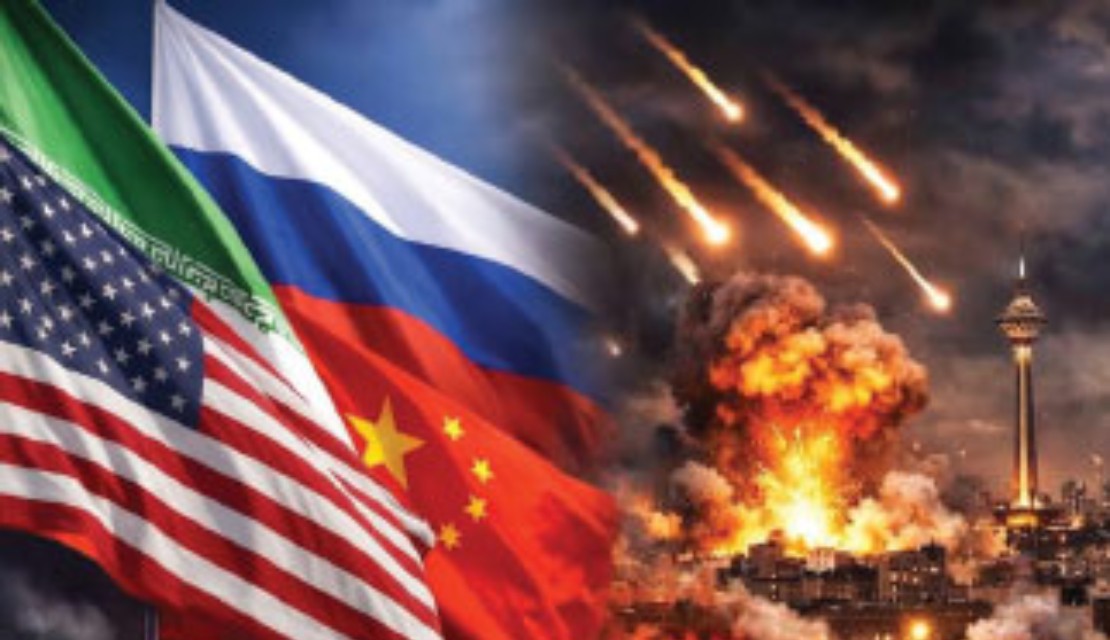
Great global empires rarely recognize the exact, defining moment their absolute dominance begins to fracture. For the United States, that moment of unrecognized unraveling arrived in the tragic autumn of 2001. The devastating strikes on American soil did more than shatter the illusion of homeland invulnerability; they set in motion a profound, irreversible metamorphosis of power dynamics across the Middle East. Washington unleashed what it envisioned as a righteous crusade to eradicate terror. Yet, this campaign quickly morphed into a grand, hubristic experiment in reshaping entire nations. The region was transformed into a massive laboratory where a new, aggressive brand of American supremacy was tested. Planners in Washington believed that their unparalleled military machine could effortlessly clear the path for a new, democratic regional order. They were fundamentally wrong. Instead of cementing American primacy, this aggressive approach triggered a chain reaction of instability that ultimately fatally eroded the fragile unipolar dominance the United States sought to protect and permanently preserve.
The Illusion of Force
The fatal flaw in the American strategy was a profound misunderstanding of how political power actually functions. Hard military power is exceptionally good at dismantling things and overthrowing established governments. However, overwhelming force is woefully inadequate when it comes to the painstaking work of building legitimate, enduring political systems. The architects of the disastrous interventions failed to grasp this historical truth. By prioritizing coercion and regime change, they systematically dismantled the established security architectures of the Middle East. The wars fought under the banner of creating a safer world ironically shattered the regional equilibrium. This widespread destruction did not pave the way for liberal democracies to bloom in the desert. Instead, it birthed a dark, chaotic vacuum. This void was rapidly filled by a toxic mix of sectarian warlords, radical insurgencies, and ambitious neighboring powers eager to expand their own spheres of influence. The American attempt to impose order through the barrel of a gun directly catalyzed a new era of unprecedented regional political fragmentation.
The Catalyst of Chaos
The invasion of Iraq in 2003 stands as the crucible of this geopolitical tragedy and strategic miscalculation. It was the exact moment the United States crossed the Rubicon, shifting from a defensive posture against terrorism to an aggressive doctrine of preventive war. By moving forward without the blessing of the United Nations Security Council, Washington brazenly discarded the established rules of the international diplomatic game forever. It essentially rewrote the foundational concepts of state sovereignty, declaring that nations could be preemptively destroyed simply because they might pose a hypothetical threat in some unforeseeable future. The immediate military victory was swift, showcasing the precision of the American armed combat forces on a global stage. But the ultimate long term geopolitical fallout was absolutely disastrous for regional stability. Dictator Saddam Hussein was a brutal tyrant, but he also served as a vital, immovable wall containing Iranian ambitions. By abruptly removing this crucial counterweight, the United States unknowingly handed Tehran the greatest strategic gift in recorded political history.
The Unintended Beneficiary
The dismantling of the Iraqi state apparatus completely erased the existing balance of power overnight. The subsequent governmental policies and the dissolution of the Iraqi military removed the only institutions capable of holding the fractured nation safely together. Into this gaping void rushed a whirlwind of sectarian violence and brutal warfare. Tehran, watching from across the border, seized the moment with strategic patience and cunning calculation. Washington spent trillions of dollars and thousands of American lives only to eliminate the two primary existential threats to the Iranian regime Saddam Hussein to the west and the Taliban in Afghanistan to the east. By clearing out these hostile neighbors, the United States inadvertently provided Iran with massive new strategic breathing room to maneuver. Tehran rapidly built an intricate, formidable network of proxy militias, political allies, and economic dependencies across the Arab region. Iran essentially won the geopolitical lottery, expanding its reach from Baghdad to Beirut, all while the United States found itself bogged down in an unwinnable violent quagmire.
The Birth of Monsters
This chaotic environment laid the necessary groundwork for a new breed of ruthless monsters to violently emerge. The strategists in Washington harbored a fantasy that removing despotic regimes would naturally result in the blossoming of democratic institutions. They fundamentally ignored the reality that political vacuums in deeply divided societies rarely produce harmony. Without a strong central authority, ancient grievances were ruthlessly weaponized by leaders. Sectarian identity became the ultimate currency of survival. It was within this shattered landscape that the radical Islamic State organization was officially born. It was not some isolated anomaly; it was the direct, horrific mutation of a broken political order in Iraq and neighboring Syria. It represented the ultimate tragic blowback of the flawed preventive war doctrine. A massive campaign initially designed to absolutely eliminate any future security threats to the domestic homeland ironically birthed a transnational terrorist enterprise far more radical, sophisticated, and territorially hungry than previous organizations ever managed to be at their absolute historical peak of global power.

The Price of Hubris
The toll of this grand geopolitical experiment is absolutely staggering, measured not just in strategic setbacks, but in oceans of human suffering. The human cost defies basic comprehension. Millions of innocent civilians perished in the crossfire of these regional conflicts. Tens of millions more were violently uprooted from their homes, forced into refugee camps across borders. The economic hemorrhage was equally profound, with the price tag for these forever wars running into the trillions of American taxpayer dollars. But the true cost extends far beyond the grim statistics of the dead and the national debt. These interventions fundamentally and slowly eroded the fragile civic institutions across the broader Middle East. They severely deepened societal fault lines, radicalized a lost generation of disenfranchised youth, and birthed a very deep cultural resentment against foreign military interference. The political grievances generated by the shock and awe bombing campaigns will continue to fuel violent regional instability, insurgencies, and anti Western sentiment for several decades to come in the future.
To truly grasp the magnitude of this shift, one must look at the data reflecting the changing power dynamics before and after the critical year of 2003. Consider the shifting balance of regional influence. The metrics of diplomatic engagement, military presence, and economic leverage demonstrate a stark reality. American dominance has steadily eroded, making way for a much more complex, fragmented distribution of power.
The Pivot That Failed
By the time the second decade following the September attacks rolled around, a Washington finally began to acknowledge the shifting winds. The strategic environment had mutated beyond recognition. The Obama administration astutely identified the need to pivot. They recognized that the future of global power would be decided in the contested waters of the Asian and Pacific. They desperately attempted to orchestrate a grand pivot to Asia, hoping to leave the military entanglements of the Middle East behind. Yet, the region possessed a inescapable gravity. It repeatedly pulled American resources, attention, and military assets back into its orbit. The tumultuous Arab Spring uprisings, the catastrophic collapse of the Libyan state, and the horrific civil war in Syria decisively proved that Washington could no longer remotely manage the region. The American empire found itself permanently trapped in a geopolitical web of its own disastrous historical making.
The ultimate symbol of this undeniable transition occurred in the late summer of 2021. The frantic, chaotic withdrawal of American forces from the airport in Kabul was a watershed historical moment. It powerfully broadcast the absolute limits of using overwhelming military force to artificially engineer a lasting political reality. The previous strategic paradigm had undeniably completely failed.
The New Multipolar Influence Distribution

The Dawn of Multipolarity
The geopolitical balance has shifted forever. While the American military was bogged down fighting shadowy insurgencies, other global competitors quietly slipped through the back door unnoticed. Russia dramatically returned to the global military stage, using the Syrian conflict to firmly reestablish both its military and diplomatic footprint in the Mediterranean Sea. Concurrently, rising China adopted a highly effective economic playbook. Instead of bombs, it brought lucrative trade deals, development projects, and vital energy partnerships. The United States has certainly not vanished entirely. It retains unparalleled financial leverage and formidable military bases across the Gulf. However, its fundamental role has been permanently downgraded from hegemon to participant. In its place, a complex, volatile system of fragmented multipolarity has firmly taken root across the land. Regional Arab powers no longer seek permission directly from Washington; they aggressively pursue their own autonomous, often conflicting, strategic national interests today.
The Final Reckoning
This profound transformation exposes the deepest paradox of the modern era. The United States stormed into the Middle East at the apex of its historical power, brimming with the belief that military supremacy could hammer out a safer, more predictable world. Instead, the relentless cycle of interventions steadily eroded that same order. The ultimate lesson is not that hard power is entirely useless, but rather that bullets and bombs cannot conjure political legitimacy or lasting institutional stability. A quarter of a century later, the Middle East is actively living within the chaotic, multipolar wreckage created by the geopolitical response to initial terrorism. The old order is now permanently broken. A contested new reality has taken its place, dictating the future.