

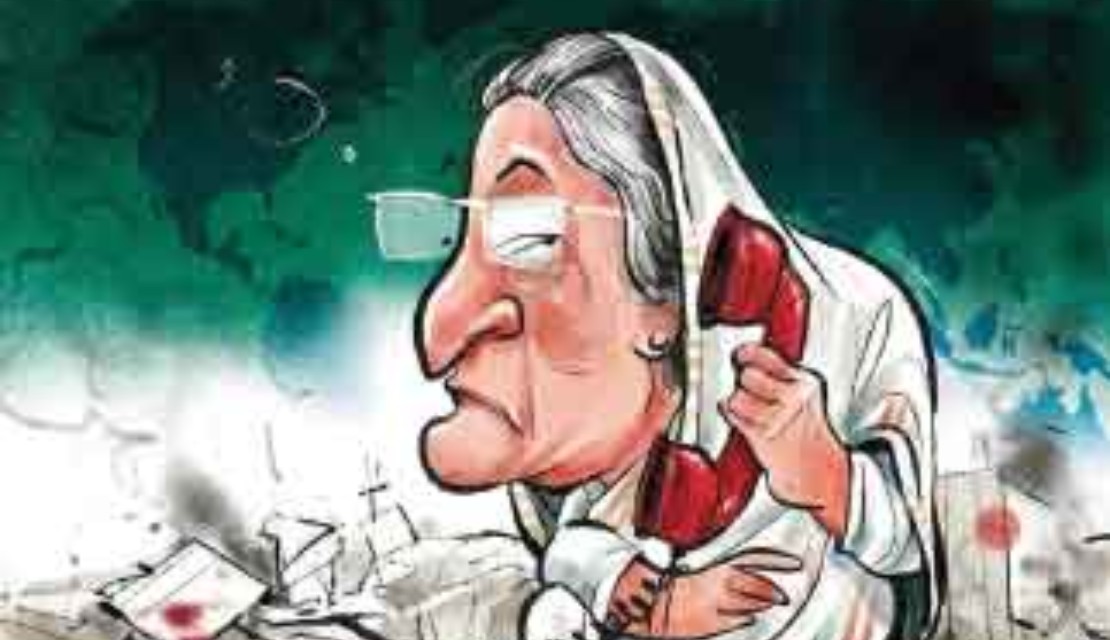
The sudden resurrection of a deposed autocrat’s voice in the discourse of a traumatized nation is rarely a harbinger of genuine democratic revival; rather, it is almost exclusively a calculated exercise in psychological warfare. When Sheikh Hasina, the former autocrat of Bangladesh who unceremoniously fled to India amid the seismic, blood-soaked mass uprising of August 2024, recently informed Reuters of her intention to return to her homeland by December, the proclamation sent immediate shockwaves through Dhaka’s volatile political theater. Hasina, who once sat at the undisputed apex of the now-banned Awami League, outlined a scenario in which she and senior party stalwarts would voluntarily cross the border to surrender to the domestic judicial apparatus. However, beneath the superficial bravado of this deadline lies a complex tapestry of strategic denial, geopolitical maneuvering, and sheer institutional impossibility. A rigorous forensic analysis reveals that this anticipated homecoming is not a logistical reality, but a meticulously engineered psychological operation. It is the phantom limb of a collapsed authoritarian regime twitching in the aftermath of its own amputation. The message is designed not to chart a physical flight path, but to manipulate the emotional topography of a fragmented party base while simultaneously serving as a geopolitical pressure valve for New Delhi. To decode Hasina’s deadline, one must examine the underlying mechanics of post-dictatorial survival, the unforgiving strictures of international aviation law, and the irreconcilable differences between historical martyrdom and contemporary judicial accountability.
The Architecture of Denial: Psychological Survival in Exile
The phenomenon of deposed leaders issuing dramatic proclamations from exile is a well-documented psychological pattern that routinely follows the abrupt disintegration of deeply entrenched regimes. If one scrutinizes the Bangladeshi dynamic through the theoretical lens of political scientist Samuel P. Huntington, a familiar architecture of denial immediately emerges. When a formidable ruling class is violently excised from the state apparatus, its immediate reaction is rarely acceptance. Instead, the exiled elite plunges into a state of strategic panic and cognitive dissonance, desperately attempting to remain relevant by framing their catastrophic downfall as a mere temporary setback or a shadowy conspiracy.
The primary catalyst behind Hasina’s unusually long, five-to-six-month timeline for her supposed return is fundamentally rooted in organizational self-defense. Since August 5, 2024, the traditional, monolithic grassroots infrastructure of the Awami League has been systemically annihilated. The final nail in the organizational coffin was hammered on May 12, 2025, when the interim government invoked the formidable powers of the Anti-Terrorism (Amendment) Ordinance. This sweeping legislative stroke was explicitly designed to guarantee untethered justice for the horrific crimes against humanity orchestrated during the uprising. Consequently, the Election Commission suspended the party’s registration, a move cemented by the National Parliament’s passage of the Anti-Terrorism (Amendment) Bill 2026, which categorically outlawed all activities of the party and its myriad syndicates.
Today, the Awami League is a ghost ship; its upper echelons and mid-tier enforcers are either languishing in penitentiaries, burrowed in deep hiding, or scattered in foreign exile. A pathetic attempt to artificially resuscitate street-level morale during the party’s founding anniversary on June 23rd evaporated without a trace. Consequently, rank-and-file loyalists remain marooned in an abyss of extreme existential dread and paralyzing uncertainty.
Weaponizing Social Capital
In this desolate landscape, Hasina’s announcement functions as a highly calibrated psychological tourniquet. Drawing upon French sociologist Pierre Bourdieu’s sophisticated concept of "social capital," the exiled leader is aggressively weaponizing her residual personal charisma to bridge the catastrophic leadership vacuum. Had she promised an immediate return, perhaps within a month and inevitably failed to materialize, the resulting disillusionment would have irreparably shattered the remnants of her base. By projecting a prolonged, multi-month horizon, she manufactures a sustained, artificial beacon of hope, keeping the party’s subterranean network psychologically mobilized.
The ultimate objective is to consolidate the estimated 20 to 30 percent demographic of die-hard loyalists who still theoretically align with her ideology, reinforcing the autocratic dogma that the party’s pulse remains inextricably linked to her existence. Yet, one must critically question the efficacy of this psychological gambit against the broader populace. Can a rhetorical strategy penetrate the collective psyche of a nation still actively healing from unprecedented, state-sponsored brutality? The empirical reality dictates otherwise. The overwhelming majority of the population, alongside the uncompromising transitional political forces currently steering the state, harbor a visceral, unyielding hostility toward any prospect of political rehabilitation for the architects of the July-August massacres. The blood on the streets has dried, but the memory of the violence has calcified into an impenetrable political barrier.
The Geopolitical Chessboard: New Delhi’s Bargaining Chip
Beyond the domestic psychological theater, the secondary dimension of Hasina’s declaration is intrinsically tied to a highly combustible geopolitical environment. Following the monumental regime change of 2024, the International Crimes Tribunal (ICT) initiated severe legal proceedings against Hasina, leveling charges that carry the weight of capital punishment for systemic crimes against humanity. The chilling specifics of these atrocities, which resulted in the slaughter of approximately 1,400 citizens, were meticulously chronicled in a devastating dossier by the United Nations High Commission for Human Rights.
This irrefutable documentation has profoundly alienated the international community. Western democratic capitals, fundamentally averse to expending political capital on deposed autocrats with blood on their hands, have universally refused to offer Hasina diplomatic sanctuary. Consequently, she has been reduced to a highly volatile diplomatic bargaining chip for Indian policymakers. An astute analysis of contemporary South Asian geopolitics reveals that New Delhi is navigating a period of acute strategic anxiety. The rapidly expanding economic symbiosis between Beijing and the new administration in Dhaka characterized by unprecedented investments and strategic port access has profoundly unsettled India’s regional hegemony.
By granting Hasina continuous sanctuary and purposefully allowing the specter of her return to hover over bilateral relations, New Delhi executes a masterclass in psychological statecraft. The long December deadline serves as a convenient, deniable instrument for India to exert continuous, low-grade diplomatic extortion upon the Bangladeshi government, forcing Dhaka to remain in a perpetual state of legal paranoia.
Comparative Analysis of Institutional Trust (2023 vs 2026)
The collapse of the Awami League fundamentally reset the baseline for institutional integrity, illustrating why a return to the old order is structurally impossible.
The Impenetrable Legal Fortress
Descending from geopolitical theory to the grounded reality of jurisprudence, one encounters the impenetrable legal fortress rendering Hasina’s return practically impossible. Does a deposed leader, saddled with international warrants, possess the sovereign agency to simply book a flight home? This inquiry exposes a fascinating institutional friction between the ideals of international human rights and the rigid mechanics of domestic law. While Article 12(4) of the International Covenant conceptually dictates that no state may arbitrarily deny a citizen the right to enter their country, global precedence is replete with instances where states legitimately suspend such entry rights under extraordinary national security imperatives.
However, the most insurmountable barrier is purely bureaucratic. Following her hasty evacuation, the interim authorities rightfully nullified her diplomatic passport under the provisions of the Bangladesh Passport Ordinance of 1973. Presently, she exists in a state of documentary limbo, entirely devoid of valid international travel credentials. The uncompromising protocols enforced by global commercial carriers dictate that issuing a boarding pass to an undocumented individual is a flagrant impossibility. Historical precedent reinforces this; during the 2007 caretaker era, British Airways notoriously denied Hasina boarding rights at London’s Heathrow after she was designated a security liability.
Today, even if she petitioned the Bangladesh High Commission in New Delhi for a temporary travel pass, issuance is strictly contingent upon the authorization of Dhaka’s Ministries of Home and Foreign Affairs–an authorization that will never materialize. Furthermore, it is a diplomatic absurdity to suggest the Indian state would undertake the reckless, illegal maneuver of physically forcing her across the sovereign border in violation of established international extradition frameworks. The logistical avenues for her return are categorically severed.
Historical Fallacies: Why 2026 is Not 1981 or 2007
In a desperate bid to weave a narrative of inevitable triumph, apologists for the fallen regime frequently superimpose Hasina’s current predicament onto her historic returns in 1981 and 2007. This constitutes a severe and intellectually dishonest historical simplification. It is an axiom of political science that every historical inflection point possesses a unique socio-psychological fingerprint.
In the grim aftermath of the brutal August 15, 1975 assassinations, a young Hasina returned as a deeply tragic, humanitarian figure, enveloped in profound moral support. Similarly, her return in 2007 was characterized by her role as a defiant opposition leader combatting an unconstitutional, military-backed "minus-two" reform agenda, drawing strength from genuine democratic aspirations.
The tectonic shift of 2024, however, occupies an entirely divergent moral universe. The August uprising was not a sterile military coup, nor a conventional skirmish between rival factions. It was a spectacular, blood-drenched eruption of cumulative, generational fury against fifteen years of systematic forced disappearances, state-sanctioned assassinations, astronomical financial hemorrhaging, and the sociopathic slaughter of unarmed students by entrenched party militias. In her previous historical iterations, Hasina was cloaked in moral legitimacy. Today, she is a fugitive evading a judicial death sentence for monstrous crimes against humanity. Past electoral popularity, especially when obtained through coercion, is a bankrupt currency when faced with the unforgiving ledger of legal and moral accountability.
The Administrative Nightmare of a Hypothetical Return
Let us indulge the ultimate hypothetical: what if, through some unprecedented alignment of diplomatic loopholes, Sheikh Hasina does step onto the tarmac of Hazrat Shahjalal International Airport? The resulting scenario would subject the nation’s fragile socio-political equilibrium to an apocalyptic stress test. The trauma and incandescent rage generated by the July-August massacres remain visceral within the collective heartbeat of the citizenry, particularly among the families whose loved ones were martyred.
The physical incarceration of a deposed tyrant inherently generates a volatile vortex of power dynamics, threatening to plunge society into renewed instability. The state would bear the crushing administrative and security burden of keeping the architect of the nation's trauma alive within a hostile environment. A Machiavellian faction within the outlawed Awami League secretly covets this outcome; they calculate that the highly publicized spectacle of their leader's imprisonment might eventually overwhelm the state's judicial bandwidth and manufacture a veneer of victimhood to peddle to naive international observers.
Conversely, the vast majority of the public and the reformist coalition view any form of legal leniency, or even the dignity of an orchestrated surrender, as an abhorrent political farce. To negotiate terms of imprisonment with a leader who institutionalized a culture of absolute impunity for a decade and a half is viewed not as justice, but as a dangerous capitulation to a radically bankrupt, authoritarian psyche.
The Illusion of Power
Ultimately, the proclamation of a December return is not a declaration of intent; it is a masterclass in political illusion. Drawing upon British philosopher Steven Lukes’ theory on the "three dimensions of power," one recognizes that supreme authority is not the capacity to dictate actions on the street, but the insidious ability to control the cognitive agenda and shape the boundaries of public discourse. Bereft of the physical state machinery, Hasina is exercising the only dimension of power left to her: the deployment of strategic propaganda to commandeer headlines.
By holding a mirror of imaginary hope up to her decimated loyalists, and casting a shadow of diplomatic leverage over Dhaka on behalf of New Delhi, she successfully forces her enemies to acknowledge her spectral presence. Nevertheless, the cold, unforgiving architecture of reality remains unmoved. The looming execution orders of the International Crimes Tribunal, the intractable absence of sovereign travel documentation, the icy repulsion of the global democratic community, and the insurmountable fury of the Bangladeshi populace have permanently blockaded all avenues of return.
The December deadline is a hollow wager. History is an irreversible current, and the conscious political factions of Bangladesh will watch the arrival of winter not with anxiety or trepidation, but with the quiet, unyielding certainty that a fallen, bloodstained dynasty’s final, desperate gamble has already been irrevocably lost to the unforgiving reality of time.