

The true metric of a nascent democracy is not found in the eloquent speeches delivered during inaugurations, nor in the celebratory parades that follow a revolution. Instead, it is measured in the mundane, uncomfortable interactions between the state and its most frustrated citizens. How a government reacts to unfiltered public anger defines its democratic integrity perfectly.
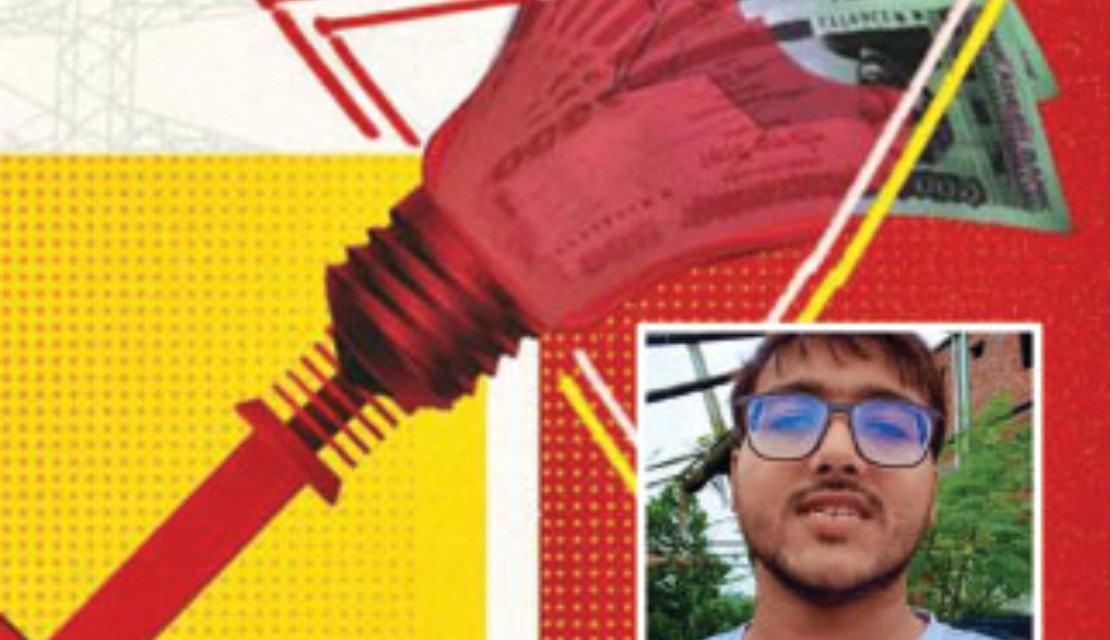
In Bangladesh, a nation still catching its breath after the dramatic mass uprising, this critical test has arrived unexpectedly early. The catalyst was not a coordinated political rebellion, but a ubiquitous mundane grievance regarding an inflated electricity bill. Sifat Abdullah, a young student in Dhaka, did what millions of digital citizens do when faced with bureaucratic extortion. He took out his smartphone and recorded a video. Over the course of eighty four seconds, he unleashed a torrent of visceral frustration regarding the inexplicable surge in his household power costs. His language was neither poetic nor polite, utilizing heavy profanity throughout.
He directed his ire squarely at the ruling political party, its grassroots leaders, government officials, and the newly minted Prime Minister. It was a crude outburst, undoubtedly offensive to institutional sensibilities. But it was also a desperate cry for accountability in a system that often feels completely deaf. To dismiss this video as an act of public indecency is to willfully miss the forest for the trees entirely. Profanity is rarely the weapon of the powerful; it is the blunt instrument of the powerless. The fundamental challenge for any modern state is separating the tone from the underlying grievance.
A mature administration recognizes that while the vocabulary of the street may be unpalatable, the underlying anxiety is entirely legitimate. Almost every ordinary consumer in Bangladesh is currently wrestling with similar economic pressures daily. Instead of asking why a young man resorted to such bitter language, the state apparatus should have been asking why the electricity billing system is producing such anomalous, punishing figures for average households. Instead of initiating an administrative inquiry into the national billing infrastructure, the government chose the path of least resistance and maximum intimidation. Local law enforcement moved swiftly to apprehend the complaining student immediately.
Anatomy of a Public Grievance
A structural breakdown of systemic disconnect

Tellingly, this specific police operation was allegedly facilitated by local grassroots activists of the ruling party, blurring the critical boundary between state security forces and partisan enforcers. What immediately followed was a textbook maneuver borrowed directly from the old authoritarian playbook. Sifat was certainly not simply charged with public nuisance. He was now retroactively entangled in an entirely unrelated, existing antiterrorism case. Initially not even named in the original documents, he was conveniently appended as a suspect during the ongoing investigation phase. This dark administrative sleight of hand transformed a disgruntled consumer into an alleged enemy of the state completely overnight.
Tellingly, this specific police operation was allegedly facilitated by local grassroots activists of the ruling party, blurring the critical boundary between state security forces and partisan enforcers. What immediately followed was a textbook maneuver borrowed directly from the old authoritarian playbook. Sifat was certainly not simply charged with public nuisance. He was now retroactively entangled in an entirely unrelated, existing antiterrorism case. Initially not even named in the original documents, he was conveniently appended as a suspect during the ongoing investigation phase. This dark administrative sleight of hand transformed a disgruntled consumer into an alleged enemy of the state completely overnight.
This weaponization of antiterrorism legislation against social media outbursts is profoundly alarming. Antiterror laws are engineered to neutralize existential threats to national security, dismantle violent syndicates, and prevent catastrophic harm. Employing them to penalize a citizen for using vulgarity on the internet is not just a disproportionate response; it is a gross perversion of the justice system. The constitution explicitly guarantees the freedom of thought, conscience, and speech. While legal scholars correctly note that free speech is not absolute, any restriction must pass the strict tests of necessity and proportionality. Conflating harsh political criticism with terrorism obliterates these legal safeguards.
When the state uses its heaviest artillery to swat a fly, it does not project strength. It broadcasts a deep, institutional insecurity that mirrors the past. The irony of this aggressive crackdown is magnified by the recent historical context. Only months prior, following the monumental collapse of the previous autocratic regime, the current leadership meticulously cultivated an image of a progressive democrat. Prime Minister Tarique Rahman publicly championed freedom of expression, even sharing a satirical cartoon of himself to demonstrate his tolerance for critique. His messages on World Free Press Day painted a picture of a revitalized political landscape for everyone everywhere.
Civic Tension Hotspots
Geospatial Risk Data Analysis

Citizens dared to hope that a genuine paradigm shift had occurred. Yet, this recent incident shatters that carefully constructed illusion entirely. It suggests that the tolerance for free speech is completely conditional, welcomed only when it is elegantly packaged or politically convenient. When the critique becomes visceral and unpolished, the velvet glove is swiftly removed. Furthermore, this episode exposes the enduring toxicity of sycophancy within political structures. When a citizen’s anger is immediately interpreted by party loyalists as a personal attack on their leader, they mobilize the state apparatus to exact vengeance. This creates a highly dangerous echo chamber inherently.
Leaders are insulated by beneficiaries who whisper that everything is perfect, filtering out the harsh realities of inflation, unemployment, and systemic corruption. But truth often resides in the unfiltered, crude complaints of the marginalized. If the government reflexively categorizes every supporter's complaint as a practical issue to be solved, and every detractor's grievance as a treasonous conspiracy, the nation is doomed to repeat its darkest historical cycles. A simple change in leadership personnel is meaningless if the foundational culture of governance remains obsessively punitive. We must critically examine the stark asymmetry of power inherent in this dynamic between the citizens.
State Responses to Dissent
Comparative Analysis of Arrest Trends

| Timeline | Observed Response |
| Previous State | Digital Security Arrests remained high. |
| Current State | Antiterror Arrests escalate rapidly. |
(Conclusion: Punitive legal frameworks constantly dominate practical resolutions).
On one side stands an ordinary citizen, armed with nothing more than a mobile phone, a social media account, and a sense of outrage. On the other side stands the monolithic state, possessing a monopoly on violence, the police force, the judiciary, and the penal system. Because of this overwhelming imbalance, the state bears an exceptional moral responsibility to exercise restraint. A true democracy does not demand that its citizens express their hardships with poetic grace. It demands that the state listen through the noise to identify the root cause of the suffering. Terrorism laws are entirely misplaced here altogether.
Consider the alternative reality, the path not taken by the administration. The government could have leveraged this viral moment to project unprecedented maturity. A simple statement acknowledging the student's frustration, condemning the profanity, but promising an immediate audit of the regional electricity board would have been revolutionary. They could have audited the meter readings, scrutinized the billing cycles, and transparently published the findings. Such a maneuver would have instantaneously defused the tension, publicly humiliating the critics not through force, but through sheer administrative competence. People do not expect infallible rulers. They desperately desire leaders who acknowledge all systemic flaws continuously.
They prioritize solutions over retribution. Laughing off a crude insult requires genuine political courage. Dispatching an armed police unit to arrest a teenager complaining about a utility bill requires absolutely no courage at all. The implications of this precedent extend far beyond a single college student. It establishes a chilling behavioral template for the new era. If expressing severe economic frustration online is met with antiterrorism charges, the natural byproduct is complete silence. Today the trigger is an electricity bill. Tomorrow, it might be skyrocketing commodity prices, a lack of employment opportunities, or journalistic inquiries into systemic corruption inside the government.
If every dissenting whisper is systematically diagnosed as a sophisticated threat to national stability, the new political order will rapidly devolve into a mirror image of the old fascist regime. Rulers must inevitably realize that political authority is transient. The authoritarian legal frameworks and oppressive administrative cultures they endorse today will almost certainly be wielded against them when the political tides inevitably turn once again. Ultimately, history will not judge this new government by the applause it receives during its honeymoon phase. It will judge the administration by its capacity to tolerate the uncomfortable, the abrasive, and the always angry.
Earning the trust of a battered populace requires far more than changing the nameplates on government buildings. It requires a fundamental rewiring of how power perceives its citizens. The transition from opposition to leadership demands an evolution in temperament. A truly secure leadership does not panic over a disgruntled youth's digital rant. Will the state continue to rule through the familiar, exhausted mechanisms of fear, paranoia, and disproportionate intimidation, or will it finally step up to govern with empathy, transparent accountability, and the quiet, unshakable confidence of a truly democratic institution? The citizens, and the global community, are watching closely.