

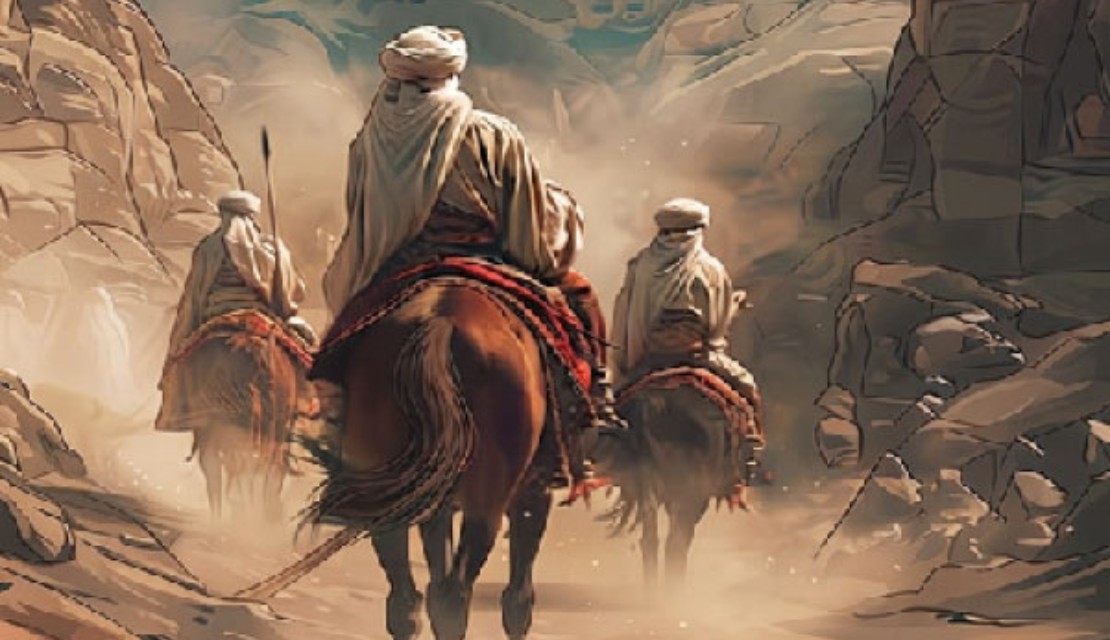
For decades, a pervasive narrative has quietly dominated the geopolitical imagination of various Islamic revivalist movements. It is the belief that the definitive antidote to the widespread socioeconomic, political, and cultural malaise afflicting the Muslim world is the sudden resurrection of an all-embracing Caliphate. The vision is often monolithic and strikingly authoritarian: a centralized, borderless institution populated by Muslims, whose dictates would govern every conceivable corner of a vast empire. In this modern fantasy, the historical Caliphate is retrofitted with 21st-century communications technology and a coercive state apparatus that rivals the most formidable modern superpowers. The prevailing theory suggests that once this supreme political entity is established, it will act as a universal catalyst, automatically curing the deep-seated psychological and material wounds of its subjects.
This perception is not only historically inaccurate but sociologically disastrous. To critique this top-down approach is not to inherently discredit the concept of the Caliphate, nor is it an attempt to malign the sincere intentions of its modern proponents. Rather, it is an urgent plea to shift our analytical gaze. We must widen our field of inquiry far beyond the narrow corridors of political science and statecraft, venturing into a multi-disciplinary diagnosis of Islamic civilization itself.
The fundamental error in the contemporary theorization of the Caliphate is that the entire process is tragically inverted. Revivalists have placed the cart before the horse. A prosperous, secure, and dynamic state cannot act as the primary catalyst for a healthy society; it is, instead, the ultimate byproduct of one. Before any grand political architecture can be erected, there must be a profound healing of the individual and societal condition. The groundwork must be laid through spiritual reform, psychological rehabilitation, and the establishment of a robust material base. Without this foundational bedrock, any hastily constructed polity will inevitably collapse under the weight of its own internal rot.
To understand this civilizational stagnation, one must turn to the profound insights of Malik Bennabi, arguably one of the most brilliant and underappreciated sociologists of the 20th century. Bennabi dedicated his life to diagnosing the sociological paralysis of the Islamic world. He observed that the Ummah had become fundamentally arrested in its developmental trajectory. It had lost the pioneering, innovative spirit that defined its early, golden generations. Because it could no longer generate its own forward momentum, it became highly vulnerable–and ultimately succumbed–to colonization by foreign powers who possessed that very impulse.
Bennabi coined a powerful term for this phenomenon: the “post-al-Muwahhid” person. This archetypal figure represents a civilization in its twilight hours. Stripped of the ability to produce novel inventions or dynamic social frameworks, this demographic falls into a tragic state of mediocrity and decay.
Ignorant of their own rich history and culturally adrift, they desperately latch onto the ideological scraps of the dominant Western civilization. However, rather than adopting the West's most beneficial traits, such as structural efficiency, scientific curiosity, or institutional accountability. The post-al-Muwahhid individual absorbs its most toxic exports: hyper-consumerism, superficial entertainment, and hyper-individualism.
Visualizing the Civilizational Deficit
To better grasp this misalignment of priorities, consider the sociological distribution of focus within contemporary diaspora communities, as diagnosed through Bennabi’s framework.
The Modern Diaspora's Resource Allocation (A Sociological Estimate)
The following pie chart represents the proportional allocation of intellectual and material energy within stagnant communities, prioritizing survival and consumption over civilizational contribution.

At the very core of this chart lies a devastating cultural vacuum. This void was birthed by centuries of stagnation and violently compounded by the domination of Western colonial empires. Yet, the tragedy is that this vacuum is maintained today by a fundamental misunderstanding of the difference between "knowledge" and "culture."
Bennabi brilliantly illustrates this through the archetype of a modern medical student. Imagine a young Muslim student who enters a prestigious Western medical institution alongside a British counterpart. Both students attend the same rigorous lectures, pass the exact same examinations, and eventually earn the identical medical degree. They possess the exact same repository of scientific knowledge. However, the Muslim student often completely neglects the underlying cultural attitude that his British peer inherently embodies, an ingrained ethos geared toward relentless progress, institutional innovation, and societal effectiveness.
While the British student might leverage his degree to research new pathologies or reform public health policies, the Muslim student is dangerously comfortable exactly where he is. His ultimate goal is merely securing the bare minimum required to sustain a luxurious, upper-middle-class lifestyle. He does not seek to toil in the trenches of the unknown to forge solutions that might carry his nation or community forward. He has the knowledge, but he is completely bereft of the culture of progress.
This is the hidden psychological plague afflicting the modern mind: a paralyzing fear of venturing into the unknown. We no longer know our precise place in the global ecosystem. We do not know what we should be contributing, nor to whom we are contributing it. Bereft of our ancestral lands, detached from organic traditions, and stripped of our historical purpose, vast swaths of the population are shuffled across the globe. We function merely as cheap manual labor in one hemisphere, or as a heavily taxed professional middle-class in another. The diaspora has become seamlessly integrated into a global monoculture that worships the weekend and consumer goods, mistaking financial survival for civilizational success.
The remedy Bennabi prescribes for this widespread paralysis is the cultivation of fa’iliya, a proactive, dynamic attitude that vigorously engages with and contributes to the broader societal project. Achieving this requires a radical reimagining of how we interact with faith itself. Islam cannot be treated merely as a static religious badge that miraculously "completes" us simply by virtue of our birthright. When viewed this way, it induces a dangerous moral paralysis, tricking the believer into thinking the work is already done. Instead, faith must be operationalized as a continuous, grueling project of individual improvement and societal expansion.
Unfortunately, in the attempt to find their footing, many Muslims in the West have taken a disastrously wrong turn. "Culture" has suddenly become a dirty word. It is increasingly viewed by younger generations as a regressive, embarrassing hindrance to a "pure," unadulterated version of the religion.
The mass migration to Western metropolises has birthed a profound identity crisis for second and third-generation migrants. The traditional cultures of their parents feel alien, outdated, and geographically distant. Simultaneously, the aggressively secular cultures of their host societies often feel inimical to their core spiritual tenets. The resulting reaction is a desperate desire to strip away all cultural nuance, attempting to synthesize a sterile, monocultural interpretation of faith that can be mass-produced, downloaded, and practiced anywhere from London to Los Angeles.
Ironically, this desperate yearning for a homogenized, cultureless religion perfectly mirrors the most destructive forces of Western modernity. The modern liberal order thrives on effacing distinct cultural differ
| Metric of Integration | Historical Model (e.g., Timbuktu, Aceh) | Modern Western Diaspora Model |
| Legal Frameworks | Highly adaptable; birthed diverse, localized Fiqh (jurisprudence) reflecting regional realities. | Rigid, imported legalism; attempts to apply foreign historical rulings to modern Western contexts. |
| Architecture & Art | Synthesized Islamic geometry with local materials and indigenous aesthetics. | Sterile, mass-produced aesthetics; an imitation of Middle Eastern norms regardless of geography. |
| Social Cohesion | Wove monotheistic values into the existing cultural fabric, elevating local traditions. | Creates isolated, parallel micro-communities completely disconnected from the host society’s struggles. |
ences to create compliant, identical consumers. By stripping their faith of its cultural richness, these communities are unwittingly doing the work of modernity for it.
Historically, this is not how Islamic civilization functioned. When we look back at the grand sweep of history, from the bustling intellectual hubs of Timbuktu in West Africa to the vibrant trade ports of Aceh in Southeast Asia, the institutions constructed were deeply organic.
Historical Synergy vs. Modern Homogenization
A comparative analysis of how faith interacts with localized environments.
The historical vitality of the message did not annihilate local identities; it elevated them. The complex interaction between monotheistic norms and indigenous traditions yielded an Ummah that was unified in creed but gloriously diverse in its cultural inflections. The immensely rich and diverse corpus of jurisprudence (fiqh) we possess today is a direct testament to this dynamic adaptability. What is urgently needed today is not the wholesale abandonment of culture as some impure toxin. Instead, we require a agonizingly sustained, creative effort to forge a virile, confident new culture that has direct relevance to our current space and time.
If this societal groundwork is ignored, any political project is doomed to fail. Even if, by some geopolitical miracle, a Caliphate were to be re-established tomorrow, it would be an empty shell if it relied on the common conceptions held today. Whether revivalists seek to crudely replicate pre-modern forms of medieval governance, or simply take the modern, coercive Western nation-state and slap an "Islamic" label on it, the result will be disastrous. We cannot use the tools of European statecraft–bureaucratic surveillance, social engineering, and violent coercion to cure a spiritual disease. We must strive instead to theorize a completely new post-liberal, post-modern understanding of governance.
The harsh reality is that the situation cannot be fixed by an all-seeing, all-governing political entity. Bennabi relentlessly condemned revival efforts that fixated purely on the political arena. Utilizing state control to solve a psychological and cultural crisis is a fool's errand. A state is not a magical entity; it is merely a reflection of the people who inhabit it. A nation is only as prosperous as its denizens are resourceful, educated, and intelligent. A border is only as secure as the citizens who are fiercely proud of what they have organically built, viewing their society as something genuinely worthy of defending with their lives. A state that desires to artificially build a society from the top down through heavy-handed social engineering is a state that is deeply fragile, brittle, and highly prone to sudden, catastrophic collapse. The true turn in a man’s heart is predicated upon his relationship with the divine and his commitment to his community. Absolutely no amount of prodding, policing, or coercion by a massive state apparatus will ever overturn this fundamental law of human nature.
Before we look to the geopolitical heavens for a centralized savior, we must look in the mirror. What we truly require now, before borders are drawn or capitals are named, is the turning of our own hearts. We must reclaim our agency, rebuild our intellectual culture, and step bravely back into the arena of human progress. Only then will we be worthy of the political prosperity we so desperately crave.