

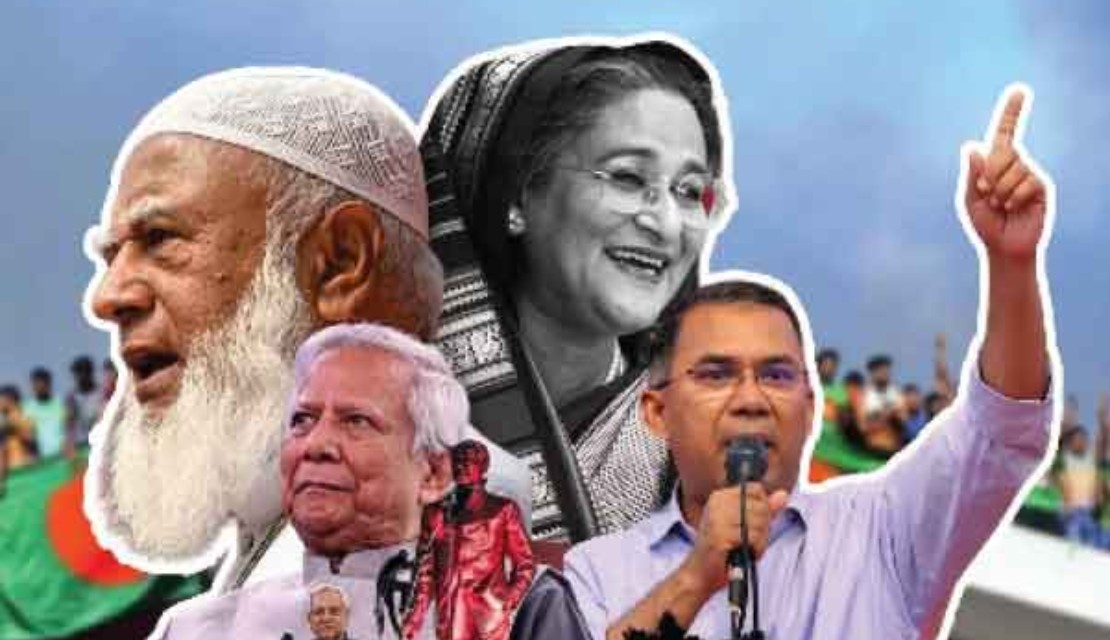
For half a century, the domestic political landscape remained trapped in a debilitating cycle of institutional degradation, where true democratic consolidation proved perpetually elusive and the material sovereignty of the state was continuously compromised. The historical failure to cultivate systemic accountability, transparency, and equity across successive regimes generated an environment where state-captured mafias systematically supplanted the rule of law. However, the deep societal shifts observed in the wake of the historic July-August 2024 Revolution have initiated a starkly alternative paradigm. This new era is fundamentally characterized by the electoral ascendancy of a major political formation grounded in Islamic values, a reality that Western capitals and domestic secular intelligentsia can no longer relegate to the fringes of political discourse.
The Five-Decade Cycle of Institutional Calcification
To understand the structural significance of the 2026 electoral outcome, one must critically dissect the historical epochs that constructed the contemporary Bangladeshi state. The foundational period terminating in the cataclysmic events of August 1975 witnessed an acute hyper-concentration of authority where the adulation of individual leadership completely overshadowed the building of durable state institutions. This prioritization of charismatic personality cults over bureaucratic frameworks inevitably forced the crystallization of a monolithic one-party regime, which effectively suffocated pluralism at the very dawn of the republic.
The subsequent interregnum spanning from 1976 to 1981 emerged as a short-lived yet structurally unique transition. Though this era operated largely under the shadow of direct and indirect praetorian intervention, it nevertheless initiated a vital multiparty framework while simultaneously re-engineering the state’s economic development paradigms and foreign policy alignments away from regional hegemony toward a more independent posture.
Historical Epochs of Bangladeshi Institutional Trajectory (1971–2026)
1. Pre-August 1975: Cult of Personality & One-Party Consolidation
2.1976–1981: Praetorian Interregnum & Multi-Party Reorientation
3. 1982–1990: Military Autocracy & Normalization of Systemic Corruption
4. Post-1990: Fragile Civilian Rule & Elite-Capture Mechanics
5. 2007: The 1/11 Caretaker Intervention
6.2009–2024: Authoritarian Consolidation & Coercive Collusion
This nascent democratization was abruptly shattered by the military coup of 1982, which inaugurated an era of autocratic rule that systematically dismantled independent foreign policy trajectories and institutionalized corruption as the primary currency of statecraft. The decade of military dictatorship under General Ershad served as a tragic incubator for widespread financial and administrative malfeasance, which rapidly metastasized across all state organs and remains an enduring pathology today.
Even after the popular uprising of 1990 restored formal civilian rule, the underlying architecture of the state failed to achieve authentic democratic consolidation. Instead, the transition merely masked a deeper systemic fragility that culminated in the explicit military-backed caretaker intervention of January 2007.
This paved the way for the deeply authoritarian regime of 2009 to 2024, which maintained a vice-like grip on power through gross human rights violations and the total subversion of the electoral machinery. This oppressive structure relied on an explicit collusion between the armed forces and a highly partisan section of internal security apparatuses until the entire coercive apparatus collapsed under the weight of the student-led July-August 2024 Revolution.
The 2026 Realignment and the Collapse of Elite Capture
The national elections of February 12, 2026, occurred in a distinct structural vacuum created by the complete absence of the Awami League, a political entity whose historical culpability in sabotaging the voting system and engineering state terror led directly to its own systemic self-destruction. In this redefined electoral arena a political movement rooted in Islamic values achieved an unprecedented breakthrough by securing 68 directly elected parliamentary seats alongside an additional 9 reserved seats for women. This historic victory represents a seismic departure from the traditional post-1990 political consensus, which was fundamentally defined by the predatory mechanics of elite capture. For decades both dominant political parties routinely outsourced their parliamentary nominations to an oligarchy composed of financial predators loan defaulters and mafia networks who viewed state power as a mechanism for personal enrichment. This systemic criminalization of the legislature directly facilitated the wholesale looting of financial institutions and the systematic destruction of good governance.
The rise of an Islamist legislative bloc provides an unprecedented opportunity to replace the discredited mafia leadership with an organic leadership model deeply embedded in the social fabric of the nation.
Unlike the oligarchs who previously bought legislative influence, the newly elected Islamist parliamentarians represent a genuine organic intelligentsia rooted in the local populace. The new legislative cohort is primarily composed of schoolmasters madrasa educators grassroots legal practitioners localized entrepreneurs and accomplished professionals such as specialist physicians and High Court advocates. Because these individuals maintain deep structural ties to their respective communities, their entry into the National Parliament effectively subverts the old oligarchic hegemony that reduced public policy to an exercise in asset stripping. By shifting the locus of power away from cosmopolitan financial mafias toward localized organic actors, the 2026 election has opened a historic window for the restoration of administrative integrity and institutional fairness.
Deconstructing the Post-9/11 Paradigm and Academic Blind Spots
The domestic academic establishment in Bangladesh has historically demonstrated a profound intellectual failure by consistently ignoring or misrepresenting the dynamics of faith-based politics. This academic marginalization ignores a fundamental global reality where Islamist political parties in Muslim-majority societies are not historical anomalies but are deeply authentic manifestations of popular will. Throughout the history of the Global South, faith-based movements consistently spearheaded anti-colonial liberation struggles against Western imperialism, which naturally positioned them as principal political actors in the post-colonial era.
The cruel historical irony, however, remains that despite their foundational role in resisting external subjugation, these movements have faced systematic persecution by domestic secular elites. These ruling classes have historically sustained their internal tyranny by securing the unyielding material and ideological backing of Western powers and their co-opted local civil societies.
Global Geopolitical Matrix of Islamist Persecution
This global architecture of oppression became deeply entrenched through the geopolitical matrix established after September 11, 2001. Under the guise of the global war on terror, the West constructed a securitized discourse that effectively stripped Muslim populations of their fundamental political rights and human liberties. These rights were rationed strictly according to the strategic conveniences of Western capitals and their client regimes in the Muslim world.
Within this highly weaponized framework, practicing Muslims who assert their identity within the public square are reflexively categorized as militant extremists or sectarian. This reductionist labeling operates as an ideological axiom that demands no empirical verification or logical proof.
The recent electoral breakthrough in Bangladesh directly challenges this post-9/11 security paradigm by demonstrating that faith-based politics can operate through democratic processes to challenge entrenched authoritarian structures.
Decolonizing Gender and Indigenous Development
One of the most transformative dimensions of the 2026 electoral shift is the introduction of highly educated, deeply pious women into the National Parliament through the reserved seats. The active mobilization of these women during high-stakes electoral campaigns and public policy summits represents a major milestone in the political evolution of the state. This development possesses immense potential for the comprehensive decolonization of gender and development discourses within South Asia. For decades the conceptualization of women's rights and social advancement in Bangladesh has been monopolized by secular non-governmental organizations that uncritically imported Western liberal frameworks completely detached from the cultural and spiritual realities of the local population.
By anchoring their advocacy within the normative frameworks of Islamic tradition, these newly empowered female leaders are uniquely positioned to rescue the discourse surrounding gender from Western intellectual dependency. They offer an alternative vernacular modernism that addresses the material needs of women without demanding the renunciation of their religious identity. This localized rearticulation of development concepts ensures that policies designed for women are communicated in a cultural language that resonates with the broader populace, thereby transforming gender advocacy from a source of elite polarization into an instrument of genuine social cohesion.
A Governance Roadmap: From Theological Abstraction to Applied Justice
If the Islamist movement is to solidify its position as a permanent alternative to the secular-mafia consensus, it must aggressively restructure its programmatic agenda away from symbolic debates and toward concrete governance outcomes. Secular and regional hegemonic factions will inevitably seek to entrap the new parliamentary forces in highly polarizing debates regarding the historical legacy of the 1971 Liberation War in order to exhaust their political energy and fracture public opinion. The historical reality remains clear that the creation of Pakistan in 1947 was a legitimate context-specific political project designed to safeguard the socioeconomic survival of the subcontinent’s marginalized Muslim population. Crucially, the modern Islamist movement in Bangladesh bears zero historical or moral culpability for the subsequent post-1947 misrule, economic exploitation, and human rights violations perpetrated by the Pakistani military-bureaucratic elite. The contemporary youth who are driving the current political realignment fully comprehend this distinction and are entirely focused on forward-looking systemic reform.
The Tripartite Framework of Applied Islamic Governance
1. Absolute Justice: Impersonal Meritocracy & Purging of Partisan State Organs
2. Equity: Material Resource Redirection & Eradication of Urban Penury
3. Benevolence: Structural Protection of Dignity & Institutional Compassion
The ideological legitimacy of Islamist politics is derived directly from the core values of Islam, which demand the absolute implementation of adl (justice), insaf (equity), and ihsan (benevolence). Consequently, the primary challenge confronting the new legislative bloc is the immediate transformation of abstract theological tenets into practical applied governance mechanisms. The ultimate test of Islamic law in the National Parliament does not lie in the realm of rhetorical declarations but in its capacity to address the material suffering of the nation's most vulnerable populations. True fidelity to Islamic jurisprudence requires raising real demands for the thousands of homeless women and young girls who sleep unprotected on the streets of Dhaka, lacking basic security, dignity, and human rights. Failing to secure the livelihoods and health of the impoverished constitutes a severe violation of public trust and a failure of spiritual accountability before Allah.
| Target Institution | Previous Pathology | Reform Mandate |
| Judiciary & Attorney General | Partisan weaponization and selective prosecution | Total administrative autonomy and meritocratic appointment |
| Election & Public Service Commissions | Institutional collusion and structural nepotism | Complete independence from executive interference |
| Civilian Bureaucracy & Police | Coercive enforcement of regime survival | Institutional neutrality and strict adherence to rule of law |
| Public Universities | Violent student mafias and academic stagnation | Intellectual depoliticization and global research standards |
Institutional De-Radicalization and the Patriotic Bourgeoisie
The preservation of state sovereignty against external regional hegemonies requires the urgent depoliticization and reconstruction of the country’s core constitutional and administrative bodies. Decades of hyperpartisan rule have been completely hollowed out. The Islamist movement must use its legislative leverage to force the establishment of strictly impersonal merit-based recruitment and operational guidelines across these institutions. Furthermore, this institutional rescue must extend to higher education, where public universities must be completely liberated from the violent grip of political mafias. Despite intense external provocations, student politics must be permanently steered away from factional violence and reoriented toward producing globally competitive intellectuals and highly skilled professionals capable of defending the state's strategic interests.
Finally, the long-term sustainability of this faith-based democratic paradigm depends on the conscious cultivation of a patriotic, highly ethical domestic entrepreneurial class. The experience of successful states demonstrates that an economy cannot thrive when it is monopolized by predatory oligarchs who park their plundered wealth in offshore tax havens. The Islamist movement must actively foster a new generation of business leaders who view economic enterprise as a national duty and a form of civic worship.
By prioritizing domestic reinvestment, ethical labor practices, and quality employment for the youth, this patriotic bourgeoisie will serve as the primary economic engine sustaining a sovereign, stable, and equitable society. Restoring order and justice to a Muslim-majority nation remains one of the highest forms of civilizational responsibility.