

When the ceremonial swords clashed gently at Sheetal Niwas this past August, the atmosphere was thick with the pomp of military tradition. Nepal’s head of state bestowing an honorary general’s rank upon the Indian Army chief is routinely painted by diplomats as a charming display of neighborly affection. It is framed as a mutual respect between two nations bound by geography and faith. Yet, beneath the polished brass and crisp uniforms lies a far more cynical reality. In the unforgiving theater of South Asian geopolitics, such gestures are rarely about parity. They are meticulously choreographed performances designed to reinforce the psychological and strategic supremacy of a regional giant over its smaller, strategically trapped neighbors.
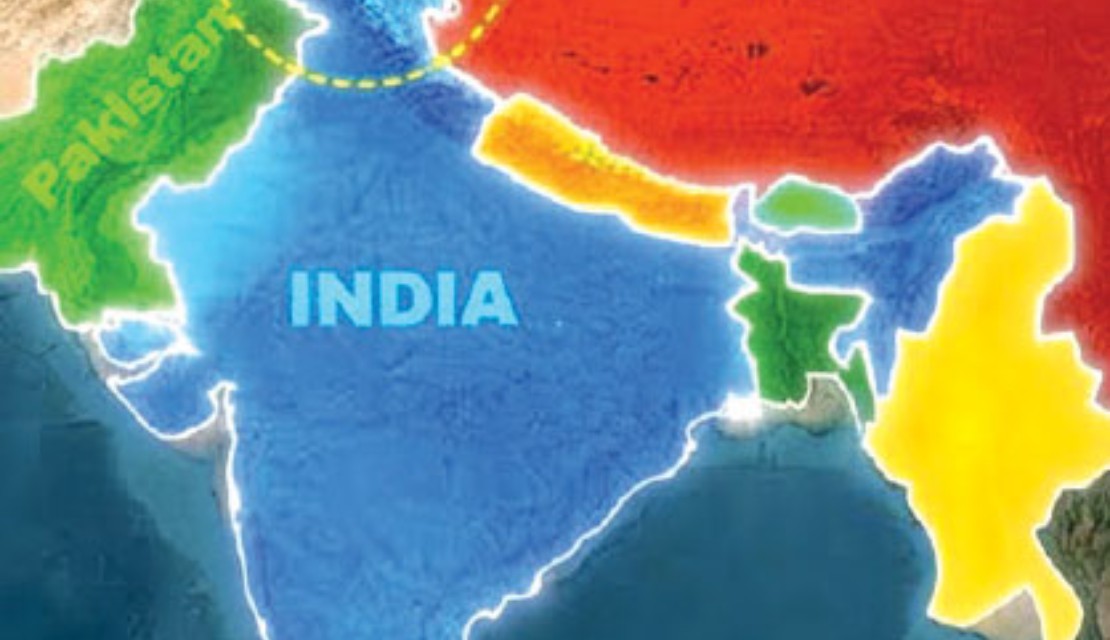
To understand the architecture of this dominance, one must look beyond the diplomatic handshakes and examine the deeply entrenched policies of New Delhi. For decades, the political establishment in India has operated on a foreign policy doctrine that mirrors the ambitions of its former British colonizers. The core tenet of this approach is not the cultivation of equal partnerships, but the maintenance of a strict sphere of influence. This is a story that stretches from the snow-capped peaks of the Himalayas to the muddy deltas of the Bay of Bengal, binding Nepal and Bangladesh in a shared narrative of structural subjugation, unequal treaties, and the relentless pressure of an overbearing neighbor.
The Illusion of Equivalence
The tradition of swapping honorary military ranks between Nepal and India did not emerge from a vacuum of goodwill. Its roots are buried deep in the colonial legacy of the nineteenth century. Following the Anglo-Nepalese War, the Treaty of Sugauli systematically dismantled Nepal’s sovereign defense capabilities. The British, acutely aware of the Gurkhas' unmatched martial prowess, co-opted them into their own ranks. When India gained independence, it did not dismantle this colonial structure; rather, it inherited it. Through a tripartite agreement, a massive contingent of Gurkha soldiers transitioned into the Indian military apparatus.
By 1950, when Nepal’s Army Chief received the first honorary rank of 'General' in the Indian Army, the die was cast. This reciprocal tradition was never about honoring a peer; it was a calculated mechanism to subtly fold Nepal’s military establishment under New Delhi’s expansive security umbrella. It provided a veneer of respectability to a relationship defined by extreme power asymmetry.
The Structure of Regional Hegemony

Geography as a Weapon: The Himalayan Squeeze
Nepal’s tragedy is partly written in its topography. Surrounded by Indian territory on three sides and walled off by the impassable Himalayas to the north, the nation is functionally landlocked. Connecting with China requires navigating some of the most hostile terrain on Earth, making the prospect economically paralyzing. Consequently, Kathmandu relies almost entirely on Indian infrastructure for access to the global market, international trade ports, and vital fuel supplies.
However, geography only tells half the story. The true architects of Nepal’s predicament were its own political elites. The Rana dynasty, prioritizing the survival of their absolute rule over national sovereignty, willingly capitulated to foreign demands. The infamous 1950 Treaty of Peace and Friendship remains the original sin of modern Nepalese diplomacy. Under Prime Minister Mohan Shumsher Jang Bahadur Rana, Kathmandu surrendered its right to independent defense procurement. The treaty dictated that Nepal must consult India before acquiring arms from any third party, effectively neutering its ability to formulate a sovereign defense doctrine.
Subsequent political factions in Kathmandu perpetuated this cycle of dependency. Leaders repeatedly mortgaged their country’s natural resources, signing away favorable terms on the Kosi and Gandak river projects in exchange for New Delhi’s blessing to crush domestic opposition. Whenever a Nepali administration dared to look northward toward Beijing or assert a truly independent foreign policy, the retaliation was swift and brutal. The crippling economic blockades of 1989 and 2015 were not mere diplomatic spats; they were weaponized starvation, designed to remind a sovereign state of its absolute vulnerability. Territorial encroachments in regions like Kalapani and Limpiyadhura further highlight an expansionist mindset that views neighbors as mere buffer zones rather than sovereign equals.
Regional Asymmetry and Dependency Metrics
An analytical overview of structural dependencies and resource control imbalances within the South Asian geopolitical framework.
● Trade Deficit Imbalance: Smaller South Asian neighbors routinely face trade deficits with India exceeding 60-70% of their total bilateral trade volume.
● Transit Dependency (Nepal): Historically, over 90% of Nepal's third-country imports have relied on Indian ports and land routes.
● Water Control Metrics: India controls the upper riparian flow of 54 shared rivers with Bangladesh, utilizing barrages to dictate dry-season agricultural survival.

From Liberator to Overlord: The Bay of Bengal Strategy
While Nepal was squeezed by its mountains, Bangladesh found itself suffocated from the sea and the plains. New Delhi’s military, diplomatic, and humanitarian intervention during Bangladesh’s bloody Liberation War in 1971 is an undeniable historical truth. Yet, pure altruism is a myth in statecraft. The underlying geopolitical imperative was the dismemberment of its primary rival, Pakistan, ensuring India’s ascension as the undisputed hegemon of the subcontinent.
Once the dust of the war settled, the mask of the liberator began to slip. A significant faction within the Indian strategic establishment viewed the newly born, war-ravaged nation not as an equal partner, but as a permanent client state. The 1972 Treaty of Friendship and Peace, signed in the immediate aftermath of independence, tied Dhaka’s defense and strategic interests tightly to New Delhi’s mast.
The early years were defined by glaring inequalities. While Dhaka swiftly honored its commitments, such as the handover of Berubari, New Delhi dragged its feet for decades on reciprocal enclave exchanges. The most devastating blow came via the waterways. The rushed agreement allowing the temporary operation of the Farakka Barrage without ironclad international guarantees doomed a vast expanse of Bangladesh to ecological and agricultural ruin. Furthermore, the mass extraction of military assets and industrial spoils from sovereign Bangladeshi territory immediately after the war crippled the new state’s defense infrastructure, planting the seeds of deep public suspicion regarding India’s ultimate endgame.
The Anatomy of Unequal Treaties
● The 1950 Nepal-India Treaty:
The Catch: Article 5 required Kathmandu to consult New Delhi before importing any military hardware from foreign nations. The Result: Permanent dependence on Indian defense manufacturing and strategic veto power over Nepal's security alliances.
● The 1972 Bangladesh-India Treaty:
The Catch: Contained mutual defense clauses that critics argued effectively prevented Bangladesh from adopting an independent, non-aligned foreign policy. The Result: Early institutionalization of a "big brother" dynamic that stunted Dhaka's autonomous diplomatic growth.

The Golden Age of Appeasement
This structural hegemony reached its zenith during the fifteen-year reign of Sheikh Hasina in Bangladesh. Throughout this era, statecraft was reduced to a singular, desperate objective: the appeasement of New Delhi at the total expense of the Bangladeshi public. To maintain an increasingly autocratic grip on power and to compensate for a total loss of domestic legitimacy, her administration systematically handed over the nation's strategic assets to Indian control.
The concessions were staggering in their scope. India was granted unfettered access to Bangladesh’s intricate web of road, rail, and river networks to supply its isolated northeastern states. This was done for negligible fees, while New Delhi conveniently ignored Dhaka’s desperate pleas for reciprocal transit rights to trade with Nepal and Bhutan. The sovereign security of the nation was further compromised as Indian vessels were granted open access to the vital seaports of Chittagong and Mongla.
Nowhere was this subjugation more glaring than in the realm of energy and borders. The failure to secure a fair share of the Teesta River waters, combined with the quiet surrender of the Feni River’s flow, showcased a catastrophic failure of diplomacy. On the frontier, the border became a killing field. The continuous, extrajudicial killings of unarmed Bangladeshi civilians by India's Border Security Force (BSF) were met with deafening silence from Dhaka, perfectly encapsulating the subservient nature of the regime.
Then came the Adani Group power deal, a masterclass in economic self-immolation. Dhaka legally bound itself to pay astronomical "capacity charges" to the Indian conglomerate, bleeding the national treasury even when no actual electricity crossed the border. Simultaneously, strategic security was steadily eroded. Agreements permitting the Indian Navy to conduct radar surveillance in the Bay of Bengal, coupled with the establishment of exclusive Indian economic zones, signaled the total surrender of maritime and territorial autonomy.
The Surrender of Sovereignty
Breakdown of Concessions
(During the 15-year appeasement era in Bangladesh)

| Sector of Concession | Percentage of Diplomatic Focus | Impact on National Interest |
| Transit & Connectivity | 35% | Free access for Indian goods; no reciprocal access for Dhaka to Nepal/Bhutan. |
| Strategic & Security | 30% | Radar surveillance in the Bay of Bengal; reliance on Indian political backing. |
| Energy & Economics | 20% | The Adani capacity charges; port access given at nominal operational costs. |
| Water & Borders | 15% | Total failure on Teesta sharing; zero accountability for BSF border killings. |
The Paradigm Shift and the Death of the Buffer State
For decades, India successfully leveraged history, geography, and complicit politicians to treat South Asia as its exclusive backyard. The overarching goal was to strip its neighbors of their agency, transforming them into compliant buffer states designed to absorb regional shocks and keep rival powers at bay. But the geopolitical tectonic plates of the twenty-first century are shifting, and this antiquated, colonial playbook is rapidly losing its effectiveness. A profound awakening is sweeping across the subcontinent. In the foothills of the Himalayas, a new generation of Nepalese citizens is aggressively demanding the abrogation of the archaic 1950 treaty. They are fiercely protesting territorial encroachments and, crucially, are looking north to construct new physical and economic corridors with China, intentionally bypassing New Delhi's monopolistic
chokehold.
This momentum found its most explosive expression in the historic Bangladeshi mass uprising of 2024. The revolution that dismantled a fifteen-year autocracy was not just a rejection of domestic tyranny; it was a thunderous repudiation of foreign hegemony. The uprising ignited an unprecedented resurgence of national pride, sovereignty, and self-respect. The message emanating from the streets of Dhaka was unmistakable: the era of unilateral exploitation is over. The citizenry will no longer tolerate the pillaging of their national interests to satisfy the strategic appetites of a neighboring state.
The landscape of South Asian diplomacy has been permanently altered. The old tricks of military pageantry, proxy autocrats, and economic strangulation have been exposed and rejected by politically hyper-aware populations. If the strategists in New Delhi refuse to abandon their colonial hangover if they fail to pivot toward a foreign policy grounded in genuine equality, mutual respect, and reciprocal benefit, they will not merely lose their influence. They will find themselves isolated in a neighborhood they once believed they owned, watching their strategic dominance crumble under the weight of its own arrogance.