

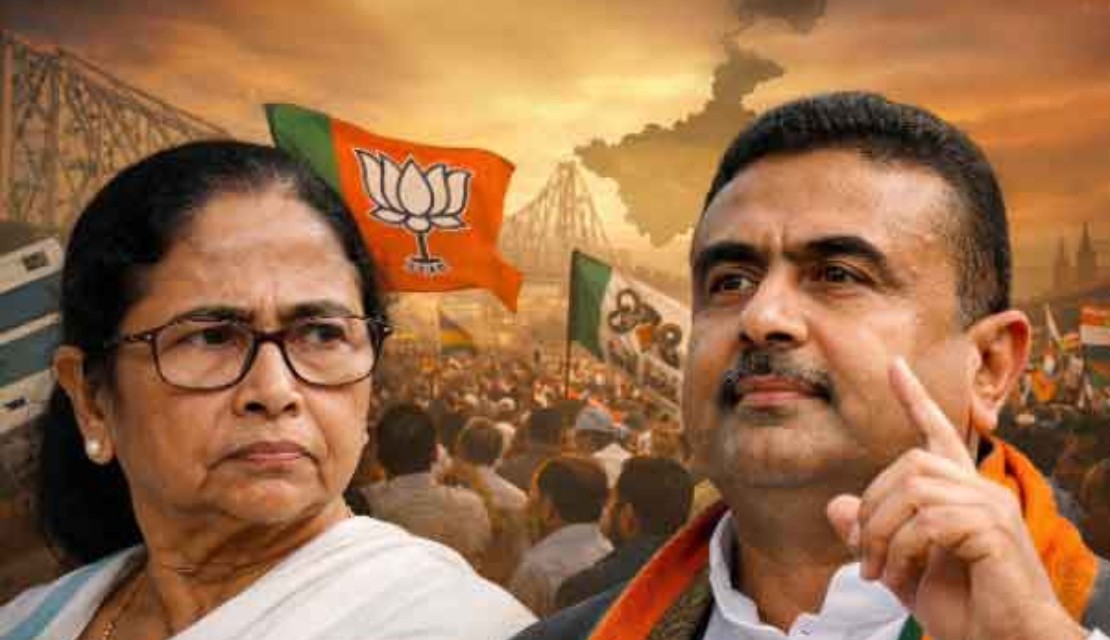
The geopolitical architecture of South Asia, long stabilized by the delicate balance of post-colonial sovereignty and the shared legacy of secular democratic ideals, is currently facing a seismic upheaval. This shift is not the result of economic fluctuations or border disputes but is driven by a profound and dangerous transformation in the rhetorical and ideological DNA of India’s political vanguard. For decades, India’s "Neighborhood First" policy was anchored in the principles of mutual respect and diplomatic nuance. However, a burgeoning strain of radical majoritarianism is now spilling over India’s borders, transforming sovereign neighbors from strategic partners into ideological targets.
The recent evocations of the "Gaza Model" by prominent Indian political figures regarding Bangladesh represent more than just campaign trail hyperbole; they signal a fundamental departure from Westphalian norms of sovereignty and a descent into a form of regional "bulldozer diplomacy" that mirrors the internal marginalization of India’s own minorities.
The Gaza Metaphor: From Conflict to 'Teaching Model'
When Shuvendu Adhikari, a heavyweight leader in the Bharatiya Janata Party (BJP), suggested that India should "teach Bangladesh a lesson" by citing Israel’s military campaign in Gaza, he crossed a Rubicon of international relations. Gaza, currently a theater of unprecedented humanitarian suffering and alleged war crimes, was not cited by Adhikari as a tragedy to be avoided, but as a blueprint to be emulated.
In the lexicon of modern international law, the Gaza conflict is defined by the deaths of tens of thousands, predominantly women and children and the systematic dismantling of civilian infrastructure. For a high-ranking Indian official to present this as an "example" for dealing with a sovereign neighbor like Bangladesh is a chilling manifestation of what political scientists call "the normalization of the extreme."
This rhetoric accomplishes three things simultaneously:
1. De-sovereignization: It strips Bangladesh of its status as a sovereign state and reclassifies it as a "territory" subject to punitive military correction.
2. Moral Legitimacy for Violence: It attempts to provide a moral and strategic framework for aggression by aligning it with global trends of "security-first" militancy.
3. Ideological Signaling: It communicates to a domestic Hindu nationalist base that the Indian state is prepared to use unbridled force to protect "civilizational interests" beyond its borders.
The Militarization of Diplomacy: The 'Surgical Strike' Paradigm
Adhikari’s comments do not exist in a vacuum. They are part of a broader, emerging consensus among a section of India's ruling elite. Just weeks prior, Assam Chief Minister Himanta Biswa Sarma utilized overtly martial language, suggesting "surgical attacks" as a "permanent solution" to perceived crises in Bangladesh.
The shift from the language of "dialogue" to the language of "demolition" is stark. By invoking the concept of surgical strikes, a term historically reserved for counter-terrorism operations against Pakistan, Sarma is effectively categorizing the entire state of Bangladesh as a security threat rather than a diplomatic partner. This creates a dangerous precedent where the complexities of migration, water sharing, and trade are flattened into a singular, binary military problem.
The Internal Mirror: Minorities and the Dalit Crisis
To understand why Indian leaders feel empowered to use such aggressive language abroad, one must look at the hardening of the state’s character at home. The "aggressive role" toward Bangladesh is a direct extension of the "inhuman torture" and systemic disenfranchisement of Dalits and religious minorities within India.
The logic is simple: if the state can normalize the marginalization of its own citizens based on their caste or creed, extending that logic to a neighboring country with a similar demographic profile becomes an easy cognitive leap. The Dalit community, despite constitutional protections, continues to face structural violence. Statistics from the National Crime Records Bureau (NCRB) consistently show high rates of atrocities against Scheduled Castes, often with low conviction rates.
Furthermore, the treatment of Bengali-speaking Muslims in states like Odisha and Assam serves as a domestic testing ground for the rhetoric used against Bangladesh. The tragic case of Jewel Rana, a 19-year-old laborer from Murshidabad who was lynched in Odisha, is not an isolated act of mob fury. It is the logical conclusion of a political discourse that labels Bengali-speaking Muslims as "infiltrators" (Termite rhetoric).
| Name of Victim | Location | Context/Trigger | Outcome |
| Jewel Rana | Sambalpur, Odisha | Suspicion of being “Bangladeshi” | Lynched/Death |
| Rinku Sheikh | Silchar, Assam | Communal/Linguistic Profiling | Violent Attack |
| Christmas Carolers | Palakkad, Kerala | “Forced Conversion” Allegation | Physical Harassment |
| Haridwar Festivities | Uttarakhand | Religious Intolerance | Forced Cancellation |
The Structural Tools of Disenfranchisement: CAA, NRC, and Beyond
The transition from a secular democracy to a majoritarian state is facilitated by a suite of legislative tools. The Citizenship Amendment Act (CAA), the National Register of Citizens (NRC), and the proposed Waqf Amendment Bill are not merely administrative updates; they are the "legal infrastructure" of exclusion.
"Bulldozer politics", the summary demolition of homes belonging to activists and minorities without due process has become a potent symbol of this new India. It represents a state that no longer feels bound by the slow machinery of the judiciary but prefers the immediate, visual gratification of punitive power. When Adhikari or Sarma speak of "teaching lessons" to Bangladesh, they are essentially proposing a "bulldozer policy" on a transnational scale.
Institutional Complicity and the Silence of the State
Perhaps the most alarming aspect of this radicalization is the "tacit consent" provided by state institutions. As noted by senior jurists like Kapil Sibal, the discrepancy in how the law is applied is glaring. A minority leader’s critical remark often results in immediate incarceration under draconian laws like the UAPA, yet when a prominent leader of the ruling party hints at genocide or military aggression against a neighbor, the silence from the judiciary and the central government is deafening.
This institutional paralysis suggests a deep-seated crisis in India’s democratic checks and balances. When the state machinery fails to penalize hate speech that calls for the destruction of a neighboring sovereign entity, it effectively adopts that hate speech as an unofficial arm of its foreign policy.
The South Asian Equilibrium: A Warning to the World
The implications for Bangladesh are profound. The Bangladesh-India relationship has historically been the bedrock of South Asian stability. However, if India continues to view this relationship through the lens of electoral "Hindutva" politics, the fabric of regional cooperation will tear beyond repair.
The "Israel-Gaza" analogy is particularly toxic because it suggests that the only way to ensure "national security" is through the total devastation of the perceived "Other." If this becomes the standard for South Asian diplomacy, the region faces:
• A permanent refugee crisis.
• The collapse of economic corridors (SAFTA/BBIN).
• The rise of reciprocal radicalization in neighboring states.
• The invitation of external superpowers to intervene in the power vacuum.
The Choice Between Dialogue and Destruction
Fascism, as history teaches us, begins with the corruption of language. It starts with the "Othering" of neighbors and citizens, moves into the legislative disenfranchisement of those groups, and eventually culminates in physical aggression. The rhetoric of Shuvendu Adhikari and Himanta Biswa Sarma indicates that India is currently in the second stage of this process, with a clear and present danger of moving into the third.
The international community, human rights organizations, and the progressive elements of Indian civil society must recognize that these are not "careless political comments." They are a manifesto for a new, radicalized South Asia. The future of the region must be anchored in the principles of the UN Charter, sovereignty, non-aggression, and human rights, not in the ruins of a "Gaza Model."
India stands at a crossroads. It can either reclaim its heritage as a pluralistic, secular leader of the Global South, or it can continue down the path of radical majoritarianism, which threatens to consume not only its neighbors but the very democratic structure of the Indian state itself. Hate is a fire that does not respect borders; it eventually burns the hand that stokes it.
Data Synthesis & Statistical Overview
To contextualize the urgency of this analysis, the following table summarizes the key pressure points in the current Indian socio-political landscape:
Table 2: Indicators of Democratic Backsliding and Regional Tension
| Indicator | Status/Observation | Impact on Foreign Policy |
| Linguistic Aggression | High (Use of “Gaza,” “Surgical Strike”) | Erosion of diplomatic trust with Dhaka. |
| Legislative Exclusion | High (CAA, NRC, Waqf Bill) | Increased perception of India as a “Hindu State.” |
| Mob Violence Conviction | Low (Persistent impunity for lynchings) | Normalization of violence as a political tool. |
| Institutional Independence | Declining (Selective application of hate speech laws) | Loss of “Moral Authority” in regional mediation. |
| Regional Stability | Volatile (Shift from partnership to threat) | Risk of multi-front regional hostility. |
This analysis serves as a clarion call for a return to diplomatic sanity. The "Gaza Model" is a recipe for regional catastrophe, and its promotion by responsible political leaders should be met with universal condemnation. The path to a prosperous South Asia lies in coexistence, not in the emulation of aggression.