

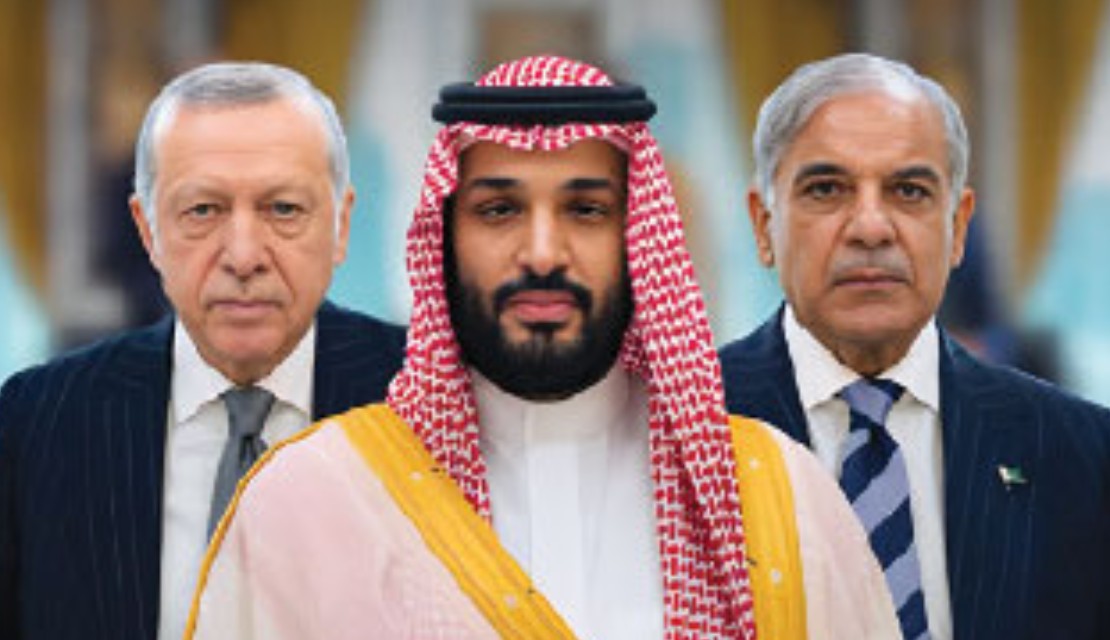
The ink on the historic Mecca Joint Defense Agreement, signed on August 7, was barely dry before the geostrategic tectonic plates of the Middle East, Europe, and South Asia began their inevitable, aggressive shift. In a world increasingly defined by multipolar fragmentation and the erosion of traditional Western security umbrellas, the defense pact between Saudi Arabia, Turkey, and Pakistan stands as a monumental pivot. Represented by Saudi Crown Prince Mohammed bin Salman, Turkish President Recep Tayyip Erdogan, and Pakistani Prime Minister Shahbaz Sharif, this triad has effectively declared a new era of self-reliance in the Muslim world. The foundational tenet of this pact, that an armed attack on one constitutes an attack on all echoes the collective defense mechanisms of NATO, yet it emerges from an entirely different cultural and geopolitical fabric. Although Riyadh, Ankara, and Islamabad have explicitly branded this alliance as a strictly defensive apparatus devoid of offensive intent against any specific sovereign state, the sheer magnitude of their combined capabilities guarantees that its ripple effects will be felt far beyond the confines of the Arabian Peninsula.
To view this agreement as an abrupt diplomatic maneuver would be a profound analytical miscalculation. It is, in reality, the formal crystallization of a deeply rooted, multifaceted relationship that has evolved over several decades of shared security anxieties and economic interdependence. The military synergy between Saudi Arabia and Pakistan, for instance, has long transcended mere ceremonial ties. For generations, seasoned contingents of the Pakistani armed forces have served as the silent architects of Saudi military training, imparting invaluable combat doctrine and operational readiness to the Kingdom's evolving defense sectors. In reciprocal fashion, Riyadh has repeatedly acted as the indispensable financial anchor for Islamabad, deploying rapid economic bailouts during Pakistan’s most severe fiscal crises.
This symbiotic relationship was structurally solidified during the 2025 Saudi-Pakistan Strategic Mutual Defense Agreement, which laid the critical groundwork for contemporary integration. When geopolitical flashpoints erupted in the chaotic regional conflict of 2026, Pakistan did not hesitate to project power far beyond its borders, rapidly deploying an estimated 8,000 elite troops, a highly sophisticated fighter squadron, and a comprehensive air defense system directly to Saudi territory. Such decisive action definitively proved that their bilateral engagements had moved decisively from the realm of polite diplomatic rhetoric into the unforgiving arena of kinetic military execution.
The Triad at a Glance: Military and Financial Metrics
•Combined Defense Budget: $125B+
•Critical Maritime Chokepoints: 3
•Asymmetric Capabilities: NATO and Nuclear

Key Pillar Contributions
• Saudi Arabia: Unmatched capital reserves, access to premium Western hardware, immense Arab-world political capital, energy dominance.
• Turkey: NATO-standard combat experience, cutting-edge UAV and EW domestic industry, European/Middle East geographic hinge.
• Pakistan: Battle-hardened infantry, advanced joint-production capabilities (JF-17), crucial South/Central Asia land-bridge, established nuclear deterrence.
The induction of Turkey into this previously bilateral dynamic fundamentally alters the mathematical and strategic realities of the alliance, amplifying its geopolitical weight to an unprecedented degree. As an integral member of NATO, Turkey brings to the table an institutionally hardened, massively capable armed force that boasts extensive, real-world combat experience across diverse theaters from Syria to Libya and the Caucasus. More crucially, Ankara introduces a fiercely independent, rapidly expanding domestic defense manufacturing sector.
Turkey has already dominated international headlines and battlefields alike with its world-class production of advanced unmanned aerial vehicles (UAVs), precision strike missiles, sophisticated electronic warfare platforms, heavily armored mechanized units, and naval assets. When integrated with Pakistan’s battle-tested, highly professional military which notably operates under the ultimate umbrella of an established and a robust nuclear deterrence capability. The alliance gains a formidable hard-power edge. Rounding out this triad, Saudi Arabia injects monumental financial liquidity, immediate access to cutting-edge Western armaments, unparalleled political leverage across the Arab and broader Islamic world, and a geographically centralized command presence.
When assessing the raw economic bandwidth of this coalition, the numbers alone command immediate global attention. According to the Stockholm International Peace Research Institute (SIPRI), defense expenditures in 2025 revealed a Saudi budget of an astounding $83.2 billion, Turkey dedicating $30 billion, and Pakistan contributing $11.9 billion. This coalesces into a staggering combined military expenditure exceeding $125 billion annually. While seasoned military analysts rightfully note that aggregate capital does not automatically translate into cohesive operational effectiveness, this immense fiscal reservoir indisputably provides the vital resource foundation required to construct a highly institutionalized, sustainable, and technologically advanced joint security apparatus capable of projecting power across multiple domains.
Equally paramount is the geographic expanse over which this new alliance casts its shadow. The spatial reality of this triad forms an intimidating strategic belt that seamlessly bridges the Eastern Mediterranean, the Black Sea, the vital arteries of the Red Sea, the energy-rich Arabian Gulf, and the vast expanse of the Arabian Sea. Turkey stands as the critical geopolitical hinge connecting Europe, the volatile Caucasus, and the Middle East. Saudi Arabia, resting at the heart of the Arabian Peninsula, serves as the undisputed heavyweight of global energy production while guarding the world's most sensitive maritime chokepoints. Meanwhile, Pakistan acts as the vital terrestrial and maritime bridge linking South Asia with Central Asia, an increasingly assertive China, Iran, and the open waters of the Indian Ocean. Together, these three nations possess the potential to monitor, influence, or decisively control some of the globe’s most critical commercial shipping lanes and energy supply routes, granting the alliance unprecedented leverage over global economic stability.
The foremost dividend of the Mecca Agreement is, undeniably, an exponential amplification of collective deterrence. The calculus for any rogue state or hostile coalition contemplating unilateral military aggression against Riyadh, Ankara, or Islamabad has been radically rewritten. Such an adversary must now realistically factor in the synchronized, multifaceted retaliation of three dominant regional powers capable of choking trade, launching devastating cyber and electronic countermeasures, and mobilizing immense conventional forces. Furthermore, the pact unlocks a transformative era of defense-industrial symbiosis. Turkey has already cemented its status as a highly sought-after exporter in the global arms market. Pakistan has demonstrated remarkable indigenous engineering capabilities, most notably through its successful joint production of the formidable JF-17 multirole fighter jet with China, alongside its manufacturing of ballistic missiles and heavy armor. Simultaneously, Saudi Arabia is aggressively injecting hundreds of billions of dollars into its domestic defense sector under the ambitious Vision 2030 modernization mandate. The trilateral fusion of boundless Saudi capital, elite Turkish technological innovation, and scalable Pakistani mass-production infrastructure sets the stage for exponential breakthroughs in artificial intelligence, next-generation drone swarms, impenetrable cybersecurity networks, autonomous weapons systems, and advanced anti-ballistic missile shields. This deliberate industrial pivot will drastically dilute their historical vulnerability to the capricious political whims of Western arms suppliers, granting them true strategic autonomy.
Beyond hardware, the institutionalization of intelligence sharing represents a subtle yet profoundly lethal enhancement of their collective security posture. All three nations find themselves uniquely besieged by a convergence of asymmetric threats: sophisticated transnational terrorism, state-sponsored cyber warfare, the proliferation of non-state drone strikes, vital maritime vulnerabilities, and pervasive regional instability. By establishing a formalized framework for real-time intelligence dissemination, conducting rigorous interoperability exercises, and aligning strategic foresight, the triad can establish a virtually impenetrable early-warning network. From a broader political perspective, this pact serves as a damning indictment of past institutional failures. Despite possessing vast demographics, enormous natural resource wealth, and significant military capabilities, the broader Muslim-majority world has tragically failed to manifest a credible, cohesive security architecture. The Organization of Islamic Cooperation (OIC), while encompassing 57 member states, remains paralyzingly constrained as a purely diplomatic forum incapable of projecting hard military power. In stark contrast, the Mecca Agreement bypasses these bureaucratic quagmires, potentially laying the cornerstone for the first truly functional, robust security paradigm for the modern Islamic world.
However, to view this alliance through an unconditionally utopian lens would be intellectually dishonest; the trilateral pact is inherently burdened by deeply entrenched structural contradictions. The most glaring challenge lies in the radical divergence of their respective primary security anxieties. Pakistan’s strategic gaze is obsessively and historically locked onto South Asia, consumed by an existential, seemingly permanent state of hostility with its nuclear-armed neighbor, India. Turkey’s defense posture, meanwhile, is hopelessly entangled in a complex web involving the chaotic Syrian theater, instability in Iraq, aggressive maneuvering in the Eastern Mediterranean, delicate balancing acts in the Caucasus, and the overarching burdens of managing its turbulent relationship with both Russia and its NATO allies. Conversely, Saudi Arabia remains fundamentally fixated on containing Iranian expansionism, securing its southern flank against Houthi insurgencies in Yemen, maintaining the sanctity of Gulf maritime traffic, and shielding its irreplaceable hydrocarbon infrastructure from asymmetric attacks.

Operational Architecture of the Mecca Pact
These asymmetrical threat perceptions spawn an array of uncomfortable, potentially paralyzing questions. Should a localized skirmish between Pakistan and India escalate into a major conventional theater war, is it strategically viable to expect Saudi Arabia and Turkey to commit direct military intervention, risking massive economic and diplomatic fallout with New Delhi? If Riyadh finds itself thrust into a direct, devastating confrontation with Tehran or a highly organized network of Iranian proxy militias, will Islamabad willingly deploy its forces into a conflict that could immediately destabilize its own volatile border with Iran? Similarly, what tangible support could Ankara realistically demand from Riyadh and Islamabad if Turkey becomes embroiled in an intense Mediterranean conflict or a sudden escalation in Syria? These hypothetical scenarios starkly illustrate a timeless geopolitical axiom: while signing elegant political declarations in grand palaces is a relatively simple affair, constructing a functional, responsive, and cohesive collective defense mechanism out of vastly differing national interests is a monumental, perhaps impossible, task.
The diplomatic tightrope becomes even more precarious when factoring in the terrifying reality of nuclear proliferation. International watchdogs consistently estimate that Pakistan possesses approximately 170 highly advanced nuclear warheads, locked in a perpetually escalating arms race with India’s estimated 190 weapons. While the Mecca framework explicitly omits nuclear weapon sharing or atomic deterrence integration from its public mandate, the undeniable reality of Pakistan’s nuclear umbrella inherently casts a long, formidable shadow over the entire alliance, radically altering how global superpowers perceive the triad’s ultimate strategic threshold.
Concurrently, Turkey’s deeply entrenched NATO membership introduces a labyrinthine layer of legal and strategic paradoxes. Bound unconditionally by NATO’s Article 5, Turkey is legally obligated to prioritize the defense of its European and North American allies. If a future geopolitical crisis were to pit the explicit treaty obligations of NATO directly against the newfound commitments of the Mecca Agreement, Ankara would be forced into an impossible diplomatic corner, potentially fracturing both alliances simultaneously and plunging Turkish grand strategy into chaos.
Furthermore, the delicate intricacies of regional bilateral relations threaten to unravel the triad from within. Despite their enduring rivalry, both Saudi Arabia and Iran have recently engaged in highly sensitive, fragile diplomatic maneuvers designed to de-escalate regional tensions and prevent an all-out Gulf war. Pakistan, which shares a massive, porous, and highly restive border with Iran, considers maintaining functional, stable relations with Tehran an absolute cornerstone of its national survival strategy. Turkey, too, relies heavily on complex economic and political bartering with Iran to sustain its energy needs and manage Kurdish dynamics. Should hardliners in Tehran misinterpret the Mecca Pact as an overtly aggressive, explicitly anti-Iranian military coalition, the ensuing paranoia could violently erase years of careful diplomatic progress, triggering a severe, rapid polarization across the entire Middle East.
A similarly intricate balancing act must be flawlessly executed regarding India. While policymakers in Islamabad will inevitably internalize this new alliance as a brilliant maneuver to outflank Indian regional dominance, New Delhi has meticulously cultivated exceptionally lucrative economic, energy, and political ties with Saudi Arabia over the past decade. It is highly improbable that the pragmatists in Riyadh would willingly jeopardize their massive trade surpluses and strategic investments with the world’s most populous nation merely to satisfy Pakistani ambitions. Additionally, nuanced but substantial discrepancies in how these three capitals navigate their complex, often contradictory policies regarding Israel further muddy the waters. These underlying policy fractures could severely complicate any attempt to articulate a unified, cohesive set of common security objectives should a major crisis erupt in the Levant.
Ultimately, the most profound peril inherent in any massive collective defense structure is the terrifying prospect of unintentional escalation, the phenomenon of being violently dragged into a catastrophic regional war through the backdoor of an ally's miscalculation. A minor border skirmish, a single misfired ballistic missile, or an isolated naval provocation could, through the rigid automated mechanisms of the pact, rapidly metastasize into an uncontrollable multilateral conflagration. It is absolutely imperative that the signatories meticulously and legally codify the precise parameters of an 'armed attack,' definitively outline the specific conditions required to trigger the collective defense clause, and strictly delineate the exact nature of the military or logistical obligations expected from each member state. Ambiguity in these documents is not a diplomatic luxury; it is a recipe for disaster.
The ultimate legitimacy and longevity of the Mecca Agreement must remain strictly tethered to the defense of sovereign integrity, the robust deterrence of unprovoked aggression, and the steadfast stabilization of a deeply volatile region, all operating strictly within the confines of established international law and the guiding principles of the United Nations Charter. It must vigorously resist the temptation to evolve into an instrument for aggressive internal interference within neighboring states or a catalyst for exacerbating existing sectarian fissures. Achieving this requires the immediate establishment of a permanent, highly disciplined tripartite defense council, institutionalized quarterly strategic summits between foreign and defense ministers, a hyper-secure, encrypted intelligence-sharing framework, and a flawlessly integrated military command structure heavily subordinated to transparent civilian and constitutional oversight.
Beyond the stark calculations of war and peace, this agreement possesses the latent potential to serve as a massive economic catalyst. Strategic, large-scale joint investments in sovereign defense industries can stimulate massive job creation, facilitate unprecedented technological transfers, and significantly boost arms export revenues across all three nations. Furthermore, coordinated naval and cyber initiatives can yield massive dividends in universally securing the indispensable maritime corridors of the Red Sea, the Arabian Gulf, and the Arabian Sea, thereby drastically reducing the vulnerability of vital energy infrastructure and fortifying national grids against state-sponsored cyber sabotage.
In the final analysis, if the Mecca Joint Defense Agreement successfully matures into a pragmatic, restrained framework dedicated to enhancing collective deterrence, crushing transnational terrorism, dominating maritime and cyber security, and fostering genuine defense-industrial cooperation, it will undoubtedly cement itself as a historic pillar of global stability. However, should it devolve into a reactive, ideologically driven, or aggressively sectarian bloc aimed at isolating or dismantling specific regional adversaries, it will inevitably ignite a devastating regional arms race, irreversibly deepen existing geopolitical chasms, and violently ensnare its member states in brutal conflicts entirely detached from their core national interests.
The convergence of Saudi capital, Turkish technological supremacy, and Pakistani military mass undeniably births a formidable new leviathan in the global security arena. Yet, the merciless judgment of history will not hinge upon the grandiosity of their political declarations, nor on the sheer volume of military hardware they can collectively deploy. It will depend entirely on the wisdom, the strategic restraint, and the geopolitical foresight demonstrated by the leadership in Riyadh, Ankara, and Islamabad. The true, ultimate success of this ambitious alliance will not be quantified by the number of devastating wars it is capable of fighting, but rather by the number of catastrophic conflicts it successfully prevents through the masterful application of combined diplomacy, unbreakable cooperation, and unyielding deterrence.