

The period from July 11 to August 25, 2026, was marked by a striking combination of political consolidation, institutional change, diplomatic activity and economic stress in Bangladesh. The BNP government, led by Prime Minister Tarique Rahman, moved from its first six months in office towards consolidating state power, while the legacy of the July Uprising continued to shape national politics.
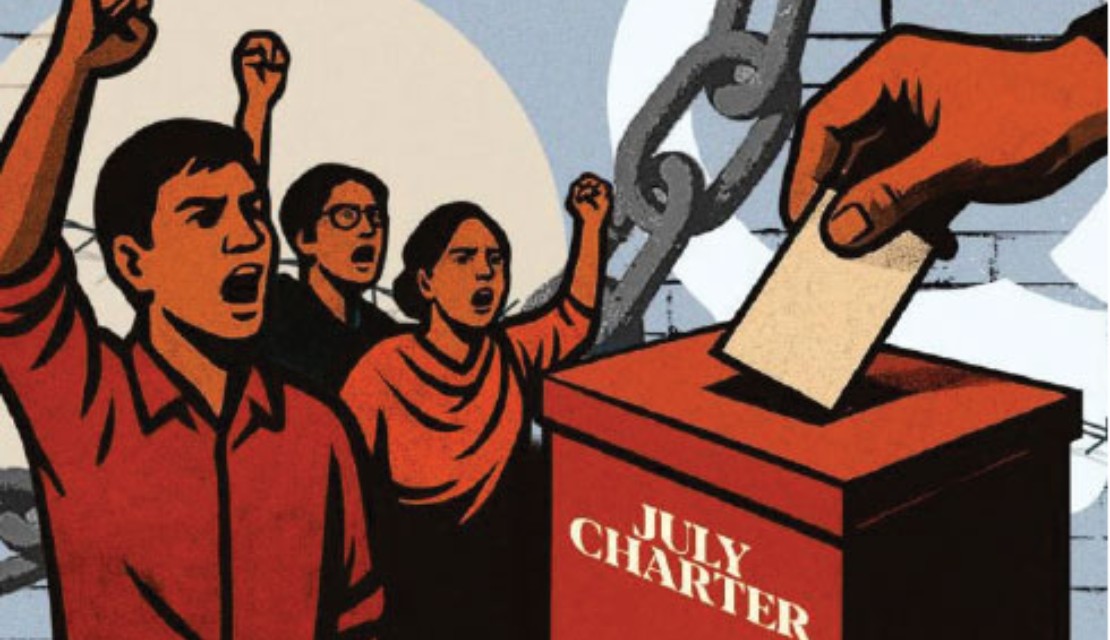
The July Charter remains unimplemented, leaving many of its aspirations unmet. India's continued covert support for Sheikh Hasina, coupled with its overt claims of her innocence, remains a major source of concern in bilateral relations. Interested in the Makkah defence pact, Dhaka is increasingly pursuing a multipolar diplomatic strategy, moving away from a Delhi-centric foreign policy. At the same time, an energy crisis, driven by mismanagement, weak investment and fiscal pressures, exposed the fragility of the economic recovery. Floods, measles and dengue outbreaks, and the continuing Rohingya crisis added to the social burden.
The BNP government should be given some time, as it is operating in what can be described as a “post-revolutionary governance trap”, a condition that often confronts governments formed after a revolution, popular uprising or the fall of an authoritarian regime. But corruption and other deviations cannot be excused.
Sheikh Hasina's government survived not just by controlling political parties such as the BNP and Jamaat or by influencing security agencies, but also by penetrating virtually every layer of the state. The Awami League regime rewarded loyalists, marginalized opponents, manipulated recruitment, suppressed independent professional associations and allowed graft to become an instrument of political control. When such a regime collapsed, the interim government inherited the physical apparatus of the state without inheriting the institutional capacity required to operate it effectively. The BNP government faces a similar challenge.
In particular, the manipulation of BCS recruitment during the 2009-2024 period created a significant institutional vacuum. Lax screening during successive BNP governments, followed by heavy political and ideological screening of BCS candidates during Sheikh Hasina's 17-year rule, weakened the representation of candidates from BNP- or Jamaat-linked families in the civil service.
Hierarchical Analysis of State Fragility

July Charter and Reform Tensions Remained Unresolved
Parliamentary politics during July revealed a widening gap between the government's reform commitments and the practical implementation of the July Charter. By July 17, political differences inside Parliament had become more visible. Opposition MPs were vocal during the budget debates but did not submit clause-by-clause amendments to the Finance Bill, while ruling-party MPs frequently praised the prime minister. The episode was seen as another setback for the post-uprising reform process, particularly because the July Uprising had generated expectations of stronger parliamentary accountability and constitutional change.
The July Mass Uprising Memorial Museum is now open, although some important anti-fascist replicas are reportedly missing, allegedly because of concerns about offending India, which critics regard as a major beneficiary of the previous regime. The political question was therefore no longer simply who would govern Bangladesh after the February election, but whether the new political order would actually deliver the institutional reforms promised after the July Uprising.
July Uprising Stands Tall Among Major Political Themes
As August approached, the government placed the second anniversary of the July Uprising at the center of the national political discourse. August 5 was officially observed as July Mass Uprising Day, marking two years since Sheikh Hasina's fall and departure for India. It was declared a public holiday. The government presented the anniversary as a turning point in Bangladesh's democratic history.
Prime Minister Tarique Rahman stressed on August 4 that the movement had succeeded because ordinary people wanted change and that the credit belonged to the people rather than to any single political party. He also urged political forces to move beyond prolonged confrontation and concentrate on rebuilding the country.
The anniversary consequently became a contest over the political ownership and historical interpretation of July, whether it should be remembered primarily as a student uprising, a mass people's movement, or a political victory that eventually enabled the BNP's return to power.
Mirza Fakhrul Islam Alamgir Becomes President
The most important institutional political development came on August 20, when Parliament elected veteran BNP leader Mirza Fakhrul Islam Alamgir as Bangladesh's new president. He defeated Liberal Democratic Party candidate Colonel (retd) Oli Ahmed by 255 votes to 88. It was the first contested presidential election in Bangladesh since 1991. However, given the floor-crossing provision in place, the election appeared largely ceremonial.
Bangladesh-India Ties and Foreign Affairs
Relations with India remained strained. Prime Minister Tarique Rahman's expected visit to New Delhi from August 23 to 25 was not confirmed, with Dhaka saying it was awaiting India's response on the extradition of Sheikh Hasina, Inqilab Mancha leader Hadi's alleged killers and other fugitives. By August 23, the proposed visit had effectively stalled. The episode illustrated how the Hasina question remained central to Bangladesh-India relations even after the change of government.
On August 25, another major foreign-policy question emerged when Bangladesh indicated that it was considering joining the Makkah Joint Defence Agreement, a Saudi Arabia-Türkiye-Pakistan mutual-defence arrangement. Such a move could significantly affect Dhaka's traditional balancing among India, China, the United States and its Middle Eastern partners. Earlier, Foreign Minister Dr Khalilur Rahman met US Secretary of State Marco Rubio in July 2026 on the sidelines of the ASEAN Regional Forum Foreign Ministers' Meeting in Manila. He later invited the US official to visit Bangladesh.
Meanwhile, State Minister for Foreign Affairs Shama Obaid Islam was joined by Humayun Kabir in the same ministerial rank as the government inducted six new faces, expanding the cabinet to 52 members. Dhaka also moved towards formal negotiations with China over the possible acquisition of J-10CE fighter aircraft and attack helicopters, signalling a potential deepening of defence cooperation with Beijing.
Energy Crisis and Its Clues
The most disruptive economic development during the period was the worsening gas and power crisis, which was unexpected in August, long after the outbreak of the Israel-US war with Iran on February 28. Although the force majeure situation had ended, the problem persisted, reportedly because of mismanagement in LNG imports.
State-run Petrobangla maintains a roster of 23 enlisted companies holding Master Sale and Purchase Agreements (MSPAs) to supply liquefied natural gas (LNG) from international spot markets. The institutional arrangements are therefore in place, but LNG supplies remain disrupted. A section of non-enlisted companies, meanwhile, has reportedly sought opportunities to enter the LNG import business while portraying some enlisted companies as being close to the previous regime.
Once again, the question of the post-revolutionary governance trap emerges. Following the collapse of the Awami League regime, the government inherited the existing physical and administrative apparatus for LNG imports, a system that is critical to the country's economic growth. There may be a need for institutional reform or a purge to strengthen capacity, but this should not come at the cost of disrupting the energy supply chain.
The purge, if necessary, cannot be carried out overnight. This may offer an important clue to understanding the energy crisis. Impatience among sections of non-enlisted importers could further complicate the situation and damage the government's credibility. A fire on July 21 at an Excelerate Energy-operated floating LNG terminal at Moheshkhali damaged electrical systems and forced the terminal offline. The shutdown removed about 450 million cubic feet per day of gas supply. The resulting shortage affected electricity generation, factories and households.
Pipeline gas supplies fell sharply, while numerous power-generating units faced fuel shortages. Factories in industrial zones were forced to operate below capacity, and some production lines stopped altogether, putting thousands of jobs at risk. Some firms were forced to turn to costly merchant power. The crisis also hit households. With pipeline gas supplies disrupted, many Dhaka residents turned to LPG cylinders, increasing household energy costs. The partial restart of the LNG terminal on August 6 brought some relief, adding about 115 million cubic feet per day to the national grid, but the supply deficit remained substantial.
Industry and Investment Came Under Pressure
The energy crisis directly threatened the government's investment-led growth strategy. By early August, production in parts of the Savar-Ashulia industrial belt had reportedly fallen by 50-60 per cent because of low gas pressure and power outages. By August 15, prolonged shortages were threatening factory employment, exports and supplies of essential goods. This created a difficult contradiction: the government was calling on domestic and foreign investors to expand in Bangladesh while businesses were struggling to secure the basic energy needed to operate.

Inflation Easing
There was nevertheless some positive economic news. The Centre for Policy Dialogue reviewed 31 economic indicators and found positive trends in 12 of them. Inflation was one of those indicators. Bangladesh's overall inflation rate fell to 8.32 per cent in July from 9.16 per cent in June, the lowest level since November 2025. Food inflation declined to 7.16 per cent from 8.60 per cent. But the improvement did not mean that the cost-of-living problem had disappeared. Monthly prices continued to rise, while wage growth remained below headline inflation. The resulting wage-price gap continued to squeeze household purchasing power.
| KEY METRIC | JUNE 2026 | JULY 2026 |
| Headline Inflation | 9.16% | 8.32% |
| Food Inflation | 8.60% | 7.16% |
| Wage Growth Indicator | Below Inflation | Below Inflation |
Exports and Remittances Rising
Exports and remittances were two other areas in which Bangladesh performed relatively well, according to CPD research. Exports reached $4.72 billion in July, the highest monthly level in 12 months, although this was still 0.9 per cent below July 2025 as garment exports declined. RMG shipments fell 1.92 per cent year-on-year to $3.89 billion.
Remittances were stronger. In the first 22 days of August, expatriate Bangladeshis sent home $2.148 billion, a 25.6 per cent year-on-year increase. These inflows helped strengthen the country's external position even as domestic investment remained weak.
Reopening of State-Owned Jute Mills
On August 11, the government signed agreements to reopen three long-closed state-owned jute mills under private management. The arrangements involved approximately Tk 619 crore in investment, with the mills expected to create at least 11,629 jobs and generate annual turnover of about Tk 1,175 crore. The move represented a significant shift towards bringing idle state industrial assets back into production through private-sector participation.
Government Courted Foreign Investment
On August 13, Prime Minister Tarique Rahman urged US companies to invest in Bangladesh with confidence and pursue long-term business opportunities. He argued that investment would generate employment, increase trade and deepen Bangladesh-US economic relations. However, the optimism was tempered by continuing gas shortages, weaknesses in the banking sector, revenue constraints and sluggish private investment. By August 24-25, the CPD warned that Bangladesh's economic recovery would take longer than expected. It said the trade deficit had widened from $6.7 billion to $10.4 billion, while the current-account balance had moved from a $1.3 billion surplus to a $0.6 billion deficit.
Measles Outbreak Became a Serious Public-Health Emergency
Bangladesh continued to face a major measles outbreak. On July 11 alone, three additional deaths were reported, along with 702 suspected cases and 84 confirmed patients admitted to hospitals. The outbreak was particularly painful for poorer families. An assessment released in August found that nearly nine out of 10 measles-affected families had borrowed money to meet treatment costs, while six in 10 had exhausted their savings. The health crisis therefore became both a medical and an economic problem, exposing the vulnerability of low-income households.
Rohingyas Call For Taking Up Arms
At a huge rally organised by the United Council of Rohingya (UCR) in Teknaf, a leader warned that failure to ensure safe and dignified repatriation through dialogue could further complicate the situation. “If return is not possible through negotiations, we are ready to take up arms,” he said.
Overall Assessment
The July 11-August 25 period exposed the central contradiction facing Bangladesh in 2026. Politically, the country appeared more settled than during the transitional years following the 2024 uprising. An elected government was functioning, Parliament was active and a new president had been elected. Yet the deeper question of how fully the July Charter's reform agenda would be implemented remained unresolved.
Economically, the government could point to falling inflation, strong remittances, relatively robust exports, renewed industrial activity and efforts to attract foreign investment. But these gains were overshadowed by the energy crisis, weak investment, banking-sector vulnerabilities, revenue pressures and a widening trade imbalance.
Socially, floods, disease outbreaks, energy shortages and the continuing Rohingya crisis demonstrated that macroeconomic stabilization had not yet translated into greater security for ordinary citizens. By August 25, Bangladesh was therefore at a critical juncture. The post-July political order was becoming institutionalized, but the government's credibility increasingly depended on whether it could convert political power into energy security, jobs, investment, institutional reform, affordable living costs and social protection.
The period showed that winning an election and consolidating power were only the first stages. The harder task was delivering the economic and institutional transformation promised after the July Uprising.