

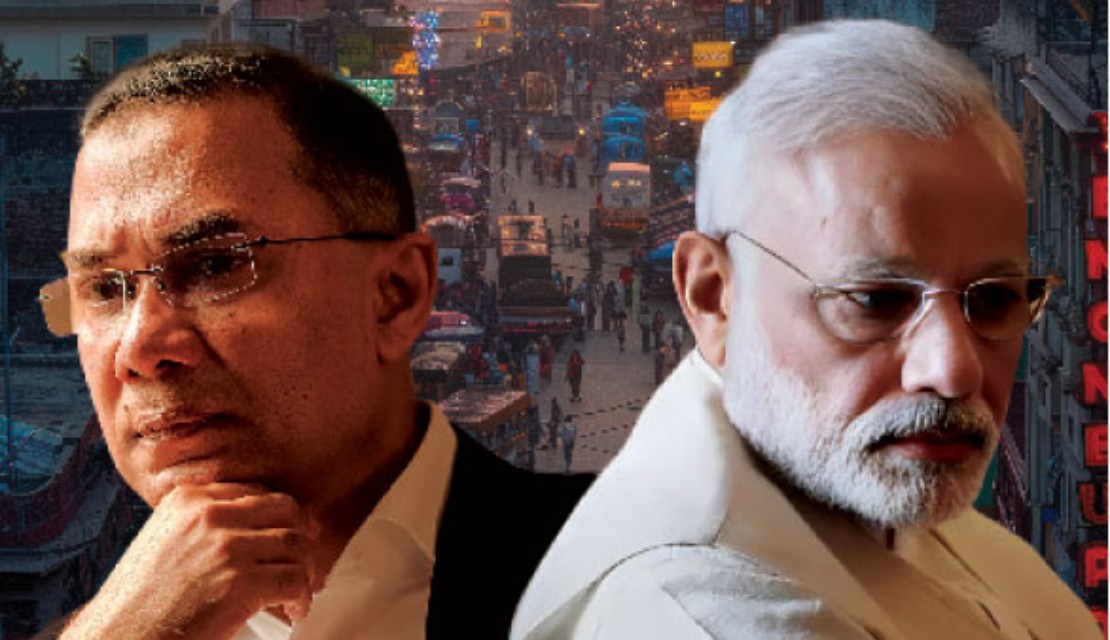
South Asia’s diplomatic tectonic plates are shifting with violent unpredictability. For decades, the corridor connecting New Delhi and Dhaka was heralded by regional observers as the ultimate triumph of bilateral statecraft, a model of neighborhood-first policy built on deeply intertwined economic and security frameworks. Yet, beneath the diplomatic veneer, the foundation was always fundamentally brittle, sustained less by organic mutual trust and more by a unilateral architecture of appeasement. Today, that brittle foundation is fracturing in real-time. The bilateral relationship is currently navigating its most perilous storm in recent memory, plagued by a severe crisis of faith and locked in a trajectory of permanent instability. The catalyst for this latest diplomatic rupture? A profound miscalculation by New Delhi regarding the optics of harboring a fallen autocrat.
The immediate flashpoint traces back to the deeply controversial events of August 5, 2026. Exactly two years after the historic July-August mass uprising of 2024, a bloody, student-led revolution that violently dismantled a fifteen-year authoritarian regime ousted Prime Minister Sheikh Hasina reappeared in the public eye. Sitting comfortably in exile on Indian soil, she utilized the platform of the Foreign Correspondents' Club of South Asia in New Delhi to deliver a blistering virtual press conference. Originally billed as a physical appearance, the event morphed into a broadcast of audio speeches and a combative question-and-answer session.
From her sanctuary in the Indian capital, the fugitive former head of government did not offer conciliation. Instead, she dismissed the historic 2024 revolution as an "organized political conspiracy." In a move of staggering audacity, she announced her unequivocal intent to return to Bangladesh by the end of December, brazenly challenging the current democratic administration. She dismissed threats of arrest, demanding the immediate unbanning of her political outfit, the Awami League, and the wholesale withdrawal of all legal cases against her loyalists.
Data Callout: The August 2026 Geopolitical Fracture
This document presents a structured chronology of the escalating diplomatic crisis between Dhaka and New Delhi, precipitated by former Prime Minister Sheikh Hasina's political activities in exile and the ensuing responses from the incumbent administration led by Prime Minister Tarique Rahman. The analysis is framed for academic review and policy briefing purposes.
1. Chronological Timeline
| Timeline | Event Description | Strategic Impact |
| July-August 2024 | Historic mass uprising topples the fifteen-year authoritarian regime. Sheikh Hasina flees to India seeking sanctuary. | Regime change; initiates immediate cross-border diplomatic complexities. |
| February 2026 | Democratic mandate solidified in Dhaka. The Bangladesh Nationalist Party (BNP) forms the government, with Tarique Rahman assuming the office of Prime Minister. | Consolidation of the new political order and structural governmental shifts. |
| Late July 2026 | Indian Ministry of External Affairs officially assures its parliamentary committee that Sheikh Hasina is prohibited from conducting political activities from Indian territory. Dhaka’s extradition request remains “under review.” | Temporary diplomatic stabilization; ambiguity surrounding the extradition status quo. |
| August 5, 2026 | On the second anniversary of her ouster, Hasina holds a highly publicized press conference in New Delhi, announcing a triumphant return and demanding political rehabilitation. | Violation of prior diplomatic assurances; sparks immediate domestic and bilateral tension. |
| August 7, 2026 | Dhaka’s Ministry of Foreign Affairs issues a blistering condemnation, viewing the event as a direct assault on the nation’s sovereignty. | Formal escalation of bilateral relations; potential policy shifts regarding Indo-Bangla ties. |
2. Academic and Strategic Implications
• Sovereignty and Extradition Norms: The harboring of a deposed political figure actively challenging the new administration tests international legal frameworks regarding extradition and asylum.
• Bilateral Trust Deficit: New Delhi's failure to enforce political silence on Hasina contradicts previous assurances, significantly widening the trust deficit with the Tarique Rahman administration.
• Domestic Security Vectors: Hasina's calls for rehabilitation could incite internal factions, necessitating heightened domestic security measures in Dhaka.
The occurrence of this press conference exposed a glaring contradiction in New Delhi’s official geopolitical posture. Just a week prior to the broadcast, the Indian government, as reported by the Indian Express, categorically assured its parliamentary committee on foreign affairs that Sheikh Hasina was forbidden from utilizing Indian territory for political maneuvering. Furthermore, the external affairs ministry claimed that Dhaka’s formal extradition request submitted under the binding framework of the 2013 bilateral extradition treaty was being meticulously reviewed through proper legal channels.
Dhaka’s reaction to this double-edged diplomacy was swift, furious, and unprecedented in its bluntness. The new political establishment, born from the blood and sacrifice of the 2024 uprising, possesses zero tolerance for the hegemonistic tendencies of the past. Last month, the Bangladesh Ministry of Foreign Affairs released a statement employing language rarely seen in the usually restrained lexicon of South Asian diplomacy.
The ministry expressed deep, unvarnished anger, categorizing Hasina not as a displaced leader, but as a "fugitive and convicted genocide accused." The statement explicitly noted that New Delhi had been warned in advance about the explosive potential of facilitating such an event. Permitting this broadcast on the very day Bangladesh was solemnly observing the second anniversary of the July Revolution was interpreted as an extreme insult to the martyrs who sacrificed their lives to end fascism. It was, according to Dhaka, a blatant attack on national sovereignty.
To the millions of citizens in Bangladesh, Hasina’s attempt to rewrite history from a studio in Delhi is an affront to the verified international consensus. The brutal massacre of unarmed civilians and children during the dying days of her regime in 2024 has been meticulously documented and established as fact by the United Nations. Any effort to dismiss these atrocities is perceived as a grotesque distortion of the truth.
The foreign ministry's dispatch unequivocally declared that Bangladesh will never revert to the dark ages of fascism. Upholding the sacred spirit of the revolution, the statement articulated a fierce national consensus: the people of Bangladesh are resolutely determined never to allow their nation to be reduced to a vassal state of any foreign power. The convicted criminal gang responsible for the 2024 atrocities, Dhaka affirmed, has permanently lost its right to participate in the political destiny of the republic.
Analytical Feature: The Anatomy of Bilateral Distrust
Public Perception of Core Friction Points (August 2026 Survey Estimate)
To understand the current crisis, one must quantify the historical grievances that have eroded public trust in Bangladesh over the past decade and a half.

(Note: Data represents aggregated sentiment analysis derived from regional civil society polling in the post-revolution landscape).
(Note: Data represents aggregated sentiment analysis derived from regional civil society polling in the post-revolution landscape).
This explosive diplomatic row arrives at an incredibly sensitive geopolitical juncture. New Delhi is scheduled to host the 18th BRICS Summit on September 12 and 13. In what was initially perceived as a major olive branch, the Narendra Modi administration invited Bangladeshi Prime Minister Tarique Rahman to attend the prestigious gathering as a special guest in the outreach sessions, leveraging his current role as the chairperson of BIMSTEC.
In the corridors of international relations, such a multilateral invitation is highly significant. It represents the largest formal diplomatic gesture extended by India since the BNP-led government assumed power in February. Optimists within the diplomatic community hoped this summit would serve as a vital reset button–an opportunity for face-to-face negotiations that could finally melt the ice and dismantle the legacy of suspicion.
Instead, the virtual press conference orchestrated by the ousted Prime Minister has severely poisoned the well. A deep sense of uncertainty now clouds Prime Minister Rahman’s participation. While India officially extends the hand of friendship with one arm, its other arm provides a platform for a convicted fugitive to actively destabilize Bangladesh’s interim democratic transition. Dhaka's policymakers view this lack of visible, decisive action to curb subversive activities on Indian soil as an act of bad faith. As a direct result, every diplomatic assessment and internal political calculation regarding the BRICS summit is currently being subjected to agonizing scrutiny.
Analytical Feature: Strategic Calculus Mapping
Evaluating the strategic trajectories available to New Delhi and Dhaka in the countdown to the September BRICS Summit.
Geopolitical Strategy Matrix: Bangladesh–India Relations
BRICS Decision Scenarios–Risk–Reward Assessment

Scenario Variables and Expected Outcomes
Analytical framework: Scenario-based qualitative risk–reward matrix constructed from the supplied assumptions.
To fully grasp the magnitude of the current crisis, one must excavate the long history of bitterness that defines this geographic neighborhood. The narrative of unwavering friendship touted during the fifteen years of Awami League rule was largely a fiction spun by state-controlled media. Beneath the surface, intense anger festered among the Bangladeshi populace.
Critics and regional analysts have long argued that India’s foreign policy towards Bangladesh during that era was defined by a ruthless, unilateral appeasement of a single
| Quadrant | Scenario | Key Variable | Expected Result |
| Expected Result | Prime Minister Rahman attends BRICS | India arrests or gags Hasina prior to the visit. | Potential diplomatic reset and normalization based on mutual respect. |
| II–High Risk, Low Reward | Rahman attends; status quo remains | Hasina continues unrestricted propaganda. | Severe domestic backlash; attendance may be viewed as capitulation to hegemony. |
| III–Low Risk, Low Reward | Rahman boycotts BRICS | Unaddressed sovereignty concerns are cited. | Diplomatic deep freeze; regional multilateralism may stall, creating space for rival actors. |
| IV–Low Risk, High Reward | IV–Low Risk, High Reward | Handover of the convicted autocrat to Dhaka. | Immediate restoration of trust and potential historic elevation of the bilateral partnership. |
political dynasty. This approach involved turning a deliberate blind eye to stolen elections, severe human rights abuses, and the systemic dismantling of democratic institutions. By propping up an deeply unpopular autocracy, New Delhi fundamentally compromised Bangladesh's sovereignty.
The ledger of unresolved grievances is extensive and painful. The deliberate stalling on the Teesta water-sharing agreement remains an open wound for millions of farmers. The persistent, heavily militarized violence by Indian border forces, resulting in the regular deaths of Bangladeshi citizens, contradicts any rhetoric of brotherly ties. Furthermore, the sweeping transit and corridor concessions granted by the previous regime are now widely viewed in Dhaka as a catastrophic capitulation that severely compromised national security.
When the people of Bangladesh shed their blood to reclaim their republic in 2024, they expected the global community to recognize their sacrifice. The realization that India immediately provided political shelter to the architects of the mass killings struck a devastating blow to the national psyche. It confirmed the darkest suspicions of the populace: that whenever a genuine people's government emerges in Dhaka, or whenever Bangladesh asserts its legitimate national interests, the policymakers in New Delhi instinctively resort to a posture of hegemonic intimidation.
The paradigm has irreversibly shifted. In the wake of the people’s uprising, the civic and political fabric of Bangladesh has been fundamentally rewoven. From the rural peasantry to the urban intelligentsia, from student leaders to veteran politicians, there is absolute zero appetite for external domination. The unified demand is a foreign policy rooted deeply in the principles of absolute independence, unyielding sovereignty, and true egalitarian partnership.
If the strategic establishment in New Delhi genuinely desires long-term peace, security, and economic integration in the Eastern subcontinent, a painful awakening is required. The foundational prerequisite for successful diplomacy in this new era is not the appeasement of a favored proxy, but a profound, actionable respect for the democratic will of 175 million free citizens. The roadmap moving forward is strictly binary. India must finally honor the repeated requests to repatriate the convicted autocrat in accordance with the 2013 extradition treaty. At the bare minimum, New Delhi must immediately and forcefully terminate the use of its territory as a launching pad for seditious propaganda against a sovereign neighbor. Giving a fugitive the oxygen of media exposure is not a defense of free speech; it is an act of geopolitical sabotage that deeply wounds the sentiments of a traumatized nation.
Ultimately, India is facing a zero-sum decision. They must choose between standing with the 175 million people of a rising, democratic Bangladesh, or continuing to shield a fugitive, convicted dictator who is hiding from the judgment of history. They cannot have both. The trajectory of regional stability hangs entirely in the balance. If the architects of fascism are permitted to plot their return from the safety of the Indian capital, it will permanently sever the psychological ties between the two nations. New Delhi must decide, and decide now, which side of history it wishes to occupy. The clock ticking toward the September summit is not just measuring time; it is measuring the lifespan of a vital geopolitical alliance.