

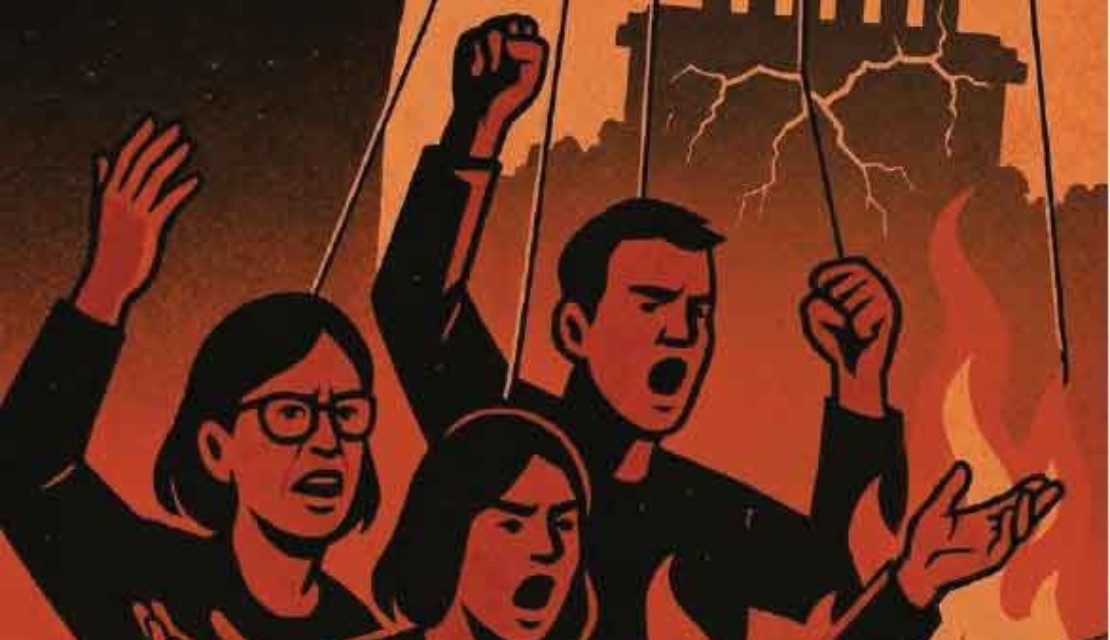
The specter of authoritarianism rarely vacates the corridors of power on the exact day the dictator boards a fleeing helicopter. Long after the tear gas dissipates and the barricades are dismantled, the remnants of the regime linger in television studios, university faculties, and the ostensibly benign spheres of arts and culture. While rigorous, unfettered debate is the lifeblood of a nascent democratic state, the deliberate obfuscation of historical realities constitutes an existential threat to its survival. In Bangladesh, in the turbulent aftermath of the July 2024 student-led mass uprising that toppled Sheikh Hasina’s iron-fisted rule, a silent, insidious war of narratives has begun. It is a psychological campaign spearheaded by the fallen regime’s intellectual architects, designed to sanitize history, invalidate the sacrifices of the martyrs, and pave the way for autocracy’s return.
To analyze the anatomy of Bangladesh’s recent democratic backsliding, one must recognize that a tyrannical regime does not survive solely on the brute force of the police, the Rapid Action Battalion (RAB), or the military apparatus. Coercion is expensive and highly visible. True authoritarian resilience relies on a sophisticated cultural infrastructure that rationalizes, sanitizes, and normalizes state violence. This phenomenon can best be diagnosed as "cultural fascism", a rigid, state-sponsored ideological ecosystem where a ruling clique imposes a monolithic way of thinking, aggressively marginalizing dissent under the guise of national culture and stability.
During the dark triad of Bangladesh's fraudulent electoral exercises, the non-voting farce of 2014, the midnight ballot-stuffing of 2018, and the dummy candidate theater of January 2024, a distinct cadre of cultural collaborators operated securely within the shadow of power. When opposition activists were systematically disappeared, extrajudicially murdered, or subjected to horrific repression, these elites played the role of willing ostriches. Worse, many openly weaponized their platforms to justify the Awami League’s policy of political extermination.
Now, with the regime dismantled, this same network of apologists is executing a calculated metamorphosis to regain influence over the state, media, and intellectual spaces. Their strategy is twofold: re-write the history of Sheikh Hasina’s brutality using new rhetoric, and absolve themselves of their complicity in a regime that viewed human blood as a cheap political commodity.
The Taxonomy of State-Sponsored Complicity
The cultural shock troops of the Hasina era did not operate as a monolith; they were a highly stratified syndicate, each class serving a specific function in the machinery of oppression. Looking back at the fifteen-year reign of Awami authoritarianism, four distinct tiers of cultural fascists emerge.
The cultural shock troops of the Hasina era did not operate as a monolith; they were a highly stratified syndicate, each class serving a specific function in the machinery of oppression. Looking back at the fifteen-year reign of Awami authoritarianism, four distinct tiers of cultural fascists emerge.
The first and arguably most damaging class comprised the opportunistic academics and intellectuals. Occupying the uppermost echelons of academia, including Vice-Chancellors and senior professors, this group traded their intellectual integrity for state awards, lucrative appointments, and absolute impunity. They provided the theoretical scaffolding for the ruler’s oppressive measures, transforming raw tyranny into 'intellectual' necessity.
The second class consisted of partisan artists, writers, and journalists. In exchange for the proverbial crumbs of power, they utilized poetry, cinema, and prime-time broadcasting to legitimize Hasina’s misrule. Renowned celebrities were witnessed enthusiastically endorsing farcical elections, wholly abandoning their artistic independence to act as cheerleaders for democratic subversion.

| Collaborator Class | Primary State Function | Method of Co-optation / Reward | Impact on Democratic Pluralism |
| Academic Elite | Providing theoretical justification for authoritarianism. | Vice-Chancellor appointments, state honors. | Stifled university dissent; transformed campuses into regime strongholds. |
| Media & Artists | Normalizing rigged elections and state violence through media. | Syndicated columns, prime-time show hosting, tax exemptions. | Created a false consensus of stability; marginalized independent journalism. |
| Cultural Bureaucrats | Institutionalizing ruling party ideology in national heritage. | Leadership in Bangla Academy, Shilpakala Academy. | Weaponized state funds to blacklist dissident writers and artists. |
| Cyber Influencers | Digital character assassination of opposition and dissidents. | RAJUK housing plots, inclusion in prime ministerial foreign trips. | Chilled online free speech; normalized cyberbullying and harassment. |
The third pillar was the cultural bureaucracy. Installed in prestigious institutions like the Bangla Academy, Shilpakala Academy, and the Ministry of Information, these bureaucrats sold their consciences for government salaries. Their primary mandate was to stifle the voices of patriotic, dissenting artists while simultaneously bankrolling the regime's propaganda. Finally, the cyber-propagandists acted as the digital vanguard. Rewarded with lucrative RAJUK housing plots and foreign junkets, they aggressively shaped public opinion on social media, executing coordinated character assassinations against anyone daring to critique the establishment.

The Post-Revolution Metamorphosis and Narrative Sabotage
Following the dramatic collapse of the Awami League government on August 5, 2024, one might have expected these cultural operatives to face marginalization. Instead, after a brief period of strategic silence, a highly adaptive segment of this cohort executed a stunning pivot. Masquerading as victims of circumstance, they suddenly adopted the lexicon of the revolution, claiming they had always opposed oppression. For these chameleons, ideology is entirely subservient to self-preservation and the relentless pursuit of opportunity. Alarmingly, many have successfully ingratiated themselves with policymakers within the current transitional framework.
A more insidious faction, however, is actively engaged in manufacturing chaos. Having gorged themselves on the surpluses of power for a decade and a half, they are now executing a psychological operation aimed at inducing public amnesia. Their objective is to broadcast a subtle, continuous message: The previous regime provided stability; the current era offers only failure and anarchy.
Figure 2: Media Narrative Shift Post-August 2024 Uprising
Volume of media mentions and social media posts illustrating a coordinated pivot from defending the former regime to weaponizing transitional friction.

This is not critique; it is a calculated psychological game designed to exhaust the populace and make them yearn for the predictable brutality of a dictatorship. Capitalizing on the inevitable administrative and economic turbulence that follows any revolution, these actors test the nerves of the pro-democracy forces. They quietly observe the fissures among the groups that championed the July uprising, waiting for the optimal moment to break from their shells and rehabilitate fallen fascism.
Case Studies in Revisionism: Weaponizing the Airwaves
The arrogance and public boasting of certain senior journalists, talk-show hosts, and celebrities in the post-fascist era is not a manifestation of free speech; it is a targeted assault on the glory of the July revolution. When figures like actress Meher Afroz Shaon or journalist Soma Islam attempt to trivialize the sacrifices of the students, whose blood bought the nation's current freedom. They are attempting to reconstruct the cultural hegemony that enabled Hasina's atrocities. Consider the historical gravity of the July 2024 student movement. It stands as a monumental milestone in South Asian political history. Yet, petty ideologues have launched a smear campaign against it. Meher Afroz Shaon’s mocking Facebook post featuring the hashtag #JulyCDI is a prime example of this trivialization tactic. By sarcastically suggesting the revolution's memory is a social media "trend" to be used when one is "sad or in a good mood," she deliberately reduces a bloody massacre to a trivial internet meme. This is textbook psychological warfare: degrade the sacredness of the resistance so the crimes of the oppressors seem less severe.
The strategy of distortion escalates further in the political commentary sphere. When journalist Soma Islam brazenly asserted on live television that "15 years of looting and misrule have been surpassed by Dr. Yunus’s 18 months," she crossed the line from journalistic critique into pure counter-revolutionary propaganda. This statement serves a distinct purpose: to normalize the Awami League's kleptocracy by establishing a false equivalence with the struggles of an interim government trying to rebuild a fractured state. It is a direct challenge to the democratic transition, providing theoretical fuel for the remnants of the fascist structure to reorganize.
Figure 3: Public Trust vs. Revisionist Propaganda Over Time (Post-Uprising)
Continuous questioning of the revolution's motives creates institutional vacuums, the precise environment where fascism historically resurfaces.

Perhaps the most bewildering and dangerous phenomenon is the infiltration of these narratives into the ranks of the supposed opposition. Recently, BNP Member of Parliament Nilufar Chowdhury Moni mirrored Awami League talking points with shocking precision during a television talk show hosted by the aforementioned Soma Islam. Moni questioned the very nature of the July movement, suggesting the protesters did not know each other, did not realize when their comrades were shot, and wildly speculated about the use of "snipers" to imply a hidden geopolitical design.
When prompted by Islam, Moni agreed that the uprising was "definitely a plan," refusing to rule out a conspiracy. This deeply irresponsible rhetoric essentially strips agency away from the hundreds of thousands of students and ordinary citizens who faced bullets on the streets of Dhaka.
It perfectly aligns with the fallen Awami League's desperate narrative, which seeks to reframe a spontaneous mass uprising as a cold-blooded, foreign-orchestrated coup. It is worth noting the deep irony that Moni, a beneficiary of the very revolution she is undermining, was swiftly condemned by her own party’s student wing, Chhatra Dal. Her previous television appearances including a bizarre defense of extortion over Zakat highlight a profound lack of political judgment, but in this volatile transitional period, such "stupid things" are profoundly dangerous. They provide a smokescreen for the true architects of the July massacres.
The Imperative of Dismantling the Echo Chamber
The objective of cultural fascism is identical to that of political fascism: absolute, exclusive control. Where the politician seeks control over the treasury and the military, the cultural fascist seeks dominion over thoughts, language, art, and historical memory. Sheikh Hasina utilized this dual approach vigorously, destroying the pluralism of Bangladeshi society to consolidate her grip.
Ensuring accountability and seeking justice for the horrific human rights violations committed during the July Movement is the foundational condition for a new, democratic Bangladesh. When intellectuals, media personalities, and compromised politicians question the core purpose of the July Revolution, they are indirectly advocating for mass murderers. By maintaining a culture of impunity and institutional distrust, they act as the vanguard for authoritarian resurgence. As history repeatedly demonstrates, fascism thrives in institutional vacuums; if the reform process loses public confidence due to relentless, bad-faith media sabotage, a dictatorial relapse becomes almost inevitable.
We must understand that when the beneficiaries of a fallen dictatorship are allowed to continuously challenge the spirit of a democratic revolution without social or intellectual pushback, it sends a powerful signal to the fugitive operatives of the old regime. It tells the underground organizers and corrupt financiers that the cultural terrain is still fertile for their return. This psychological encouragement is the first step toward physical reorganization and violent provocation.
Ultimately, the true power of history lies in its application. If Bangladesh can harness the bitter, bloody lessons of the July Movement to forge a robust state structure characterized by an fiercely independent judiciary, deeply accountable administration, and unshakable respect for civil liberties, the significance of the July 24th chapter will be permanently cemented into the bedrock of the nation.
When fascism is defeated at the ballot box or on the streets, it does not evaporate. If its intellectual and cultural root systems are left intact, it will don a new disguise and bide its time. The current boasting of Bangladesh's cultural fascists is not mere noise; it is a highly calibrated propaganda mechanism designed to smooth the path for an autocratic restoration. To preserve the hard-won, blood-soaked achievements of the July Revolution, civil society must build an impenetrable fortress of resistance against this intellectual sabotage. The citizens of a new Bangladesh must remain hyper-vigilant who wielded the guns, but against the cultural elites who provided the ideological bullets. Only by completely dismantling this architecture of amnesia can the sacrifices of the July martyrs be truly honored, and a sovereign state based on equity, human dignity, and social justice be permanently secured.