

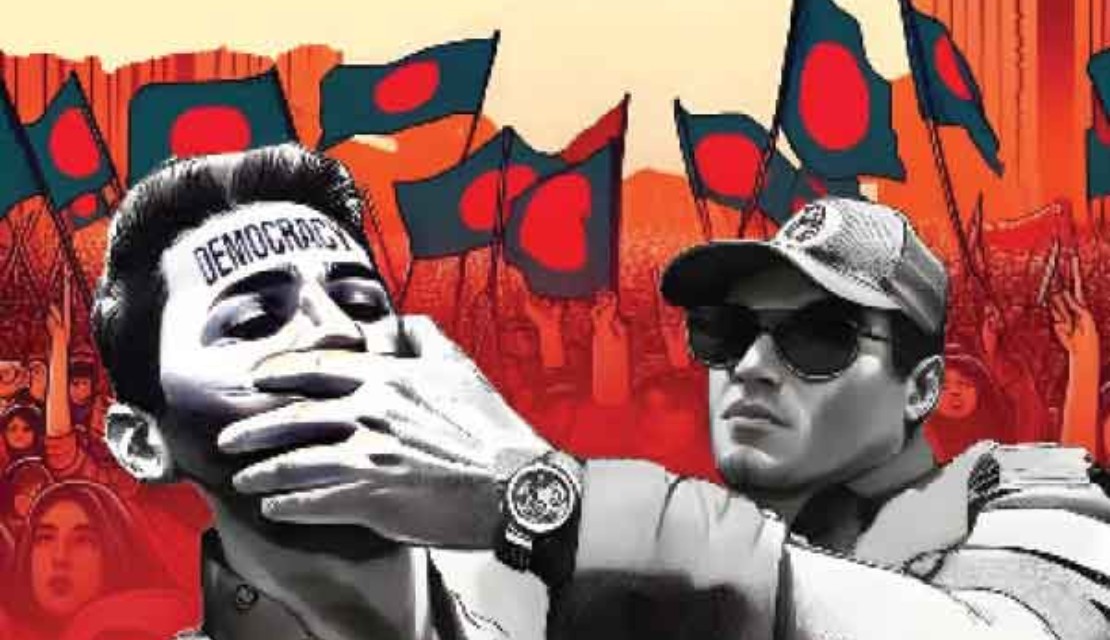
The geographical heart of Bangladesh is currently a theater for one of the most profound socio-political experiments of the twenty-first century. As the dust settles on the landmark elections of early 2026, Bangladesh stands not only at a seasonal change of administration but also at a civilizational threshold. For nearly a century and a half, the region’s political trajectory was defined by various iterations of alienation from colonial subjugation to the more recent, and perhaps more painful, era of internal autocracy characterized by a "fascist" consolidation of power. Today, the "Second Republic", born from the crucible of the 2024 student-led revolution, faces its ultimate existential query: can the kinetic energy of the street be successfully distilled into the static, deliberative authority of the National Parliament?
The transition from a "blood-soaked" political culture to a stable, rule-of-law-based democracy is never a linear progression. It is a violent struggle between the ghosts of a despotic past and the aspirations of a liberated future. The current administration and the newly minted opposition face a mandate that transcends partisan victory; they are tasked with the restoration of the social contract in a land where that contract has been repeatedly torn asunder by the arrogance of unchecked executive power.
The Theoretical Collapse: Why the Streets Replaced the Chamber
To understand the current fragility of the Bangladeshi state, one must look through the lens of classical political philosophy. The tragedy of the previous century was not just the presence of a dictator but the systematic erosion of the "deliberative space". When the National Parliament ceases to be a forum for the "battle of reason", it defaults to being a rubber stamp for the executive. In this vacuum, politics by necessity migrates to the highway.
The Lockean perspective provides a sobering critique of the pre-2024 era. The very legitimacy of the state rests on the "consent of the governed" and the systematic resolution of disputes. When a regime alienates itself from this consent, the citizen’s surrender of natural freedom becomes a nullity. In Bangladesh, the "despotic form" became a lived reality. The legislature, instead of being the "highest authority" and a "shield against public interest violations", became a theater of the absurd.
Consequently, the street became the only venue where the "general will" could manifest. However, street politics is inherently entropic. It relies on muscle power, blockades, and the tragic loss of life. The "separation of powers" is the only mechanism to prevent power from becoming absolute. For Bangladesh, the failure of this balance meant that the judiciary and the legislature were subsumed by the executive, leaving the masses with no recourse but the "July-August Uprising". The high cost of this restoration documented at 1,581 martyrs is a testament to the failure of institutional politics.
The 2026 Mandate: Beyond the "Winner-Takes-All" Paradigm
The recent elections have brought about an interesting, if unstable, pluralism. The emergence of the Jamaat-e-Islami (BJI) and the National Citizen Party (NCP) as credible parliamentary forces represents a shift in the traditional binary of Bangladeshi politics. More importantly, the discourse has shifted from "total control" to "shadow governance".
The announcement by the BJI and NCP regarding the formation of a "Shadow Cabinet" is perhaps the most significant structural development in the country's legislative history. In the Westminster model, the shadow cabinet is not only a group of critics, but it is also a government-in-waiting that provides granular, ministry-by-ministry oversight. This institutionalization of the opposition is the only antidote to the "parliament boycott" culture that has historically paralyzed the House.
"A functioning democracy requires an opposition that views itself as a stakeholder in the state’s stability, rather than a rebel force seeking its collapse."
If the BJI and NCP can successfully transition from the rhetoric of the street to the rigors of the "negotiating table", they will provide the necessary "check by power" that is deemed essential. However, such a transition requires the ruling party to abandon the "arrogance of the majority". The history of Bangladesh is littered with the remains of regimes that believed a parliamentary majority granted them immunity from accountability.
The Calculus of Violence: A Statistical Autopsy
The human cost of Bangladesh’s political evolution is staggering. To contextualize the 2026 transition, we must examine the "bloody chapter" of the past fifty-five years. The instability following the 1971 independence, characterized by leftist insurgencies and military coups, created a precedent where political disputes were settled by the bullet rather than the ballot.
| Era | Context | Estimated Fatalities |
| 1975–1990 | Military Rule/Coup Cycles | Thousands (Military & Civilian) |
| 1991–2006 | Transitional Democracy Struggles | ~2,500 |
| 2013–2015 | Pre-election Volatility | ~1,000 |
| 2024 | Student-Public Uprising | Student-Public Uprising |
| Sept 2024 – Jan 2026 | Post-Revolutionary Transition | 195 |
The data reveals a disturbing trend: even after the "restoration" of democracy in 1990, violence remained the primary currency of political exchange. The recent figures, 195 deaths and 11,000 injuries between late 2024 and early 2026, indicate that while the "fascist" head has been removed, the "muscle power" at the grassroots remains active.
A critical analysis suggests that much of this current violence is inter-party and intra-party conflict. This is a symptom of a "weak parliamentary center." When the National Parliament is perceived as a mere formality, local dominance becomes the only way to secure resources and influence. The struggle for the "highway" is, in reality, a struggle for the survival of the local political cadre.
The "July Charter": From Street Slogans to Legal Frameworks
The "July Charter" was the spiritual blueprint of the 2024 uprising. It demanded a non-discriminatory, humane, and accountable state. However, as any political scientist will attest, "spirit" is a poor substitute for "statute". The greatest risk facing Bangladesh today is that the reformist energy of the students will be dissipated into vague political promises without being anchored in the law.
To prevent the resurgence of dictatorship, the 2026 Parliament must prioritize the following structural reforms:
1. Constitutional Enshrinement of Oversight: The "July Charter" must be converted into a legal framework that limits executive overreach. This includes reforming the "Winner-Takes-All" electoral logic that encourages authoritarianism.
2. Strengthening Standing Committees: In a modern democracy, the real work of the state happens in committees. These bodies must be empowered to audit tax expenditures, veto environmentally catastrophic projects, and grill ministers.
3. Institutional Independence: The judiciary and the Election Commission must be insulated from the "poisonous fumes" of partisan politics. If the referee is biased, the game will always end in a riot.
4. Representation for the Marginalized: The Parliament must create pathways for the direct representation of workers, farmers, and the youth who led the 2024 movement. When the "common man" finds his voice in the chamber, he no longer needs to shout from the street.
The Economic Imperative: Why the "Highway" Must Be Restored to the People
The fetishization of the "highway" as a political tool has decimated the Bangladeshi economy for decades. Strikes and blockades have historically led to billions in lost GDP, disrupted supply chains, and, most tragically, the loss of life among the working class.
The 2026 government must understand that economic stability is the most potent defense against political upheaval. A student who can obtain employment and a worker who receives a fair wage are far less likely to be recruited into a political "muscle" squad. The current instability, characterized by isolated post-election violence, threatens to derail the fragile recovery of the post-2024 era.
The highway must return to its "natural rhythm". It should be a conduit for commerce and education, not a battleground for ego. Every hour lost to a political blockade is an hour stolen from the nation's future.
The Sanctity of the Chamber
Bangladesh is currently experiencing a "dawn", but the morning air is still heavy with the scent of past conflicts. The martyrs of the July uprising did not sacrifice their lives for a change of flags; they died for a change of system.
The National Parliament must become the "sacred place" described in classical political science. It must be the venue where the battle of ideas replaces the battle of sticks. If the 2026 legislative session fails to accommodate the "general will", the legitimacy of the state will once again weaken, and the cycle of blood will return.
The choice before the current leadership, both the ruling party (BNP) and the BJI-NCP opposition, is stark: will they be the architects of a sustainable, institutional democracy, or will they be the gravediggers of yet another failed republic? The answer lies in their ability to keep the "door of discussion" open. If the parliament remains effective, the streets will remain peaceful. Only then will the blood of the 1,581 martyrs be truly honored.
The "July Charter" is not just a document of the past; it is a mandate for the future. As we move further into 2026, the world watches to see if the Delta can finally trade its culture of violence for a culture of reason. The highway has seen enough blood; it is time for Parliament to see some statesmanship.