

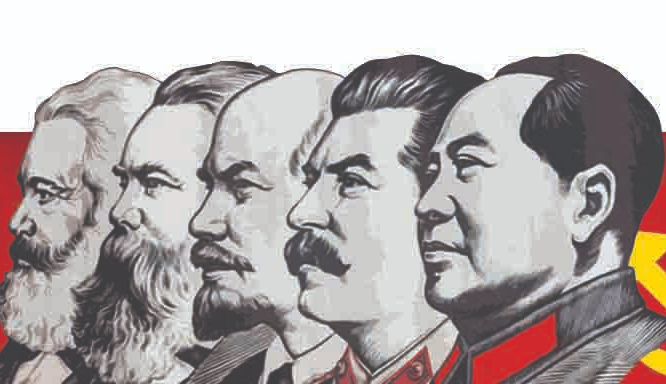
The leftist movement in Bangladesh is a story of grand ideals, bitter divisions, and a slow descent from revolutionary fervour into political irrelevance and compromise. The 1960s were a golden decade for communism across the globe. The Cold War was in full swing, the Soviet Union was a dominant force in world politics, and revolutionary fervour was sweeping across Asia, Africa, and Latin America. East Pakistan—now Bangladesh—was not immune to this wave. In those days, it was a dream for many young people to join the ranks of the leftist movement. University campuses, cultural platforms, and student unions became fertile ground for Marxist ideas. Even the sons and daughters of prominent Muslim League leaders—whose families once stood for Pakistan’s conservative politics—found themselves drawn to socialism, radical change, and the promise of equality.
In both the final years of East Pakistan and the early decades of independent Bangladesh, leftist politics carried a certain intellectual glamour. The left was not just a political force—it was a cultural presence. Its leaders, writers, and activists shaped the country’s literature, theatre, journalism, and student movements. Leftist ideals inspired plays, poems, protest songs, and fiery editorials. Among intellectual circles, socialism was often seen as the language of justice and liberation. But culture and politics are not the same thing. While the left enjoyed great influence in the arts and in university campuses, it struggled to turn that influence into a mass political movement that could compete for real power. The appeal of socialist thought in Dhaka’s coffee houses did not always translate into votes in rural villages.
The CPB in Bangladesh’s Political Landscape
In the heady days of 1971, as the new nation of Bangladesh emerged from the ruins of war, there was a quiet hope among the country’s communists that history was about to turn in their favour. The Communist Party of Bangladesh (CPB), newly separated from its Pakistani counterpart, saw in Sheikh Mujibur Rahman’s Awami League government a potential partner in building a just, socialist future. The CPB’s goals were unambiguous- land reform for the rural poor, an independent foreign policy free from imperialist influence, and the nationalisation of key resources. The early moves of the Mujib government—curbing big business and limiting capitalist power appeared to align with this vision. But political romance in Bangladesh has always been short-lived. Even in the early 1970s, dissent within the left began to bubble. Pro-Beijing communists, led by Maulana Bhasani’s National Awami Party, accused the CPB of naïvely supporting a “petty bourgeois” government. The left was fractured from the start—a weakness that would haunt it for decades.
The turning point came in 1975. Mujib’s creation of the one-party BAKSAL system dissolved political pluralism, swallowing the CPB whole. Months later, Mujib’s assassination in a bloody coup ushered in years of military rule. By the time civilian politics returned, the communists were scattered into competing factions—some choosing gradual mass politics, others pursuing insurrectionary dreams. Meanwhile, the BNP rose as the chief rival to the Awami League, championing Bangladeshi nationalism. Corruption scandals tainted the Awami League, but for many, it remained the “lesser evil.” For the CPB, this meant opposing both dominant parties while somehow rallying a divided left. In rare moments of self-reflection, the CPB admitted its missteps. In 1980, party secretary Rahman confessed that the party had failed to challenge Mujib’s undemocratic tendencies, over-romanticised his leadership, and surrendered too easily to the BAKSAL order. The communists had been so eager to forge unity that they forgot the value of their own independence.
The Divided Left in Bangladesh’s Liberation War — A Lesson in Missed Unity
The Liberation War of 1971 was one of the most defining moments in the history of the subcontinent. It was a struggle for identity, dignity, and independence—a struggle that demanded unity against a ruthless Pakistani military regime. And yet, among the political forces that had long championed the cause of the oppressed—the leftists—unity was tragically absent. The left in East Pakistan entered 1971 carrying the baggage of a decade-long ideological cold war- pro-Soviet vs. pro-China, with each camp further splintered into rival factions. These differences were not merely theoretical; they dictated whether a party would fight alongside India and the Awami League, or wage an entirely separate guerrilla campaign, or even stand aloof in suspicion.
The pro-Soviet communists, such as the East Pakistan Communist Party (pro-Moscow) and its allies in the Purbo Banglar Communist Samonnoy Parishad, chose to stand shoulder-to-shoulder with the Bangladesh government-in-exile and India. They believed the struggle for liberation justified international alliances, even with capitalist or “social-imperialist” powers, if it meant defeating the Pakistani army.
In stark contrast, the pro-Peking left fractured into mutually distrustful camps. Some, like the groups led by Deben Sikder and Abul Bashar, fought from India despite their ideological reservations. Others, such as Abdul Matin’s Purbo Banglar Communist Party and Siraj Sikder’s Purba Bangla Sarbahara Party, chose to wage an independent people’s war from inside occupied territory—rejecting Indian and Soviet involvement altogether. Still others, led by Mohammad Toaha and Abdul Huq, refused to engage under the Awami League’s leadership, viewing it as the representative of the lumpen bourgeoisie, beholden to Indian expansionism and Soviet “social imperialism.” The result? The left, which could have been a decisive revolutionary force shaping the liberation struggle, ended up marginal in influence. Their ideological purity tests and factional squabbles meant they could not present a united, coherent front. When the dust settled in December 1971, it was the Awami League, backed by India, that emerged as the undisputed political victor—while many leftist factions remained outside the mainstream, clinging to the belief that independence had been compromised by foreign domination.
History does not reward disunity in the face of oppression. The Liberation War showed the heroism of individual leftist fighters and groups, but it also exposed the danger of allowing sectarian dogma to override the urgent need for collective action. In the end, the people of Bangladesh paid in blood for their freedom—but the left paid in relevance for its divisions.
The Dark Side of the Purbo Bangla Communist Party’s “Jono Juddho”
In the turbulent years after Bangladesh’s independence, one of the most controversial chapters in the country’s political history was written by the Purbo Bangla Communist Party (PBCP). Born out of revolutionary rhetoric and a deep distrust of mainstream politics, the PBCP claimed to wage a Jono Juddho—a “people’s war”—aimed at overthrowing what they saw as a corrupt, elitist state serving foreign and feudal interests. But in practice, much of this so-called people’s war descended into a campaign of violence that terrorized large swathes of rural Bangladesh. Certain districts became “liberated zones” in name only—in reality, they were fear zones where ordinary villagers lived under the shadow of extortion, arbitrary killings, and political intimidation.
While the PBCP’s rhetoric spoke of liberation and justice, their actions often told another story. Many innocent people, with no involvement in politics, became victims of targeted killings simply because they were suspected of being informers, rivals, or “class enemies.” In the chaos, even some genuine supporters of the movement slipped into criminality, using the banner of revolution to justify robbery, looting, and personal vendettas. Extortion of farmers, small traders, and transport owners became a routine source of funding for the party’s armed wings.
The transformation of idealistic youth into hardened militants was perhaps the most tragic part of this dark chapter. Drawn initially by promises of equality and resistance against oppression, they found themselves trapped in a cycle of bloodshed that neither advanced socialism nor improved the lives of the poor. What began as revolutionary activism ended up breeding a culture of lawlessness. This is not to say the PBCP’s rise happened in a vacuum. The post-independence period was marked by deep disillusionment with the ruling elite, broken promises of land reform, and a political system where corruption thrived. The PBCP’s radical message found fertile ground among the frustrated and the dispossessed. But when revolution is unmoored from accountability and humanity, it loses its moral compass.
The history of the PBCP’s “Jono Juddho” is a cautionary tale for Bangladesh and for revolutionary movements everywhere. Without discipline, democratic accountability, and a respect for human life, armed struggle can easily morph into the very tyranny it claims to fight. The left in Bangladesh already struggled with fragmentation and ideological rigidity; episodes like this further alienated the masses, staining the socialist cause with blood and fear. True liberation cannot be built on the graves of innocents. If the left in Bangladesh wishes to reclaim moral credibility, it must reckon honestly with these mistakes and reject the politics of terror, no matter what lofty ideals are invoked to justify it.
The Left’s Collaboration with Hasina and the Politics of Shahbagh
The story of Bangladesh’s left is one of idealism compromised, influence traded for proximity to power, and moral authority squandered for short-term gains. Nowhere is this clearer than in the political dynamics that unfolded after the Awami League returned to power in 2008. That year, Sheikh Hasina’s Awami League formed a coalition government with several leftist parties. For these leftist groups — many with deep roots in student movements, cultural activism, and the media—the alliance offered a rare chance to be inside the corridors of power. For the Awami League, the deal was equally beneficial- it gained the ideological and cultural legitimacy that leftist intellectuals could provide, as well as access to their strong influence over media, literature, theatre, and academia.
But this collaboration had consequences. Rather than acting as a check on state excesses, much of the left in this coalition became enablers of the Awami League’s authoritarian turn. Through their media platforms, cultural wings, and intellectual networks, they helped construct narratives that portrayed dissent as treachery and opposition as enemies of the state. A few leftist parties stayed out of the formal coalition, but they maintained a discreet working relationship with the government—avoiding open criticism and often echoing its talking points.
The defining moment of this collaboration came in 2013 with the Shahbagh movement. Sparked by the verdict in the war crimes trial of Jamaat-e-Islami leader Abdul Quader Molla, the protests began as a demand for the death penalty instead of life imprisonment. But what unfolded at Dhaka’s Shahbagh intersection was more than a spontaneous outpouring of public sentiment—it was a government-supported, media-amplified spectacle in which leftist activists played a leading role.
In the process, the movement crossed a dangerous line- it openly challenged the independence of the judiciary, demanding that a specific verdict be changed to meet the crowd’s demands. Soon, the law was amended, and on December 12, 2013, Abdul Quader Molla was executed. Other top leaders of Jamaat-e-Islami and the BNP followed the gallows, in what many observers—both domestic and international—viewed as politically motivated trials and judicial killings.
In Bangladesh’s political lexicon, “Shahbagh” became a shorthand for a movement aligned with government interests, and “Shahbagi” an insult aimed at those seen as government mouthpieces masquerading as grassroots activists. The derogatory tone reflected a widespread perception that the movement was less about justice and more about consolidating the Awami League’s power by destroying its political enemies. Through it all, the leftist collaborators remained steadfast in their support for Hasina’s government. They defended controversial legal changes, justified state repression, and used their media dominance to delegitimize dissenting voices. While their popularity among ordinary voters remained marginal, their visibility in television talk shows, newspapers, theatre, and literature ensured they retained influence in shaping public discourse.
The left’s role in this era was not one of principled opposition or independent critique. Instead, they became co-authors of an authoritarian script—providing the cultural and intellectual cover for the Awami League’s drift toward fascism. In doing so, they forfeited the very values they once claimed to champion: justice, equality, and democracy.
The Rise and Stagnation of the Left in Bangladesh
After the independence of Bangladesh in 1971, the political reality became even harsher. The major parties—first the Awami League, then Zia’s BNP, and later others dominated the national stage. The left was often divided, sometimes co-opted by those in power, and repeatedly sidelined in electoral politics. Over time, its position in parliament shrank, its grassroots base thinned, and its image shifted from “voice of the masses” to “voice of the so-called intellectual class.” So why did this happen? The answer lies in a mix of strategic missteps, ideological rigidity, and political compromises that slowly drained the left of its strength. Four key reasons stand out, each telling part of the story of how a movement that once seemed poised for transformation ended up struggling for survival.
Too close to the ruling parties: From the very start of independent Bangladesh, much of the left chose proximity to power over building its own strength. In the early 1970s, many leftist groups aligned themselves—both politically and culturally—with Sheikh Mujibur Rahman’s Awami League. This alliance gave them short bursts of influence: a few policy wins here, some cultural platforms there. But it came at a heavy price. To the public, the left stopped looking like an independent movement with its own vision. Instead, it seemed like an intellectual wing of the ruling party. This loss of political distinctiveness was never truly reversed. When Ziaur Rahman rose to power in the late 1970s, he strategically brought in a mix of former Muslim League politicians and disenchanted leftist leaders. The left, or at least sections of it, once again found itself in the orbit of power—and again lost credibility as a genuine alternative.
The pattern continued. Under Hussain Muhammad Ershad, Khaleda Zia, and Sheikh Hasina, certain leftist figures kept close ties to whichever leader was in office. While this ensured some personal survival for those leaders, it also cemented the image of the left as a “satellite” force—one that clung to whichever government held power, rather than standing firm on principle. This tradition of political dependency eroded the left’s ability to organise at the grassroots. Ordinary people began to see them not as a force for change, but as political opportunists who floated from one power centre to another. In the long run, this blurred identity may have been more damaging than any single electoral defeat.
Failure to connect with religious society: Many leftist leaders openly declared themselves atheists and dismissed religious traditions. In a deeply religious country like Bangladesh, this pushed away large sections of the population. Instead of expressing socialist ideas in a way that connected with local culture and faith, some leaders stuck to an inflexible ideology that rural, faith-driven communities found alien.
Corruption and lost credibility: For years, the left presented itself as the “clean” alternative to corrupt mainstream politics. But when some leaders gained power—often through alliances with ruling coalitions—they fell into the same corrupt practices they once condemned. This hypocrisy damaged their moral authority beyond repair.
Endless divisions: Factionalism plagued the left from the beginning—pro-Soviet vs. pro-China, revolutionary vs. reformist, urban intellectual vs. rural organiser. These divisions led to constant infighting while the major parties quietly consolidated real political control. In the end, the left became a cultural force rather than a political one. Its writers, artists, and journalists shaped the nation’s intellectual life, but its leaders failed to win over the masses. It is the story of a movement full of promise—one that inspired minds but could not mobilise votes.
The Fading Romance of the Left
The romanticism that once surrounded leftist politics in Bangladesh has long since faded. In the 1960s, to be a leftist was to be young, idealistic, and daring—a believer in the promise of equality and revolution. Today, for much of the younger generation, that image has been replaced by one of cynicism. The left is no longer seen as a courageous opposition force but as a collaborator—a willing partner to the ruling party’s authoritarian excesses.
Instead of confronting political opponents through ideological debate or democratic persuasion, too many in the contemporary left resort to character assassination, intimidation, and, at times, physical violence. The ideals they once preached—tolerance, dialogue, and justice—have been replaced by the politics of vendetta. They no longer engage their political opponents with the strength of ideology or the depth of debate; instead, they resort to attempts at silencing them entirely, even through violence.
It is as if they play the role of a carefree lover—full of grand promises and passionate gestures—but when the time comes to commit, to take responsibility, to “marry” their ideals with action, they walk away. This disconnect between their rhetoric and their responsibility has stripped away the old romance, leaving behind only mistrust and disappointment.