

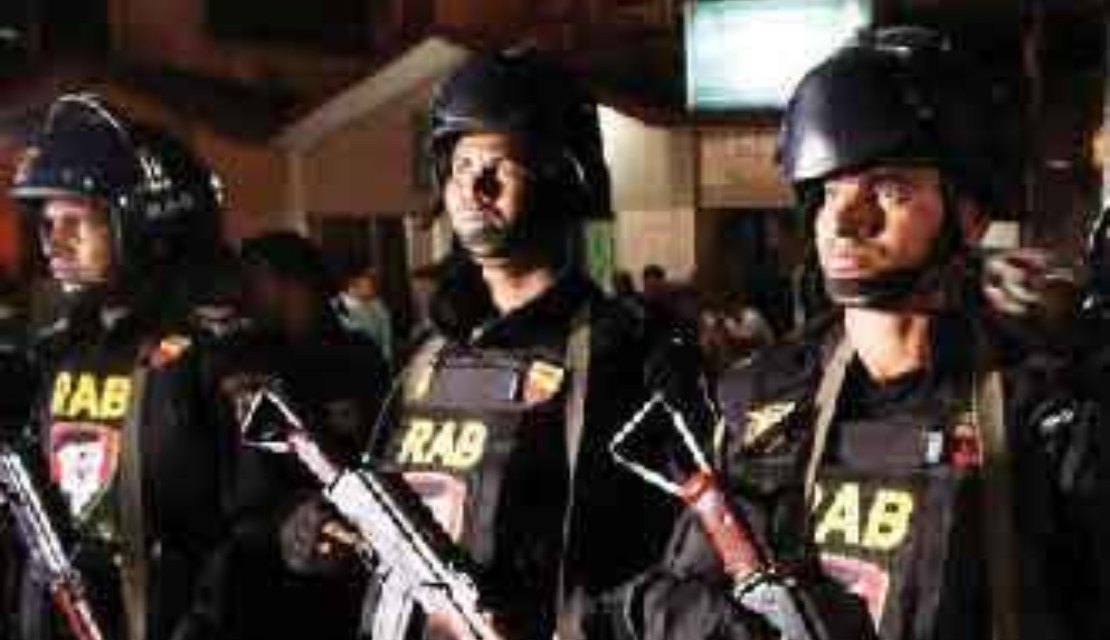
The contemporary history of Bangladesh will likely be remembered not for its economic aspirations alone, but for the sophisticated engineering of a security narrative that redefined the boundaries of state power. For nearly two decades, the term "militancy" was transformed from a specific security concern into a multifaceted instrument of statecraft, serving simultaneously as a political cudgel, a tool for diplomatic branding, and a strategic shield for regional hegemony. This was a calculated "securitization of dissent" that allowed a regime to bypass democratic norms under the guise of global stability.
By dissecting the anatomy of this narrative, it becomes clear that the "militant card" was the primary currency in an exchange between the Awami League administration and its international patrons. To understand how a nation’s religious identity was systematically criminalized, one must look beyond the police cordons and media briefings to the very origin of the language used to cage a population.
The Semantic Shift: From Warrior to Pariah
Language is the first casualty of political manipulation. The word "militancy", as applied in the Bangladeshi context, represents a profound etymological hijacking. Historically, the concept of the "militant" finds its linguistic roots in the Persian word 'jang', signifying a warrior or one engaged in a struggle. In the Mughal era, a "militancy" (or "jang") was a recognized military operation, devoid of the modern connotations of indiscriminate terror. It was a term of combat, not of cowardice.
However, the late 20th century witnessed a Western-led semantic distortion. During the anti-Soviet resistance in Afghanistan, the mujahideen were celebrated as "supreme". When geopolitical interests shifted, the same demographic was rebranded as "Islamic militants". Following the cataclysm of September 11, 2001, this distorted definition was imported into the South Asian media landscape. The term was no longer descriptive of an action; it became prescriptive of an identity.
In Bangladesh, this shift was weaponized to create a "culture of guilt" among the religious majority. By conflating the practice of Islam with a predisposition toward violence, the state successfully placed a significant portion of its citizenry under a permanent cloud of suspicion.
Geopolitical Synergy: The Birth of a Proxy Narrative
The rise of the "militancy" narrative in Bangladesh cannot be separated from the global "War on Terror" (WoT). President George W. Bush’s declaration of a global crusade against extremism provided a convenient template for autocratic regimes worldwide. For Bangladesh, a Muslim-majority nation, this meant being folded into a strategic circle where "stability" was prioritized over "democracy".
The 2008 Electoral Genesis
The 2008 national elections served as the laboratory for this narrative. Backed by a convergence of interests between India and Sheikh Hasina’s Awami League, it ascended to power with a mandate, explicit or implicit, to act as the regional bulwark against "extremism".
This international recognition was the lifeblood of the regime. To maintain this support, the government had to ensure that the threat of militancy remained "active" enough to justify its iron-fisted rule, yet "contained" enough to demonstrate its competence.
| Stakeholder | Interest Served | Narrative Utility |
| Awami League | Awami League | Suppression of political rivals (BNP/Jamaat) as “extremist sympathizers.” |
| India (RAW/NIA) | Regional Hegemony | Neutralizing Islamic political influence to ensure a pro-Delhi neighbor. |
| EU and Others | Security Realism | Securing a “moderate” partner in a volatile region |
| Securing a “moderate” partner in a volatile region | Financial/Social Capital | Financial/Social Capital |
The Theater of Counter-Terrorism: Staged Events and Fictitious Identities
If the 2008 election was the prologue, the July 1, 2016, Holey Artisan Bakery attack was the centrepiece of the drama. While the tragedy resulted in the deaths of 22 people, the aftermath revealed a meticulously constructed state response designed to reap maximum diplomatic dividends.
The government’s immediate pivot, branding the event as a domestic manifestation of an international conspiracy, served to corner Islamist forces and religious institutions. What followed was a series of "raids" across Ashkona, Mirpur, Kalyanpur, and Narayanganj, Dhaka, that bore all the hallmarks of a scripted television drama.
The Mechanics of the "Militant Drama"
• Pre-emptive Detentions: International human rights organizations and victims' families frequently alleged that many of those killed in "suicide attacks" during these raids had actually been in state custody for months or even years prior.
• Symbolic Evidence: Every raid followed a predictable pattern of evidence recovery: the Quran, "Islamic literature", and a convenient stash of weapons. These items were displayed to the media to visually reinforce the link between piety and peril.
• The "Suicide" Narrative: The frequent reporting of children and families perishing in suicide blasts during these operations served a dual purpose: it dehumanized the victims as fanatics who loved death more than their own kin, and it foreclosed the possibility of a transparent investigation or trial.
India’s Strategic Design: The RAW and NIA Nexus
The anti-militancy campaign in Bangladesh was never a purely domestic affair; it was an extension of regional politics. The involvement of the Indian intelligence agency (RAW) and the NIA is a critical, albeit often obscured, component of this analysis.
India’s long-term strategic goal has been the containment of Islamic political consciousness in South Asia, fearing that a religious-nationalist awakening in Bangladesh could spill over its borders. Sheikh Hasina served as the perfect vehicle for this strategy. By "intimidating" the populace through the specter of Islamic extremism, India secured a neighbor that was compliant and strategically aligned.
The Narrative Shield
This "militancy card" functioned as a diplomatic shield. Whenever the international community raised concerns regarding extrajudicial killings, enforced disappearances, or electoral irregularities, the regime and its regional backers would simply invoke the threat of a "militant takeover". The logic was simple: "It is either Hasina or the Jihadists." Faced with this false binary, the Western world opted for the "peacekeeper" they knew, effectively giving a green light to a decade of democratic collapse.
The Institutionalization of Fear: Media and Intellectual Complicity
The success of the militancy narrative required more than just police action; it required a cultural shift. A segment of the media and the "secular" intellectual class became the primary vectors for this state propaganda.
Mosques, madrasas, and even general religious gatherings were placed under constant surveillance. The state-sponsored message was clear: Islam was an obstacle to progress. This fostered a society where practicing one’s faith according to traditional values became a liability. Thousands of scholars, students, and ordinary religious people were disappeared or imprisoned without trial, creating a vacuum of moral leadership that the regime filled with party loyalists.
Figure 1: The Cycle of Narrative Consolidation
1. Event: A perceived or staged security incident occurs.
2. Labeling: Authorities immediately link it to "Islamic militancy" and political opposition.
3. Media Saturation: Pro-regime media outlets broadcast "successful" raids and "jihadi" evidence.
4. Diplomatic Branding: The regime presents itself to the West as the only defense against chaos.
5. Suppression: Laws (like the Digital Security Act) are used to silence anyone questioning the narrative.
6. Legitimacy: International support is maintained, and domestic opposition is neutralized.
The Moral and Political Cost: A Collapsed Democracy
The price of this "branding" has been the total erosion of Bangladeshi institutions. To sustain the militancy narrative, the judiciary had to be rendered partisan, the administration turned into a paramilitary extension, and the electoral process completely gutted.
By treating Islam, a religion that is the moral and social bedrock of the nation, as a rival to the state, the Awami League fractured the social contract.
The inspiration for self-sacrifice and unity that religion provided during the 1971 independence movement was recast as a threat to national security. This was not secularism; it was a silent policy of repression aimed at de-linking the people from their cultural and moral identity.
The Necessity of a Truth Commission
As the sun sets on the long dictatorship of Sheikh Hasina, the "militancy" narrative stands revealed as a house of cards. The question that haunts the common citizen, "Was there ever real militancy, or was it all a play?", demands a rigorous, independent investigation.
The evidence suggests that the "militancy" era was a joint venture between a regime desperate for power and a regional power seeking strategic depth. It was a narrative designed to corrupt the image of Islam and eliminate political competition. For the future of Bangladesh, the revelation of these misdeeds is not just a matter of historical record; it is a prerequisite for the restoration of democracy, human rights, and freedom of expression.
History rarely forgives those who attempt to destroy the soul of a nation. As Bangladesh moves forward, it must reconcile its state policy with its religious identity, ensuring that no future political force can ever again use the "security card" to enslave its own people.
The era of the "militant drama" must end, replaced by a genuine commitment to justice that honors the faith and the freedom of the majority.